Vladimir Putin's Third Inauguration as President of Russia
2012 · Moscow, Russia
Vladimir Putin was inaugurated for a third term as President of Russia, amid protests and allegations of electoral fraud.
May 7, 2000
Vladimir Putin was inaugurated as President of Russia, marking the beginning of his first term in office.
Moscow, Russia | Russian Government
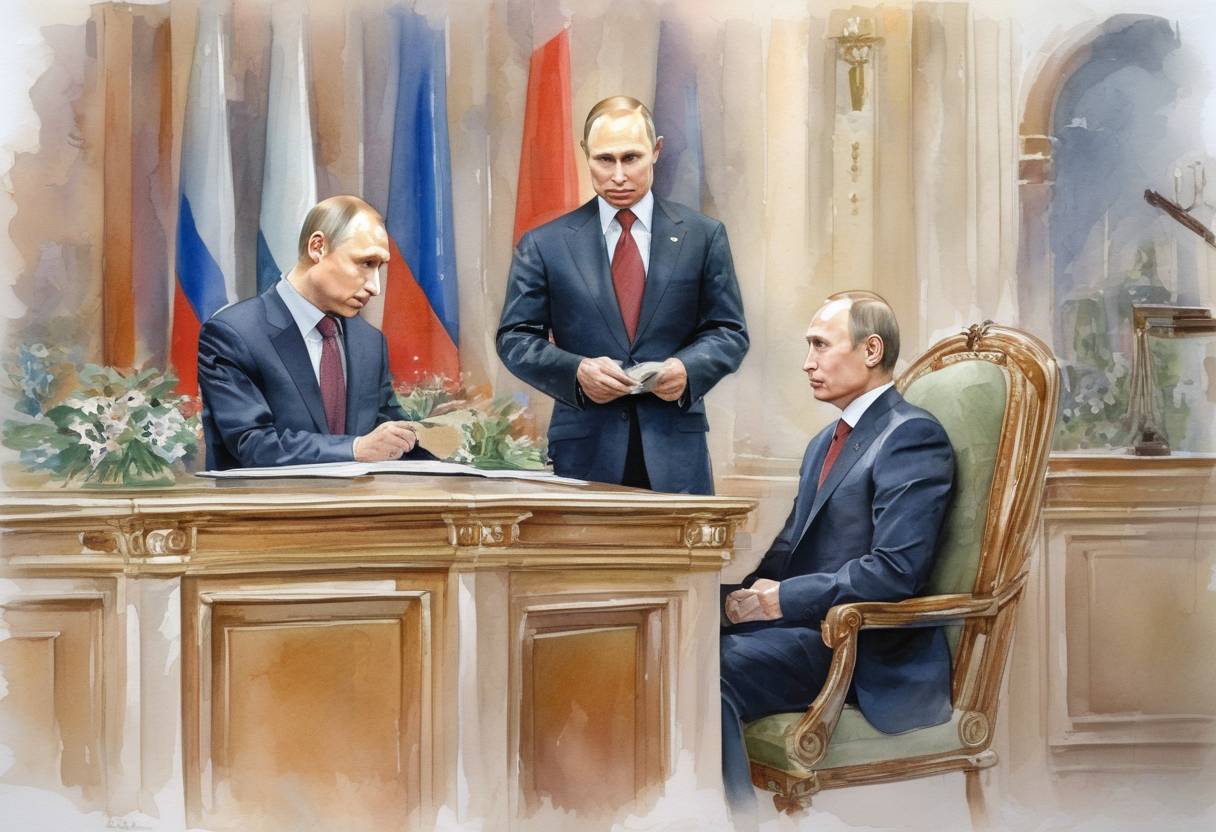
On May 7, 2000, Vladimir Putin was inaugurated as the President of Russia, marking the beginning of his first term in office. This event was a significant moment in Russian history, as it signaled a new era of leadership following the tumultuous years of the 1990s.
Background: Vladimir Putin, a former KGB officer, had risen rapidly through the political ranks in Russia. He was appointed Prime Minister by then-President Boris Yeltsin in August 1999.
Yeltsin’s Resignation: On December 31, 1999, Boris Yeltsin unexpectedly resigned, making Putin the Acting President. This move was seen as a strategic decision to ensure a smooth transition of power.
Presidential Election: Putin’s popularity surged due to his strong stance on the Second Chechen War and his promise to restore stability in Russia. He won the presidential election held on March 26, 2000, securing 53% of the vote in the first round.
Location: The inauguration took place at the Grand Kremlin Palace in Moscow, a traditional venue for such significant state events.
Ceremony Details: The ceremony was attended by numerous Russian dignitaries and foreign guests. Putin took the presidential oath, pledging to uphold the Russian Constitution and protect the rights and freedoms of its citizens.
Symbolism: The inauguration was marked by a sense of optimism and hope for a more stable and prosperous Russia. It was also seen as a moment of continuity, as Putin promised to build on Yeltsin’s reforms while addressing the challenges facing the nation.
Domestic Policy: Putin’s first term focused on consolidating power, stabilizing the Russian economy, and strengthening the central government’s authority. He implemented reforms aimed at economic recovery and reducing the influence of oligarchs.
Foreign Policy: Internationally, Putin sought to reassert Russia’s influence on the global stage, balancing relations with the West while maintaining strong ties with former Soviet states.
Legacy: Putin’s first term laid the groundwork for his long tenure in Russian politics. His leadership style, characterized by centralization of power and assertive foreign policy, has had a lasting impact on Russia’s political landscape.
Vladimir Putin’s inauguration as President of Russia on May 7, 2000, was a pivotal moment that set the tone for his future leadership and the direction of the country in the 21st century.
Source: www.britannica.com