The Consecration of the Hagia Sophia: December 27, 537
537 · Constantinople, Byzantine Empire
The Hagia Sophia in Constantinople is consecrated as a cathedral by Emperor Justinian I.
December 31, 0535
The Byzantine general Belisarius completed the conquest of Sicily, marking a significant step in Emperor Justinian I's campaign to reconquer the Western Roman Empire territories.
Sicily, Byzantine Empire | Byzantine Empire
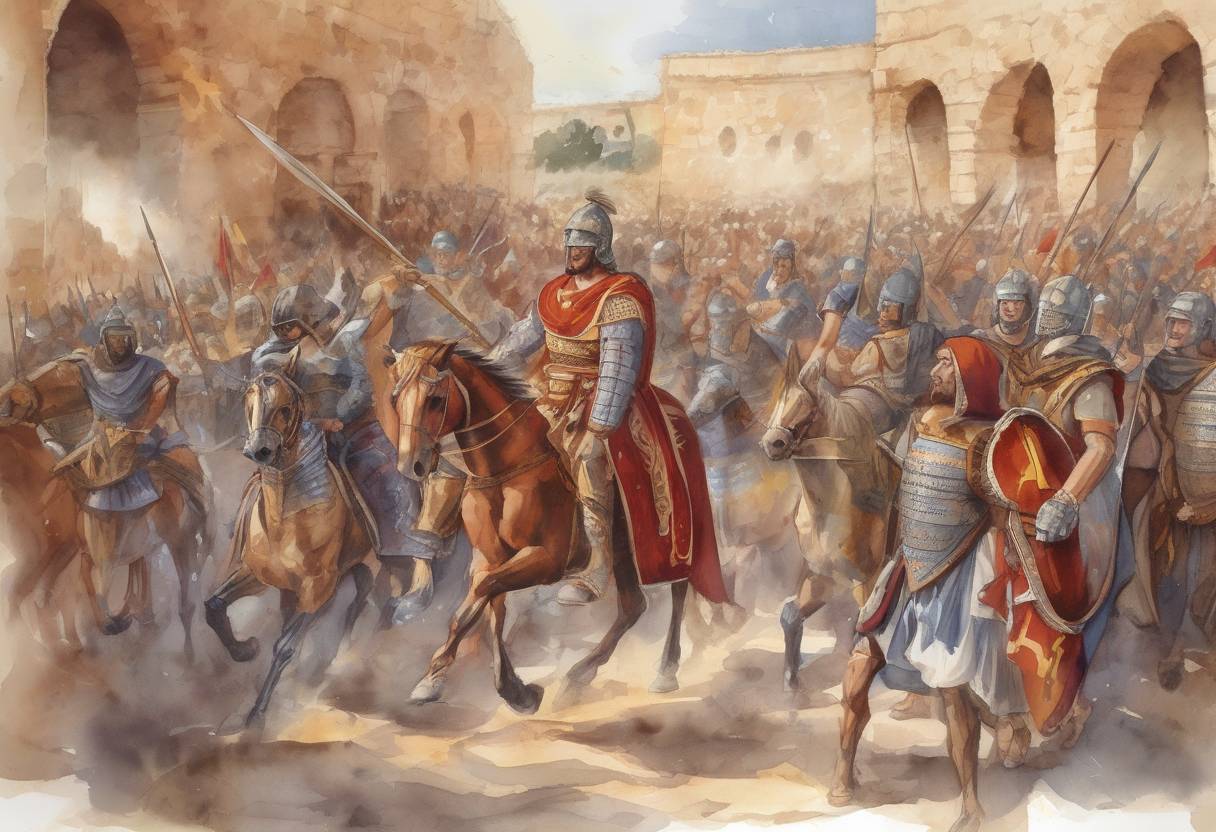
On December 31, 535, the Byzantine general Belisarius completed the conquest of Sicily, marking a pivotal moment in Emperor Justinian I’s ambitious campaign to reconquer the territories of the Western Roman Empire. This event was part of the larger Gothic War (535–554), which aimed to restore Roman control over the Italian Peninsula and other former Western Roman territories.
Emperor Justinian I: Ascending to the throne in 527, Justinian I was determined to restore the Roman Empire to its former glory. His reign was marked by extensive military campaigns, legal reforms, and architectural achievements, including the construction of the Hagia Sophia.
The Ostrogothic Kingdom: By the early 6th century, the Ostrogoths controlled much of Italy, including Sicily. The kingdom was established after the fall of the Western Roman Empire in 476 and was ruled by Theodoric the Great and his successors.
Strategic Importance of Sicily: Sicily was a crucial strategic location in the Mediterranean, serving as a bridge between the Eastern and Western parts of the former Roman Empire. Its conquest was essential for securing supply lines and establishing a base for further operations in Italy.
Belisarius’s Campaign: Belisarius, one of Justinian’s most talented generals, was tasked with leading the campaign against the Ostrogoths. Known for his strategic acumen and ability to inspire his troops, Belisarius had previously achieved success in the Vandalic War in North Africa.
Initial Invasion: In 535, Belisarius launched his invasion of Sicily, landing with a relatively small force. He capitalized on the element of surprise and the internal divisions within the Ostrogothic leadership.
Siege of Palermo: The key battle for Sicily was the siege of Palermo, the island’s main stronghold. Belisarius’s forces successfully captured the city, effectively securing control over Sicily by the end of the year.
Foundation for Further Conquests: The conquest of Sicily provided a critical foothold for the Byzantine Empire in the West. It paved the way for subsequent campaigns on the Italian mainland, including the capture of Naples and Rome.
Impact on the Ostrogoths: The loss of Sicily weakened the Ostrogothic Kingdom, contributing to internal strife and diminishing their ability to resist Byzantine advances.
Legacy of Belisarius: The successful campaign further cemented Belisarius’s reputation as one of the greatest military commanders of his time. His achievements were instrumental in Justinian’s efforts to restore Roman territories.
Long-term Consequences: Although Justinian’s reconquests temporarily restored parts of the Western Roman Empire, they strained the Byzantine Empire’s resources and contributed to its vulnerability to future invasions, particularly by the Lombards and later the Arabs.
The conquest of Sicily by Belisarius was a significant milestone in the Byzantine Empire’s military history, reflecting the ambition and complexity of Justinian I’s reign. It demonstrated the empire’s capacity for military innovation and strategic planning, even as it foreshadowed the challenges of maintaining such expansive territories.
Source: en.wikipedia.org