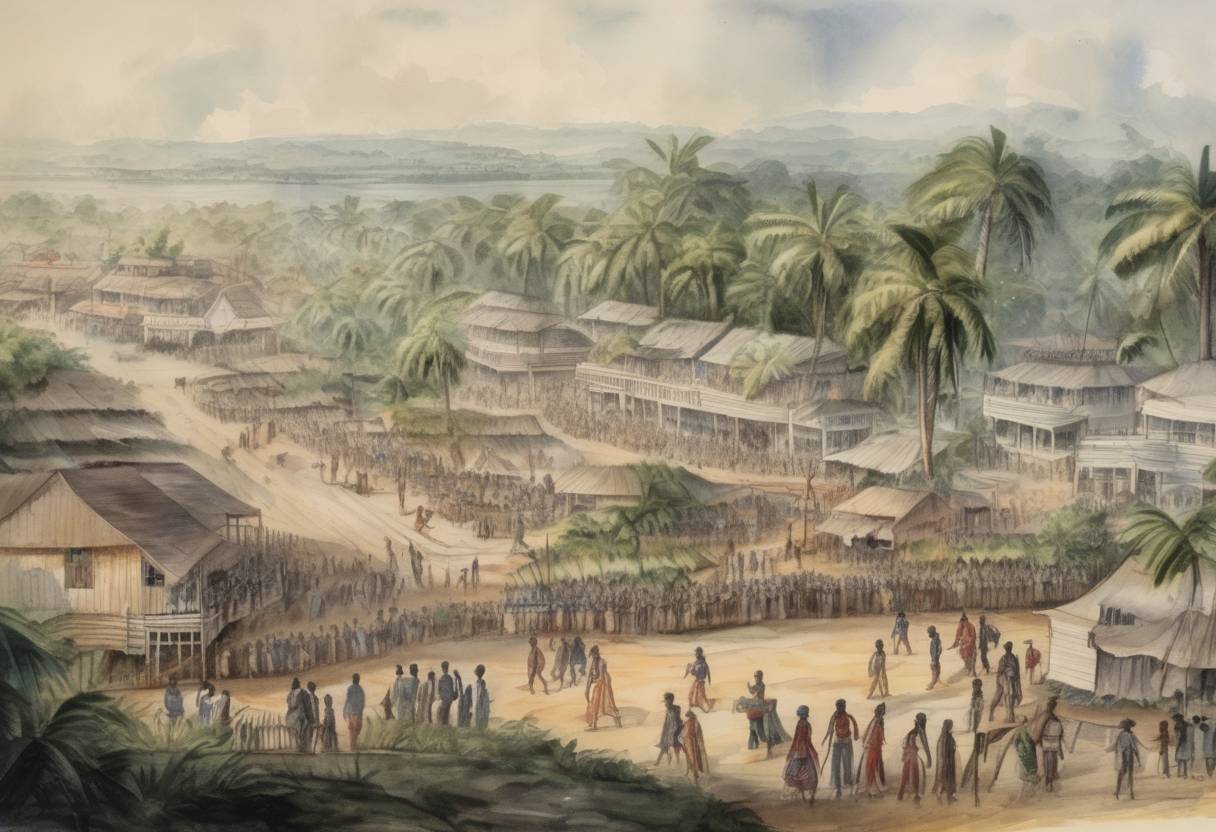
Liberia’s Declaration of Independence: July 26, 1847
On July 26, 1847, Liberia declared its independence from the American Colonization Society, marking a significant moment in African and world history as it became the first African republic to proclaim independence. This event was the culmination of a complex interplay of social, political, and economic factors that had been developing over several decades.
Historical Context
The American Colonization Society (ACS)
- Formation: The American Colonization Society was founded in 1816 by a group of prominent Americans, including politicians and religious leaders, with the aim of resettling free African Americans in Africa.
- Motivations: The motivations behind the ACS were varied. Some members believed in providing African Americans with opportunities for self-determination, while others saw colonization as a means to reduce the number of free Blacks in the United States, which they perceived as a social problem.
Establishment of Liberia
- Early Settlements: The first group of settlers, consisting of free African Americans, arrived on the West African coast in 1822. They established a settlement at Cape Mesurado, which later became Monrovia, named after U.S. President James Monroe.
- Expansion: Over the following years, more settlers arrived, and the colony expanded, facing challenges such as resistance from indigenous groups, disease, and logistical difficulties.
Declaration of Independence
- Constitutional Convention: In 1847, a constitutional convention was held in Monrovia. The delegates drafted a constitution modeled after that of the United States, emphasizing democratic governance and individual rights.
- Proclamation: On July 26, 1847, the delegates declared Liberia an independent republic. Joseph Jenkins Roberts, a prominent settler and leader, became the first president of Liberia.
Significance and Aftermath
- First African Republic: Liberia’s independence was a landmark event as it was the first African nation to gain independence during a period when the continent was largely under European colonial rule.
- International Recognition: Initially, Liberia struggled to gain recognition from major world powers. The United Kingdom recognized Liberia in 1848, but the United States did not extend formal recognition until 1862, during the American Civil War.
- Challenges: Post-independence, Liberia faced numerous challenges, including economic difficulties, political instability, and tensions between the Americo-Liberian settlers and indigenous populations.
Broader Historical Impact
Liberia’s independence set a precedent for future African nations seeking self-determination and independence from colonial rule. It also highlighted the complexities of nation-building in a diverse and multi-ethnic context. Despite its challenges, Liberia’s establishment as a republic was a significant step in the broader narrative of African independence movements.
In conclusion, Liberia’s declaration of independence on July 26, 1847, was a pivotal moment in history, symbolizing both the aspirations and the struggles of a new nation striving for self-governance and identity amidst a world dominated by colonial powers.