The Trial of Guy Fawkes and the Gunpowder Plot Conspirators
1606 · London, England
The trial of Guy Fawkes and other conspirators involved in the Gunpowder Plot begins in London.
January 31, 1606
Guy Fawkes is executed for his role in the Gunpowder Plot, an attempt to blow up the English Parliament and assassinate King James I.
London, England | English Government
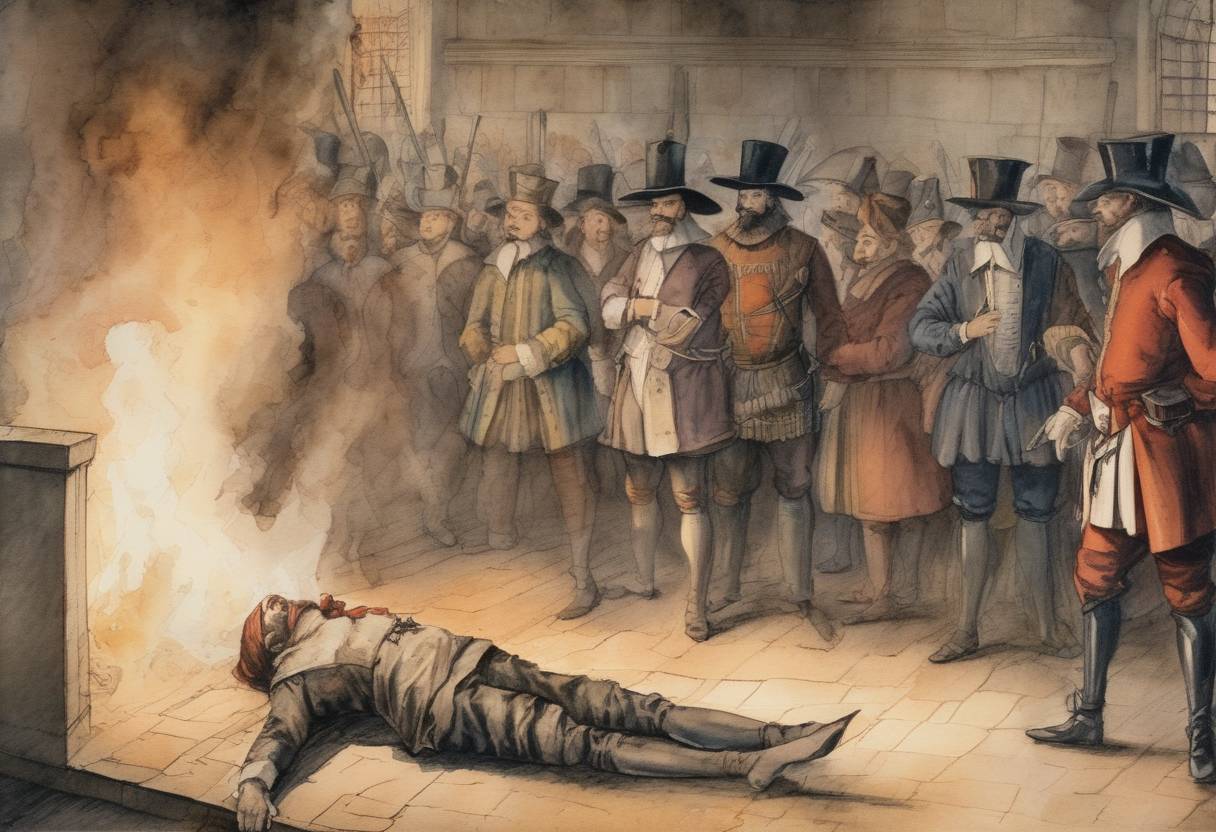
On January 31, 1606, Guy Fawkes was executed for his involvement in the Gunpowder Plot, a failed attempt to assassinate King James I of England and blow up the House of Lords. This event is a significant moment in English history, reflecting the intense religious and political tensions of the time.
The Gunpowder Plot was conceived by a group of English Catholics who were disillusioned with King James I’s failure to grant greater religious tolerance to Catholics. The plot aimed to eliminate the Protestant leadership of England by destroying the Parliament building during its State Opening on November 5, 1605.
The conspirators leased a cellar beneath the House of Lords and filled it with 36 barrels of gunpowder. However, the plot was foiled when an anonymous letter warning a Catholic peer to avoid the State Opening led to a search of the premises. Fawkes was discovered guarding the explosives and arrested.
Following his arrest, Fawkes was tortured and eventually confessed, revealing the identities of his co-conspirators. He and the other plotters were tried and found guilty of high treason. On January 31, 1606, Fawkes was executed by hanging, drawing, and quartering—a common punishment for treason at the time.
The failure of the Gunpowder Plot had several significant consequences:
The execution of Guy Fawkes and the thwarting of the Gunpowder Plot remain pivotal in understanding the religious and political dynamics of early 17th-century England.
Source: en.wikipedia.org