The Battle of Stilo: Otto II's Campaign in Southern Italy
982 · Crotone, Italy
Otto II, Holy Roman Emperor, defeats an Arab force near Crotone in Southern Italy, marking a significant moment in his campaign to extend influence into Italy.
August 10, 0955
The Battle of Lechfeld took place, where Otto I, Holy Roman Emperor, decisively defeated the Magyar forces, ending their incursions into Central Europe and solidifying his power.
Lechfeld, Germany | Holy Roman Empire
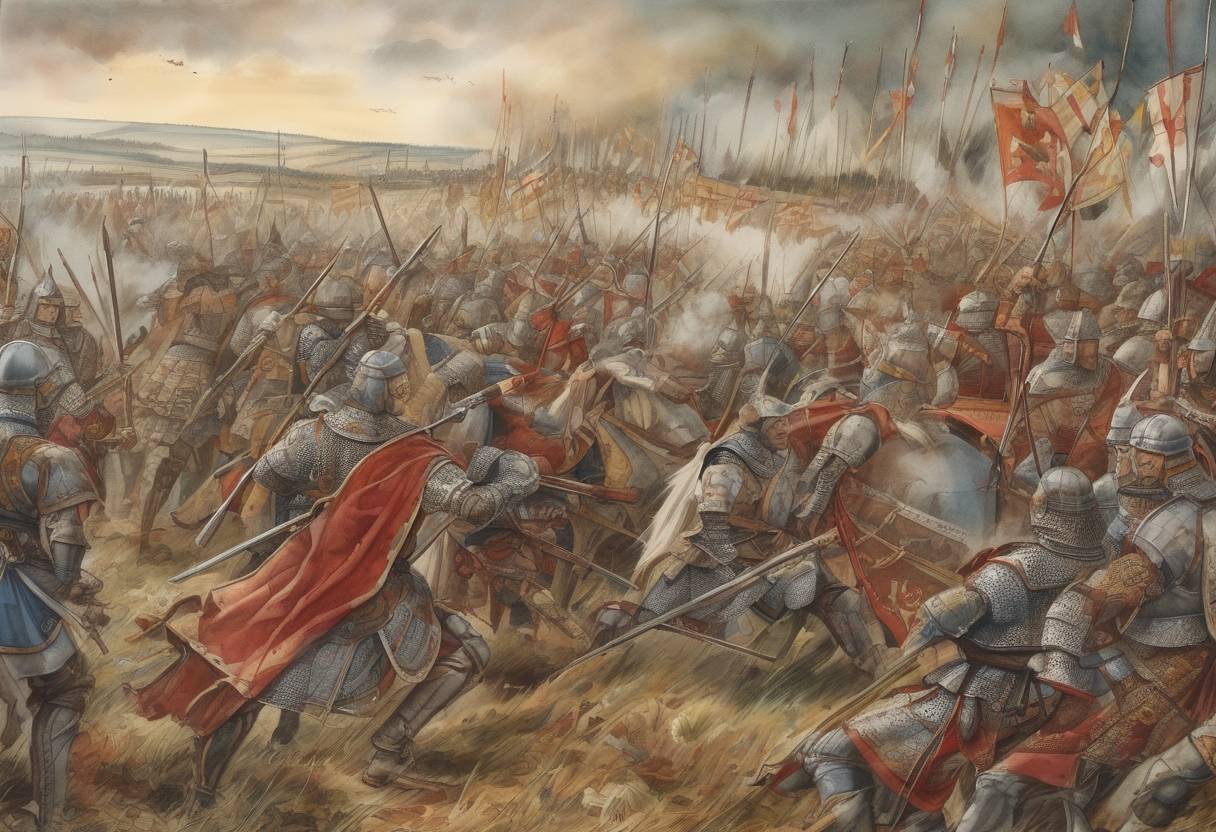
The Battle of Lechfeld, fought on August 10, 955, was a pivotal conflict in European history, marking a decisive victory for Otto I, the Holy Roman Emperor, over the Magyar forces. This battle effectively ended the Magyar incursions into Central Europe and solidified Otto’s power, laying the groundwork for the Holy Roman Empire’s future stability and expansion.
Magyar Incursions: The Magyars, a nomadic people from the Eurasian steppes, had been conducting raids across Central Europe since the late 9th century. Their swift cavalry tactics allowed them to penetrate deep into territories, including modern-day Germany, France, and Italy, causing widespread devastation.
Otto I’s Rise: Otto I, also known as Otto the Great, became King of East Francia in 936. He sought to consolidate his power and stabilize his realm, which was fragmented and threatened by external invasions, including those by the Magyars.
Location: The battle took place near Augsburg, in the Lechfeld plain, a strategic location that had been a frequent target of Magyar raids.
Forces Involved: Otto I commanded a coalition of forces from various German duchies, including Saxons, Franconians, Swabians, and Bavarians. The Magyar forces, known for their skilled horse archers, were led by Bulcsú, a prominent chieftain.
Tactics and Outcome: Otto’s forces utilized a combination of heavy cavalry and infantry to counter the Magyar’s mobility. The battle unfolded over several days, with Otto’s forces ultimately encircling and defeating the Magyars. The victory was decisive, with many Magyar leaders captured or killed, including Bulcsú.
End of Magyar Raids: The defeat at Lechfeld marked the end of major Magyar incursions into Central Europe. Subsequently, the Magyars settled in the Carpathian Basin, where they began to establish the foundations of the Kingdom of Hungary.
Consolidation of Power: Otto’s victory at Lechfeld significantly enhanced his prestige and authority. It reinforced his position as a unifying figure among the Germanic tribes and paved the way for his coronation as Holy Roman Emperor in 962.
Legacy: The battle is often seen as a turning point in European history, symbolizing the shift from the fragmented political landscape of the early Middle Ages to the more centralized and organized structures that characterized the High Middle Ages.
In summary, the Battle of Lechfeld was not just a military triumph for Otto I but also a crucial event that shaped the political and cultural trajectory of Central Europe. It underscored the importance of unity and strategic military leadership in the face of external threats, setting a precedent for future European conflicts.
Source: en.wikipedia.org