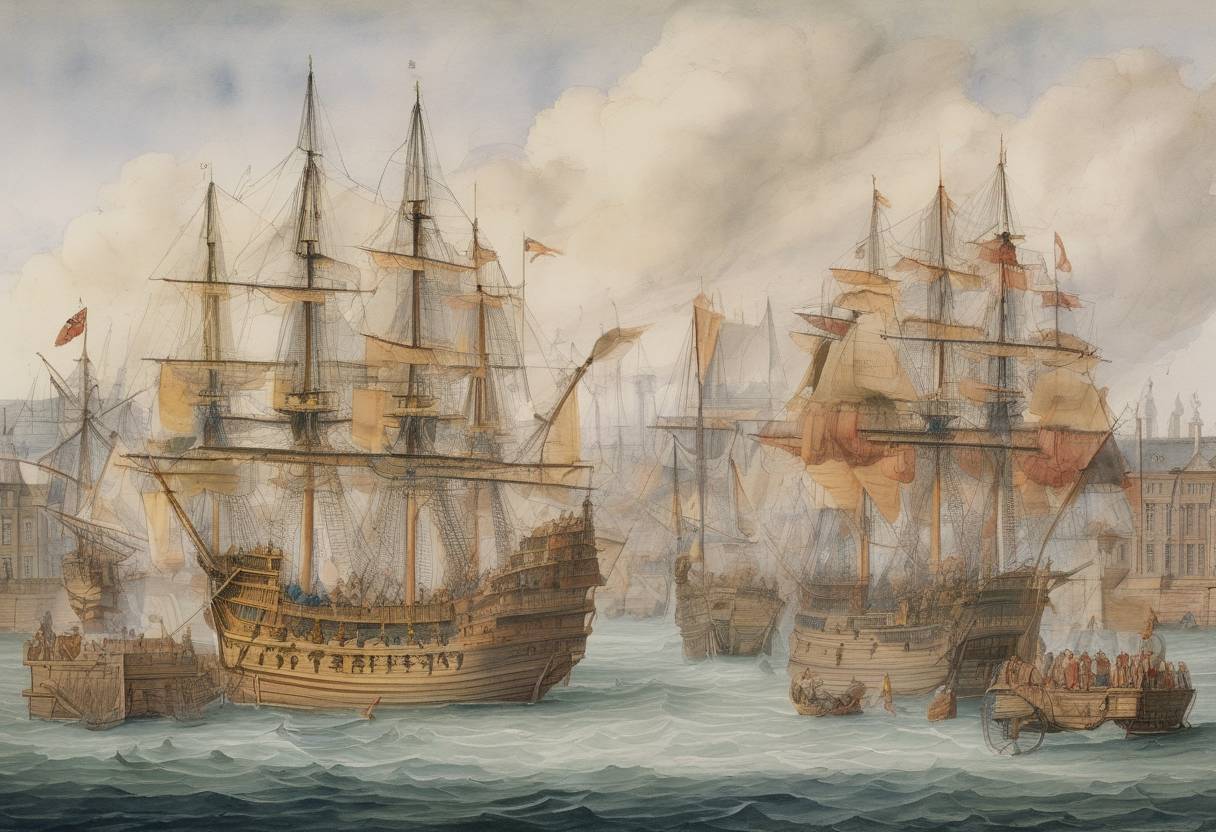
The Charter of the Virginia Company of London: April 10, 1606
On April 10, 1606, King James I of England granted a charter to the Virginia Company of London, marking a pivotal moment in the history of English colonization in North America. This charter authorized the company to establish colonies along the eastern coast of North America, a region that would come to be known as Virginia, named in honor of Queen Elizabeth I, the “Virgin Queen.”
Context and Background
The early 17th century was a period of intense competition among European powers for overseas territories. England, eager to expand its influence and wealth, sought to establish a permanent presence in the New World. The Virginia Company of London, a joint-stock company, was formed by a group of investors who aimed to profit from the resources and trade opportunities in North America.
Key Provisions of the Charter
The charter granted by King James I included several important provisions:
Territorial Rights: The Virginia Company was given the right to establish settlements between the 34th and 41st parallels, which covered a vast area along the Atlantic coast.
Governance: The charter outlined a governance structure for the colonies, including a council in England to oversee the company’s operations and a local council in the colonies to manage day-to-day affairs.
Economic Incentives: Investors and settlers were promised a share of the profits from the venture, with the hope of discovering gold, silver, and other valuable resources.
Religious Mission: The charter emphasized the spread of Christianity as one of the colony’s objectives, reflecting the era’s intertwining of religious and imperial ambitions.
Establishment of Jamestown
Following the charter, the Virginia Company dispatched an expedition that led to the establishment of Jamestown in 1607. This settlement became the first permanent English colony in North America. Despite facing numerous challenges, including hostile relations with Indigenous peoples, disease, and food shortages, Jamestown laid the groundwork for future English colonization efforts.
Broader Historical Significance
The charter and the subsequent establishment of Jamestown had far-reaching consequences:
Colonial Expansion: It set a precedent for the establishment of other English colonies in North America, contributing to the eventual formation of the United States.
Economic Impact: The introduction of tobacco cultivation in Virginia became a significant economic driver, influencing the colony’s development and labor practices, including the use of indentured servants and enslaved Africans.
Cultural Exchange and Conflict: The arrival of English settlers initiated complex interactions with Indigenous peoples, leading to both cultural exchanges and conflicts that would shape the region’s history.
In conclusion, the Charter of the Virginia Company of London was a foundational document in the history of English colonization, setting in motion events that would have lasting impacts on the development of North America.