Henry IV Crowned King of France
1594 · Chartres, France
Henry IV is crowned King of France at the Cathedral of Chartres.
October 15, 1285
Philip IV was crowned King of France, marking the beginning of a significant reign known for his conflicts with the papacy and his efforts to consolidate power.
Reims, France | Kingdom of France
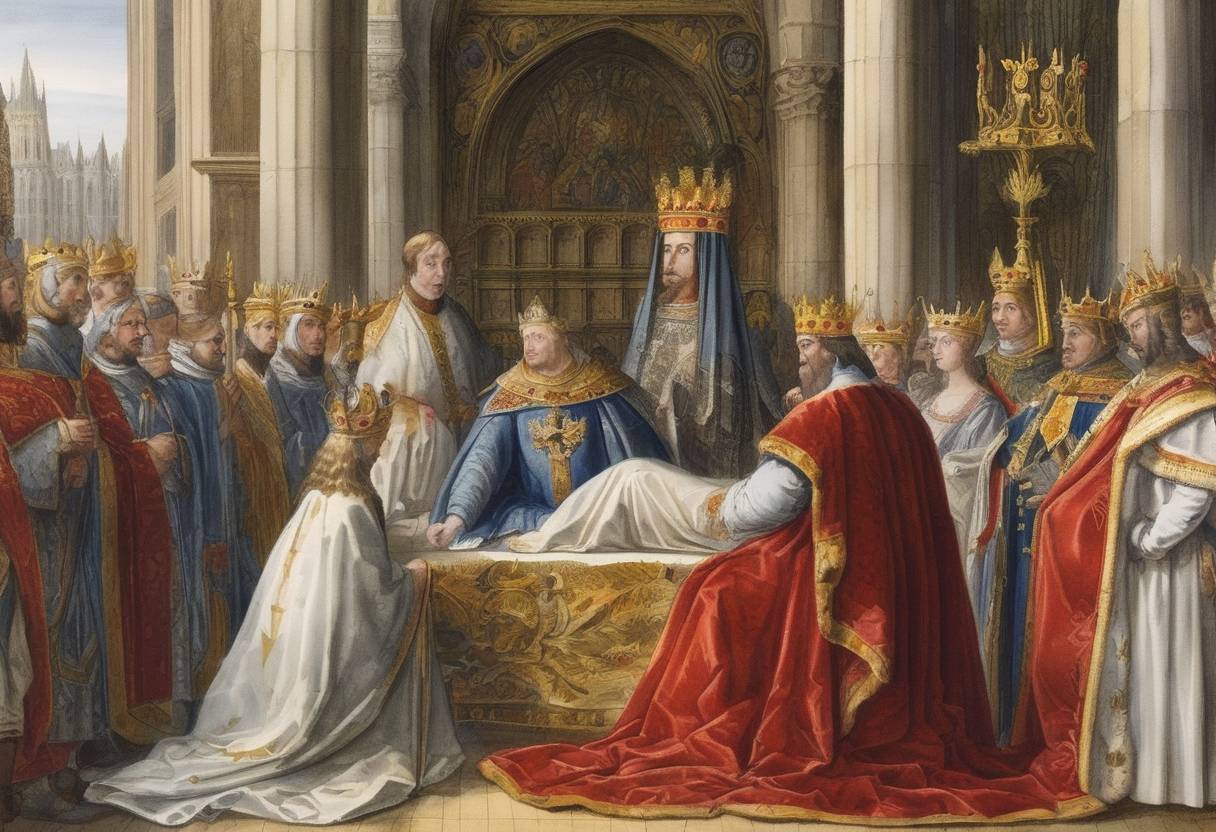
On October 15, 1285, Philip IV, also known as Philip the Fair, was crowned King of France, marking the commencement of a reign that would have profound implications for both the French monarchy and its relationship with the Catholic Church. His coronation took place during an era of evolving power dynamics in Europe, setting the stage for significant political and religious conflicts.
Philip IV ascended to the French throne following the death of his father, Philip III, who succumbed to illness during a military campaign in October 1285. Philip IV was born in 1268 and became king at the age of 17. His reign was characterized by attempts to strengthen the monarchy’s authority and consolidate territorial control in France.
One of the defining aspects of Philip IV’s reign was his contentious relationship with the Papacy. His efforts to extend royal influence often brought him into conflict with Pope Boniface VIII. The most notable clash occurred over Philip’s taxation of the French clergy to fund his military campaigns, which prompted Boniface to issue clerical exemptions from civil taxation, leading to a power struggle.
Philip’s defiance against the Vatican reached its peak in 1303 with the events surrounding the “Outrage of Anagni,” where Philip’s forces briefly captured Pope Boniface VIII, contributing to the pope’s subsequent death. This episode highlighted the tension between secular and ecclesiastical powers and prefigured the Avignon Papacy period.
Domestically, Philip IV sought to increase his control over France by restructuring its financial and judicial systems. He fostered economic development through trade while also instituting monetary reforms. Additionally, Philip IV convened the Estates-General in 1302, a significant step toward a more centralized governmental system, allowing him to gain support from a broad range of social classes against the papal authority.
Philip IV’s reign laid the groundwork for the future of the French monarchy. His policies and conflicts with the church had long-lasting effects, influencing the nature of French governance and its relationship with religious authority. By the end of his reign in 1314, Philip IV had notably expanded French territories and reinforced royal power, though his methods often antagonized traditional structures of ecclesiastical and noble power.
Overall, Philip IV’s reign is remembered as a pivotal period in French history, instrumental in shaping the medieval landscape and the evolution of the French nation-state.
Source: en.wikipedia.org