The Spanish Armada Sets Sail - May 28, 1588
1588 · Lisbon, Portugal
The Spanish Armada, a fleet of 130 ships, sets sail from Lisbon, Portugal, under the command of the Duke of Medina Sidonia, with the intention of invading England.
August 28, 1588
The Spanish Armada anchored in the Seine estuary after being chased from England by the English fleet, following the failed invasion attempt.
Seine Estuary, France | Spanish Navy
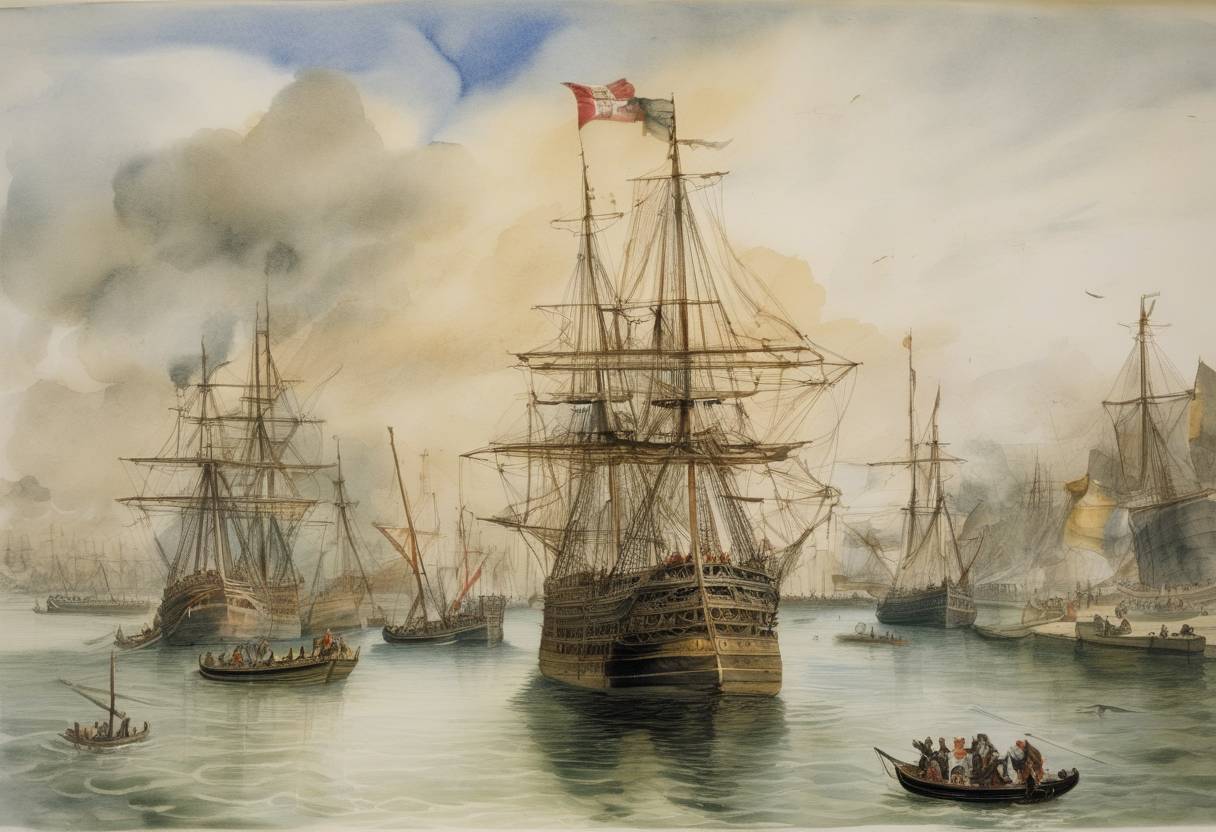
In the late summer of 1588, one of the pivotal moments in naval warfare reached its conclusion as the Spanish Armada anchored in the Seine estuary on August 28. This event marked the aftermath of Spain’s ambitious but ill-fated attempt to invade England, a significant episode in the protracted Anglo-Spanish War (1585–1604).
The Spanish Armada, consisting of 130 ships and commanded by the Duke of Medina Sidonia, had set sail earlier that year with the intent of overthrowing Queen Elizabeth I of England and re-establishing Catholic rule. Their mission was to escort an army from Flanders, commanded by the Duke of Parma, across the English Channel to invade England. However, the Armada faced several setbacks, including poor weather and strategic miscalculations.
One crucial battle occurred from July 29 to August 8, 1588, during which the English fleet, utilizing quicker and more maneuverable ships under the command of Charles Howard and Sir Francis Drake, harassed the Spanish ships. The fire-ship tactic used by the English off the coast of Gravelines was particularly decisive in breaking the Spanish formation, forcing the Armada into retreat.
Following the defeat at Gravelines, the Armada attempted to return to Spain by circumnavigating the British Isles, a route fraught with dangerous weather. The battered fleet, short on supplies and suffering casualties from skirmishes and severe storms, managed to reach the safety of the French estuary of the Seine.
The anchoring in the Seine Estuary symbolized the failure of Spain’s naval and military objectives against England. The armada’s defeat marked a turning point in naval dominance, bolstering England’s maritime prowess and weakening Spanish sea power. It emboldened Protestant forces across Europe, altering the balance of power significantly.
Moreover, the consequences reverberated deeply within Spain, where the defeat caused significant financial strain and questioned King Philip II’s strategy and leadership. The event deepened the resolve of the English crown and its allies, ensuring the continuation of hostilities until the eventual signing of the Treaty of London in 1604, which concluded this prolonged conflict.
The Spanish Armada’s presence in the Seine estuary on August 28, 1588, represents a key moment in early modern European history. It highlights the dramatic shifts in military and political fortunes that characterized the late 16th century, marking the rise of England as a formidable maritime power and prompting shifts in European alliances that shaped the future of the continent.