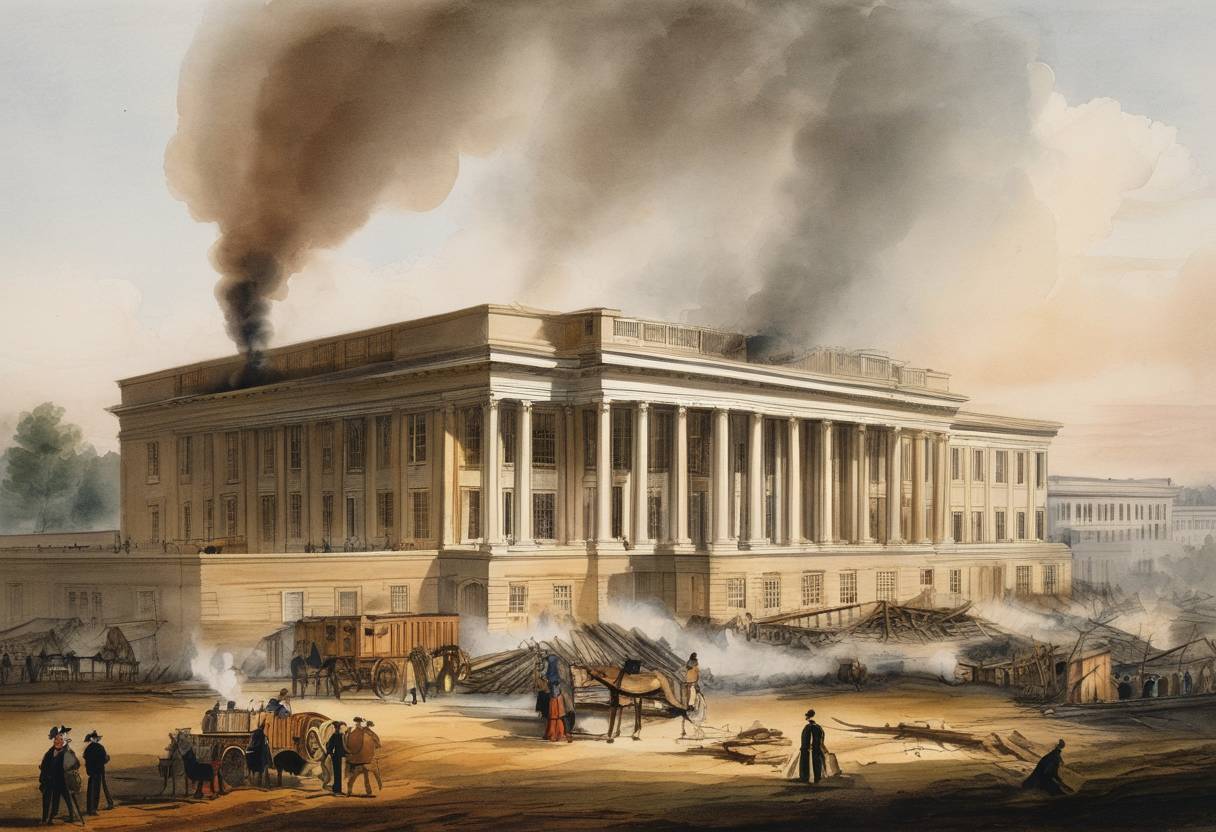
The U.S. Patent Office Fire of December 15, 1836
On December 15, 1836, a disastrous fire engulfed the United States Patent Office in Washington, D.C., leading to the destruction of more than 10,000 patent models and documents. This catastrophic event underscored significant deficiencies in the fireproofing of government buildings at the time, prompting a series of reforms in building standards and patent filing processes.
Historical Context
The U.S. Patent Office, established in 1790, was responsible for issuing patents and safeguarding the nation’s intellectual property. By 1836, the office had accumulated thousands of patents reflecting the burgeoning innovation of the early industrial era in America. Patent models, usually crafted from wood or other flammable materials, were required to accompany patent applications, showcasing the invention’s design.
The Fire and Its Aftermath
The fire broke out late at night on December 15, originating in the building’s attic. Firefighting efforts were hampered by inadequate water supplies and the presence of highly combustible materials within the building. Consequently, a vast collection of patents, models, and records dating back to the Patent Office’s inception were lost.
This disaster served as a pivotal moment in U.S. architectural and bureaucratic practices. Recognizing the need to better protect critical documents, Congress allocated funds to rebuild the Patent Office in a manner that incorporated fire-resistant materials—a radical departure at the time. The new structure, completed in the early 1840s, would be one of the first federal buildings designed with fireproofing as a priority.
Impact on Patent Procedures
In response to the fire, the Patent Office also reconsidered its procedures. The destruction of records necessitated a reconstruction of patent documentation, prompting a legislative overhaul of the patent system itself. Enacted on March 3, 1837, the new patent law allowed for the reissuance of lost patents and improved the organizational structure of the Patent Office—modernizing operations to prevent such catastrophic losses in the future.
Broader Significance
Beyond its immediate impact, the 1836 fire is often credited with accelerating the transition to more modern building codes and archival practices. This included advancements in document preservation and the implementation of better building safety standards, influencing the design of government infrastructure for generations.
Overall, while the fire was a significant setback for American inventors at the time, it spurred essential reforms that enhanced the resilience and functionality of both the Patent Office and other public institutions.