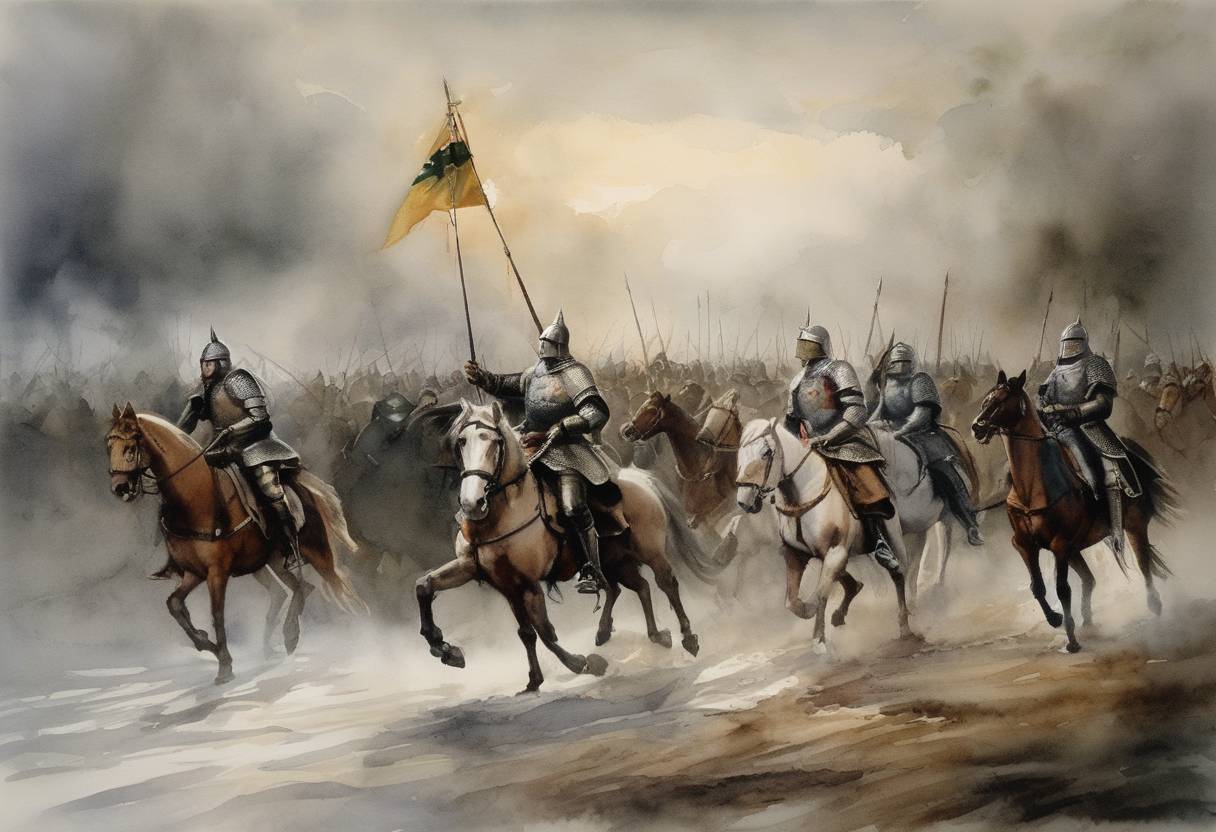
The Teutonic Knights’ Campaign Against Lithuania - March 9, 1291
On March 9, 1291, the Teutonic Knights, a Catholic military order founded during the Crusades, initiated a campaign against the Grand Duchy of Lithuania. This move marked a significant escalation in the ongoing conflict between the Christian military orders and the pagan Baltic tribes, part of the Northern Crusades aimed at converting the Baltic region to Christianity.
Context and Background
The Northern Crusades began in the late 12th century under the influence of the Pope and Christian Europe, aiming to spread Christianity to the still pagan regions along the Baltic Sea. The Teutonic Knights, originally based in the Holy Land, refocused their efforts on the Baltic after the fall of Acre in 1291, enhancing their mission to convert pagans and establish Christian rule in Eastern Europe.
Lithuania, at that time, remained one of the few pagan strongholds in Europe and offered significant resistance to Christianization efforts. The warring climate from previous decades set the stage for regular conflicts between the Teutonic Knights and the Grand Duchy of Lithuania.
Key Events Leading to the 1291 Campaign
- 1202: The establishment of the Livonian Brothers of the Sword, precursor to the intensified crusades in the Baltic region.
- 1226: The Golden Bull of Rimini granted the Teutonic Knights a mission in Prussia, setting them on the path to influence and territorial expansion.
- 1260-1274: The Prussian uprisings against the Teutonic Knights, highlighting the intense resistance faced by the order.
By 1291, the Teutonic Knights had consolidated power and sought to extend their influence into Lithuanian territories, with the ultimate objective of converting the populous to Christianity and fortifying their control.
The 1291 Campaign
The March 1291 campaign was part of a series of aggressive maneuvers by the Teutonic Knights into Lithuanian lands. The military operations were characterized by raids and tactical offensives aimed at weakening Lithuanian defenses and fortifications. This campaign saw the Knights confronting a resistant and resilient enemy, necessitating unparalleled military acumen and resources from both sides.
Aftermath and Historical Significance
Continued Conflict: The 1291 campaign did not yield a decisive victory for the Teutonic Knights, prompting continued hostilities between the parties. These engagements were foundational to future conflicts and treaties.
Fortified Alliances and Crusader Power: This period exemplified the growing power of the military orders and their role in shaping medieval Northern Europe, highlighting the complex interaction between indigenous cultures and incoming European powers.
Christianization and Cultural Change: Ultimately, while initially met with resistance, such campaigns paved the way for the eventual Christianization of Lithuania, formalized with the Grand Duchy’s conversion in 1387 under Grand Duke Jogaila when he became King of Poland.
This campaign and others like it underscore the relentless push of Christendom against paganism in Eastern Europe and form a rich tapestry of conflict and cultural shift during the medieval era.