Capture of Guam: June 21, 1898
1898 · Hagåtña, Guam
The United States captured Guam from Spain during the Spanish-American War, marking the beginning of American control over the island.
April 21, 1898
The United States Navy began a blockade of Cuban ports during the Spanish-American War.
Washington, D.C., United States | United States Navy
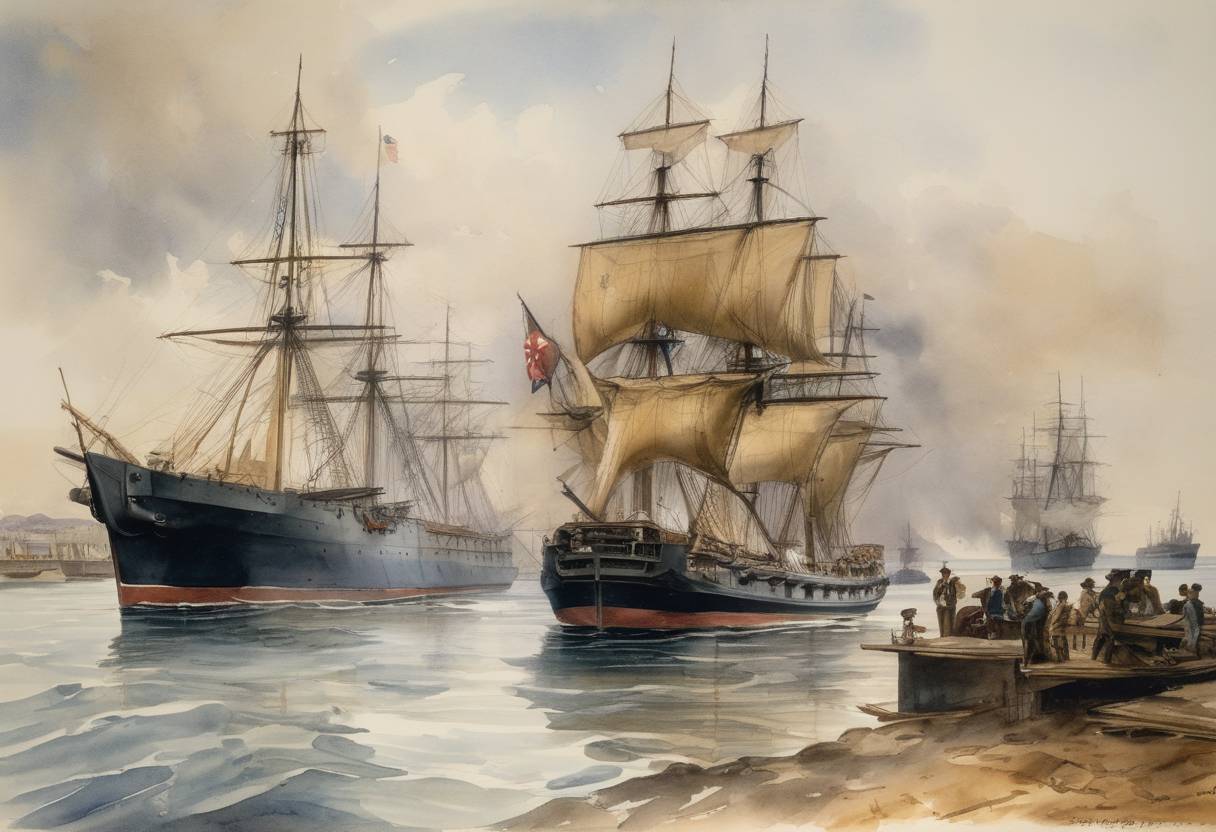
On April 21, 1898, the United States Navy commenced a blockade of Cuban ports, marking a pivotal start to hostilities in the Spanish-American War. This action was a direct consequence of escalating tensions between the United States and Spain, driven by political, economic, and humanitarian interests.
In the late 19th century, Cuba, then a Spanish colony, was embroiled in a struggle for independence. The harsh colonial policies of Spain garnered significant sympathy for the Cuban cause within the United States, fueled by sensationalist journalism known as “yellow journalism.” The situation deteriorated further following the mysterious explosion of the USS Maine in Havana Harbor on February 15, 1898, which killed over 260 American crew members. Although the exact cause remained disputed, the incident was widely blamed on Spain and exacerbated public demand for intervention.
The McKinley Administration faced mounting pressure to act, and diplomatic efforts to resolve the crisis failed. On April 20, 1898, President William McKinley signed a Joint Resolution of Congress, which demanded Spanish withdrawal from Cuba and authorized the use of force if necessary.
The blockade initiated on April 21 was a prelude to formal war declarations and served as a critical military strategy. The United States sought to cut off Spanish supply lines and isolate Cuban ports, thereby weakening Spanish forces on the island. The naval blockade targeted major ports including Havana, Cienfuegos, and Santiago de Cuba.
The task was carried out by the North Atlantic Squadron, which included an assemblage of battleships, cruisers, and other vessels. Rear Admiral William T. Sampson commanded the naval operations, effectively implementing the blockade to restrict Spanish naval and merchant vessels from accessing Cuban waters.
The blockade effectively marked the unofficial start of the Spanish-American War. The United States would formally declare war on Spain on April 25, but operations were already underway. The blockade achieved its strategic aims, applying pressure on Spanish forces while providing a platform for subsequent land invasions.
The blockade contributed significantly to the eventual U.S. victory in the war, which resulted in the Treaty of Paris on December 10, 1898. Spain relinquished its claim on Cuba, ceded Puerto Rico and Guam to the United States, and sold the Philippines to the U.S. for $20 million.
This chain of events highlighted the rise of the United States as an emerging world power and marked a significant expansion of its influence in the Caribbean and Pacific. The success of the blockade underscored the importance of naval superiority in modern warfare, setting a precedent for future military engagements.
Source: www.history.com