The United States Takes Over the Panama Canal Construction - May 4, 1904
1904 · Panama City, Panama
The United States took over the construction of the Panama Canal from the French, marking a significant step in its completion.
January 28, 1855
The Panama Railway, the first transcontinental railroad, connecting the Atlantic and Pacific Oceans, was completed.
Panama City, Panama | Panama Railway Company
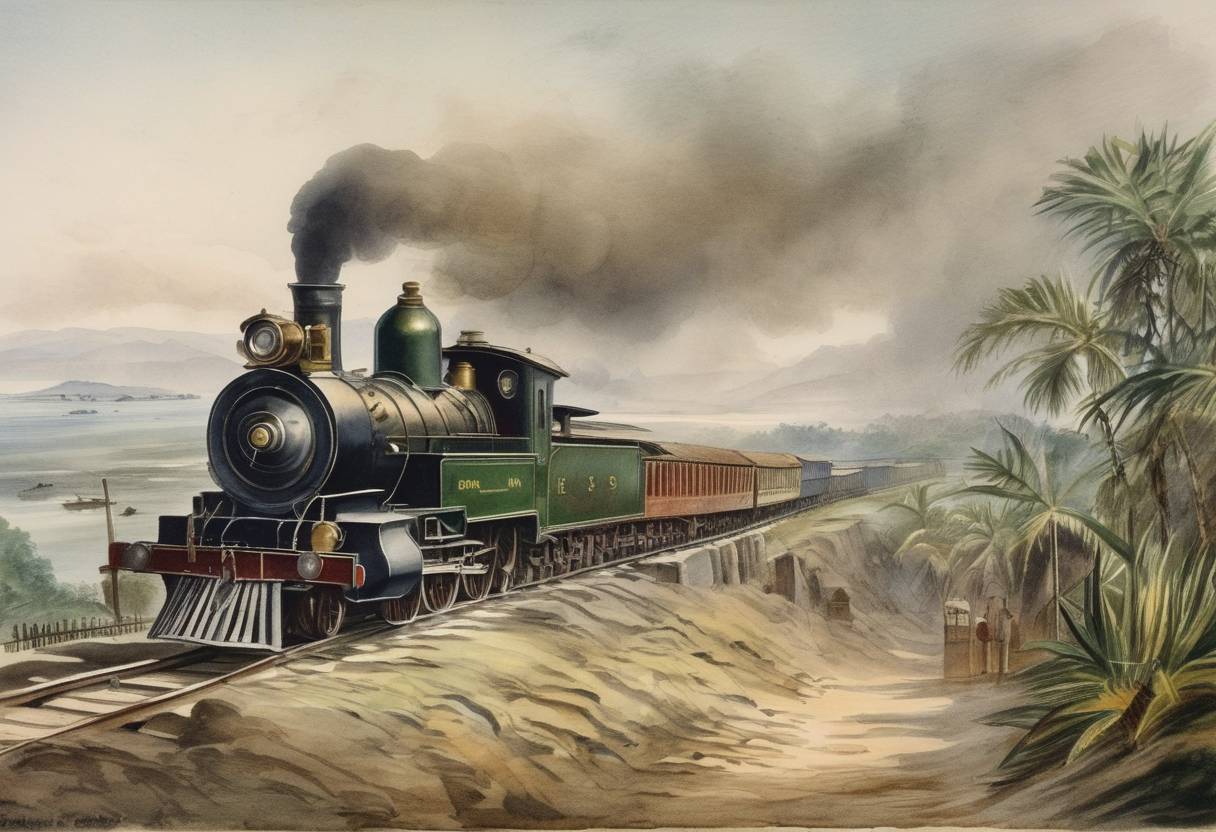
The Panama Railway, a pivotal engineering achievement of the 19th century, was completed on January 28, 1855. This remarkable project marked the first transcontinental railroad, connecting the Atlantic and Pacific Oceans across the Isthmus of Panama. Its construction was motivated by the need to provide a more efficient route for transportation across the Americas, particularly during the California Gold Rush, when the demand for quicker travel between the coasts surged.
The realization of a railway across the isthmus began with the signing of a contract with the Republic of New Granada (modern-day Colombia and Panama) in 1848. The aim was to establish a reliable route that circumvented the dangerous and lengthy journey around Cape Horn or through the jungles of Central America.
Construction was initiated by the Panama Railroad Company, spearheaded by entrepreneurs William H. Aspinwall, Henry Chauncey, and John L. Stephens. The project faced numerous challenges, including difficult terrain, tropical diseases such as malaria and yellow fever, and the logistical difficulties of transporting materials through dense jungle environments. Despite these obstacles, the workforce—comprising diverse labor from around the world, including immigrants from China, Europe, the Caribbean, and the United States—persisted through harsh conditions.
The Panama Railway had profound implications for international trade and travel. It drastically reduced the time required to transport goods between the eastern and western United States, supporting the growth and development of both coasts. The railway also facilitated increased political and economic interest in the region, paving the way for the future construction of the Panama Canal.
Over time, the railway would see numerous upgrades and modifications, maintaining its critical role until overshadowed by the canal in the early 20th century. Nonetheless, its completion on January 28, 1855, remains a landmark in transportation history, symbolizing human ingenuity and perseverance against formidable natural challenges.
Source: en.wikipedia.org