Winston Churchill's Resignation as Prime Minister
1955 · London, United Kingdom
Winston Churchill resigned as Prime Minister of the United Kingdom due to ill health, marking the end of his political career.
October 26, 1951
Winston Churchill became Prime Minister of the United Kingdom for the second time, after his Conservative Party won the general election.
London, United Kingdom | Conservative Party
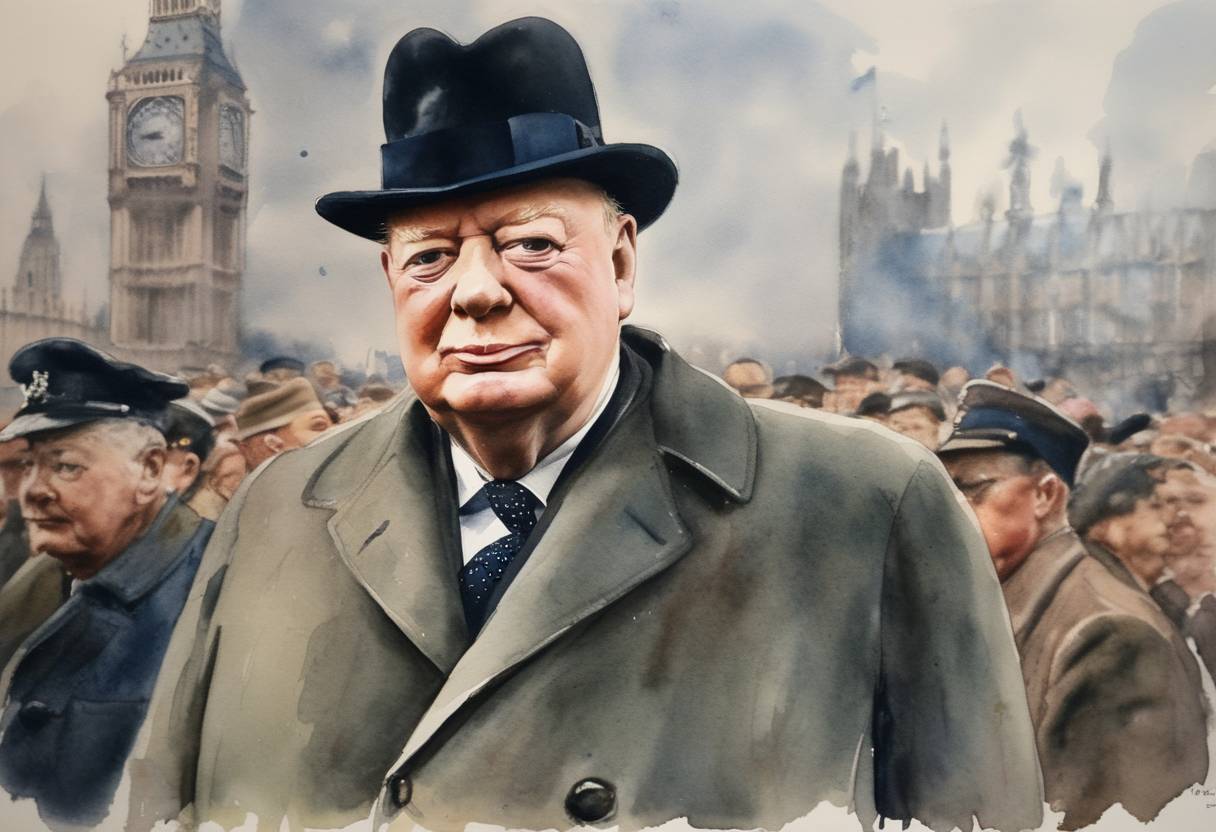
On October 26, 1951, Winston Churchill became Prime Minister of the United Kingdom for the second time following the victory of the Conservative Party in the general election. This electoral success marked a significant political comeback for Churchill and the Conservatives after six years out of power.
After World War II, the 1945 general election had resulted in a landslide victory for the Labour Party led by Clement Attlee, which implemented significant social reforms in the UK, including the establishment of the National Health Service and the nationalization of major industries. Despite these changes, by the early 1950s, public opinion began to shift due to various economic challenges, such as balance of payments issues and rationing, leading to growing support for the Conservatives.
The 1951 general election was characterized by Labour’s desire to obtain a fresh mandate and from Churchill’s perspective, a chance to regain leadership. Although the Labour Party won a larger share of the popular vote (48.8%) than the Conservatives (48%), the Conservatives won 321 seats against Labour’s 295 due to the electoral system’s first-past-the-post method. This outcome allowed Churchill to return as Prime Minister.
Churchill’s return to power was marked by a focus on economic stability and foreign policy. His administration worked towards inflation control, investment in housing, and maintaining Britain’s role on the international stage during the early years of the Cold War. Churchill also navigated the complex issues of the British Empire’s gradual decline, fostering relationships with the United States and managing tensions with the Soviet Union during this period.
Churchill’s premiership during these years was significant because it demonstrated his enduring influence in British politics. Though age and health were declining factors, Churchill’s leadership during this period was marked by his insistence on maintaining Britain’s global influence and his pursuit of peace in the nuclear age.
Churchill’s second term concluded in 1955 when he resigned in favor of his Foreign Secretary, Anthony Eden, citing health concerns. His impact, however, remained, leaving an indelible mark on both British and international affairs.
Source: www.britannica.com