Nat Turner: Trial and Execution on November 11, 1831
1831 · Jerusalem, United States
Nat Turner, leader of a slave rebellion in Virginia, was tried, convicted, and hanged, marking a pivotal moment in the history of American slavery and resistance.
November 21, 1831
Revolutionary and slave rebellion leader Nat Turner is hanged in Virginia.
Jerusalem, United States
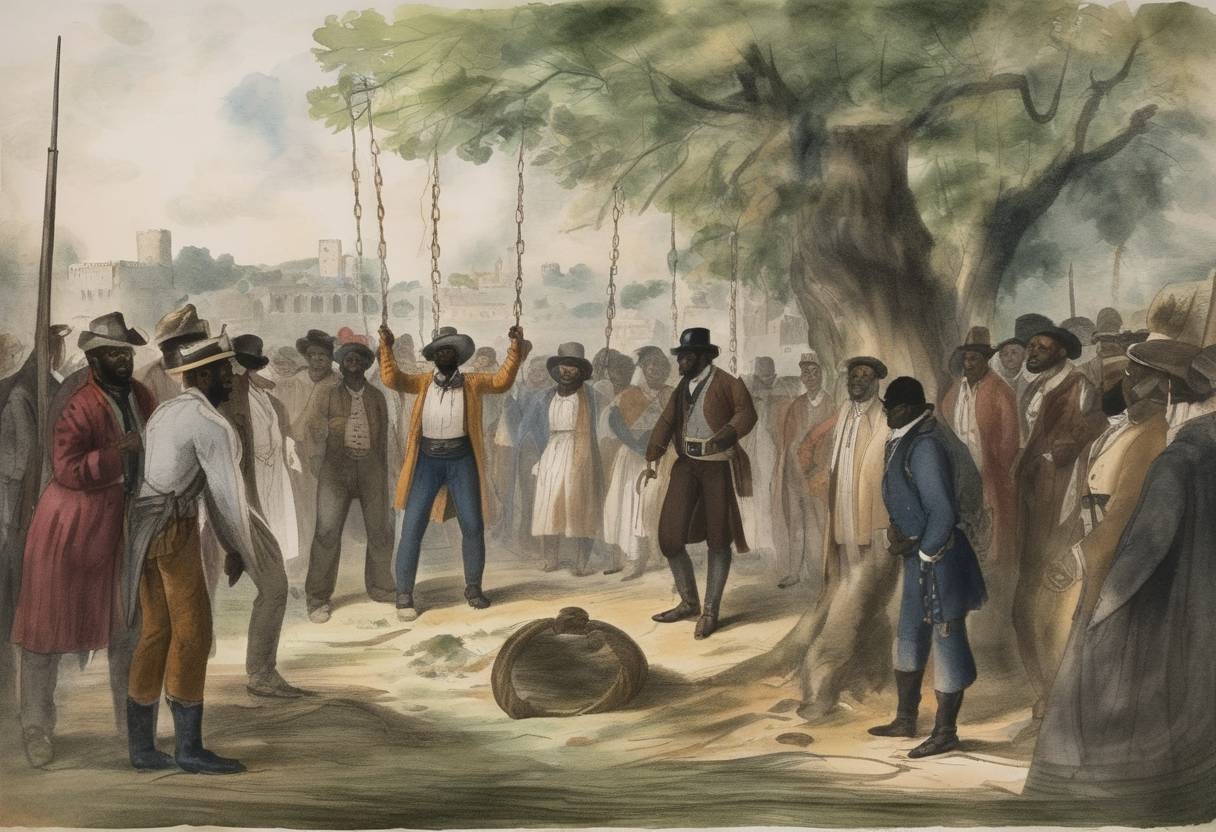
On November 21, 1831, Nat Turner, an enslaved African American preacher and leader of a significant slave rebellion, was executed by hanging in Jerusalem, Virginia. This event was a pivotal moment in American history and is emblematic of the struggle against the institution of slavery in the United States.
Nat Turner was born into slavery on October 2, 1800, in Southampton County, Virginia. Known for his intelligence and religious fervor, Turner became a preacher among the enslaved community. He was deeply troubled by the conditions of slavery and believed he was chosen by God to lead his people to freedom.
On August 21, 1831, Nat Turner led a rebellion that became the deadliest slave uprising in American history. Starting at the Travis plantation where Turner was enslaved, the revolt involved about 70 enslaved and free Black people who moved from plantation to plantation in Southampton County. They killed approximately 60 white men, women, and children in their quest for liberation. This revolt fueled fears throughout the Southern United States and led to widespread hysteria.
After a militia was called in to suppress the uprising, Turner evaded capture for nearly two months. He was apprehended on October 30, 1831. His trial was swift; he was found guilty of promoting slave rebellion on November 5, 1831, and sentenced to death.
Turner was executed on November 21, 1831. His execution did little to extinguish the fear among white Southerners after the rebellion. The immediate aftermath saw harsh reprisals against both free and enslaved Black people. New, restrictive laws were enacted across Southern states, tightening the already oppressive grip on African Americans by curbing civil rights, restricting education, and halting the movements of enslaved and free Blacks.
Turner’s rebellion and subsequent execution are significant in the annals of American history, highlighting the intense resistance against slavery and foreshadowing the abolitionist movements that would gain momentum in the decades to follow.
The rebellion and Turner’s legacy have sparked numerous discussions and debates about the ethics of freedom fights, the brutal conditions of slavery, and the lengths to which individuals have gone to secure their liberty. It remains a pivotal moment in the long and tumultuous history of slavery in the United States, serving as a stark reminder of the human cost of oppression and the enduring battle for freedom and equality.
Source: www.britannica.com