Itō Hirobumi Begins His Third Term as Prime Minister of Japan - January 12, 1898
1898 · Tokyo, Japan
Itō Hirobumi begins his third term as Prime Minister of Japan.
February 26, 1936
The February 26 Incident occurred in Japan, an attempted coup d'état by young officers of the Imperial Japanese Army.
Tokyo, Japan | Imperial Japanese Army
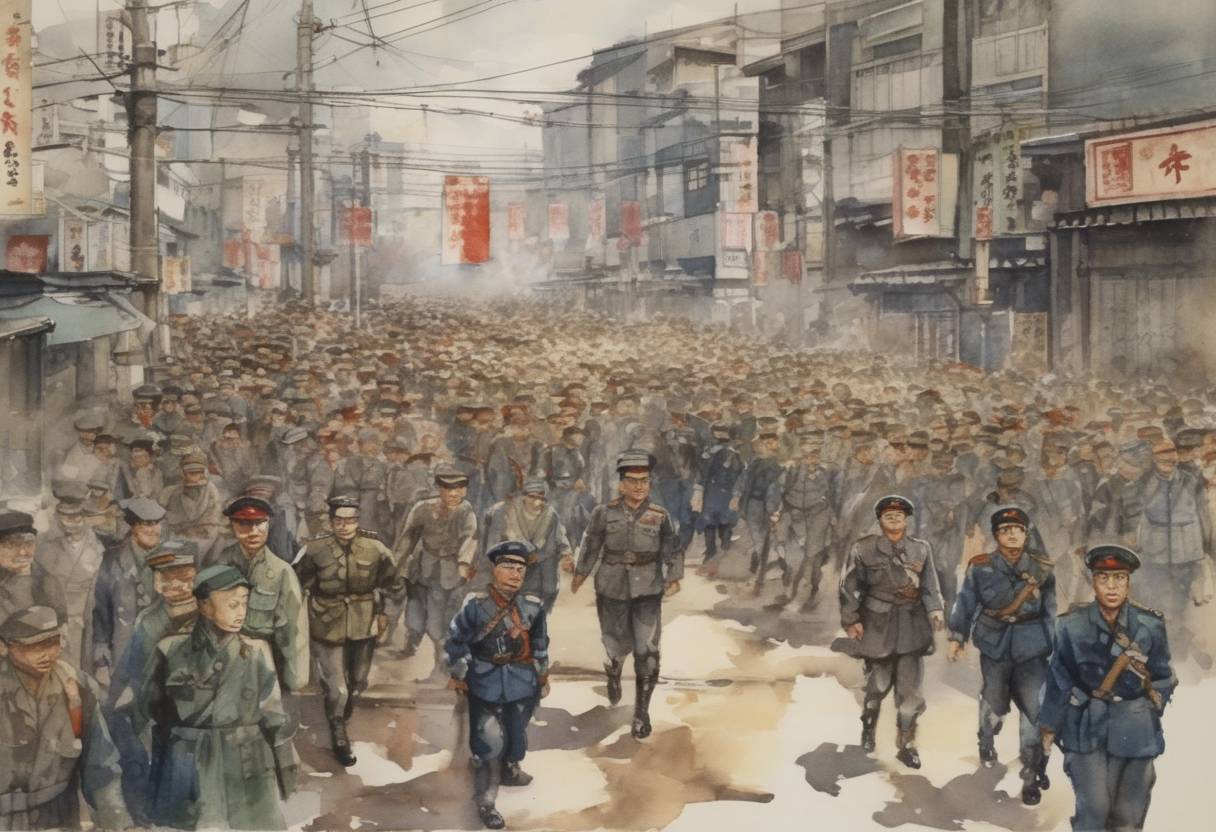
The February 26 Incident, also known as the “Ni-niroku Jiken” (二・二六事件), was a significant attempted coup d’état that took place in Japan on February 26, 1936. This event was orchestrated by a group of young officers from the Imperial Japanese Army, driven by a mix of nationalist fervor and dissatisfaction with the political and economic state of Japan.
In the early 1930s, Japan was undergoing significant political and economic turmoil. The Great Depression had severely impacted the Japanese economy, leading to widespread unemployment and social unrest. Additionally, there was growing discontent within the military ranks regarding the perceived corruption and inefficiency of the civilian government. Many young officers were influenced by the ideology of the “Kōdōha” (Imperial Way Faction), which advocated for a more militaristic and expansionist approach to governance, as well as a return to traditional Japanese values.
On the morning of February 26, 1936, approximately 1,400 troops, led by a group of young officers, launched their coup attempt in Tokyo. Their primary objectives were to assassinate key government officials whom they deemed responsible for Japan’s woes and to establish a new government aligned with their nationalist ideals.
Assassinations and Attacks: The rebels successfully assassinated several high-profile figures, including Finance Minister Takahashi Korekiyo and Lord Keeper of the Privy Seal Saitō Makoto. They also attempted to kill Prime Minister Keisuke Okada, but he narrowly escaped.
Occupation of Key Locations: The insurgents seized control of several strategic locations in Tokyo, including the Army Ministry and the Metropolitan Police Department, effectively paralyzing the government.
Imperial Response: Despite their initial successes, the coup plotters failed to secure the support of Emperor Hirohito, which was crucial for their plans. The Emperor, upon learning of the coup, was reportedly outraged and demanded that the rebellion be suppressed.
The coup attempt lasted for four days, ending on February 29, 1936, when loyalist forces surrounded the rebels. Realizing their untenable position and lacking imperial endorsement, the insurgents surrendered. The government swiftly arrested the leaders, and a military tribunal subsequently sentenced many of them to death or imprisonment.
Political Impact: The February 26 Incident had profound implications for Japanese politics. It led to increased military influence over the government, as civilian leaders sought to appease the military to prevent further unrest.
Military Reforms: The incident highlighted the need for reforms within the military, leading to a crackdown on radical elements and a reorganization of military leadership.
Path to Militarism: Although the coup failed, it marked a turning point towards greater militarization in Japan, setting the stage for the country’s aggressive expansionist policies in the late 1930s and 1940s.
The February 26 Incident is a pivotal moment in Japanese history, illustrating the deep-seated tensions between military and civilian authorities during this period. It underscored the fragility of Japan’s political system and foreshadowed the nation’s eventual descent into militarism and war. The event remains a critical study for understanding the complex dynamics that shaped Japan’s path in the early 20th century.
Source: en.wikipedia.org