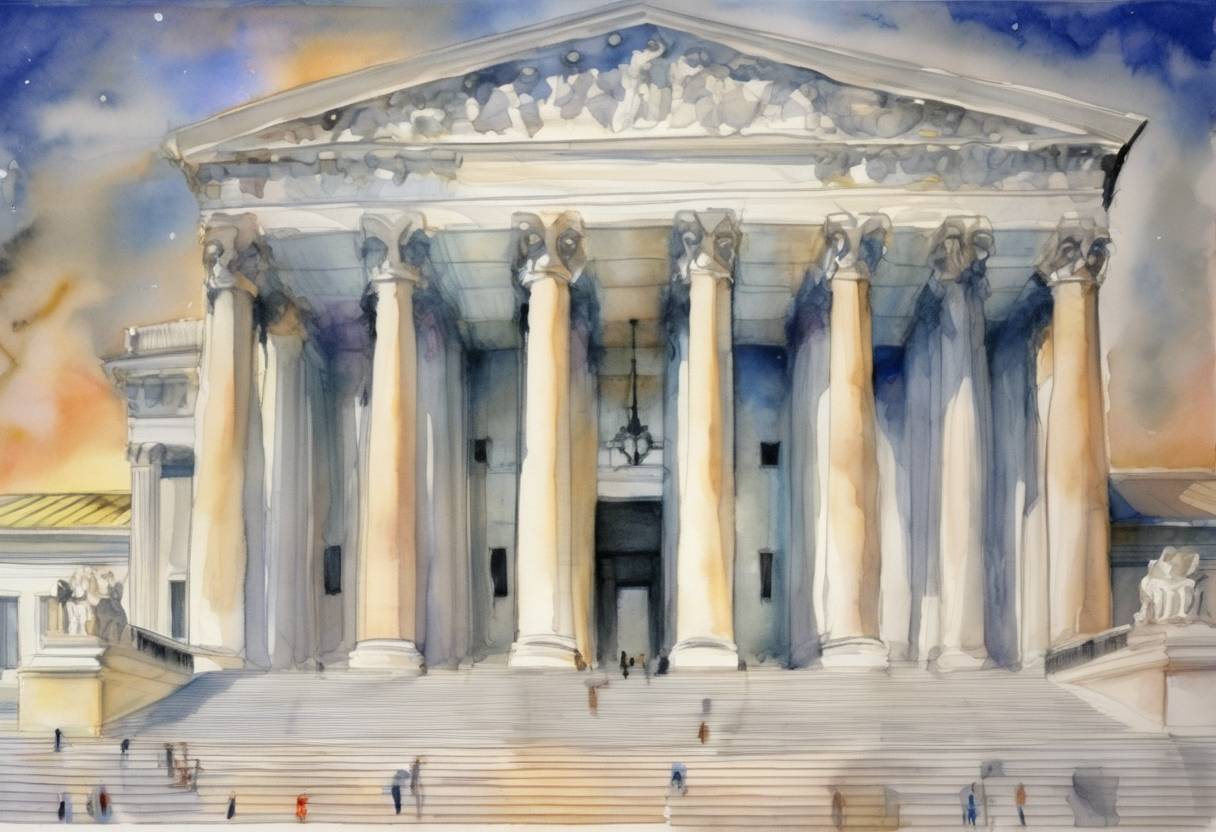
It seems there is a slight error in the date you provided. The United States Supreme Court ruled in the case of Bush v. Gore on December 12, 2000, not on March 6, 2001. Here is a detailed account of the event:
Bush v. Gore Supreme Court Decision
Background
The 2000 United States presidential election was one of the closest and most contentious in American history. The election took place on November 7, 2000, between Republican candidate George W. Bush and Democratic candidate Al Gore. The outcome hinged on the state of Florida, where the vote was extremely close, triggering an automatic machine recount as mandated by state law.
Key Events Leading to the Supreme Court Case
Initial Results and Recount: On election night, the media initially projected Gore as the winner in Florida, but later retracted it, eventually calling the state for Bush. The margin was so narrow that it triggered an automatic recount.
Manual Recounts and Legal Battles: Discrepancies and issues with voting machines, particularly with punch-card ballots, led to calls for manual recounts in several counties. The Florida Supreme Court ordered a statewide manual recount of undervotes (ballots that did not register a vote for president).
Bush’s Appeal: Bush’s legal team appealed to the U.S. Supreme Court, arguing that the Florida Supreme Court’s decision violated the Equal Protection Clause of the Fourteenth Amendment by allowing different standards of counting in different counties.
The Supreme Court Decision
Date: December 12, 2000
Ruling: In a per curiam decision, the Supreme Court ruled 7-2 that the Florida Supreme Court’s method for recounting ballots was unconstitutional due to inconsistent evaluation standards. In a 5-4 decision, the Court effectively halted the recount, stating that no constitutional recount method could be completed by the “safe harbor” deadline set by federal law.
Justices: The majority opinion was supported by Chief Justice William Rehnquist and Justices Sandra Day O’Connor, Antonin Scalia, Anthony Kennedy, and Clarence Thomas. The dissenting opinions were written by Justices John Paul Stevens, David Souter, Ruth Bader Ginsburg, and Stephen Breyer.
Aftermath and Significance
Resolution of the Election: The decision effectively awarded Florida’s 25 electoral votes to George W. Bush, giving him a total of 271 electoral votes to Al Gore’s 266, thus securing the presidency for Bush.
Impact on American Politics: The ruling was highly controversial and sparked debates about the role of the Supreme Court in electoral processes, the integrity of voting systems, and the influence of partisanship in judicial decisions.
Long-term Consequences: The case highlighted the need for electoral reform, leading to changes in voting technology and procedures in subsequent elections to prevent similar issues.
The Bush v. Gore decision remains a pivotal moment in U.S. history, illustrating the complexities of the electoral process and the profound impact of judicial intervention in political matters.