The Last Commercial Flight of the Concorde: October 24, 2003
2003 · London, United Kingdom
The Concorde makes its last commercial flight, ending an era of supersonic passenger travel.
March 2, 1969
The first test flight of the Concorde, a supersonic passenger airliner, took place in Toulouse, France.
Toulouse, France | Aérospatiale and British Aircraft Corporation
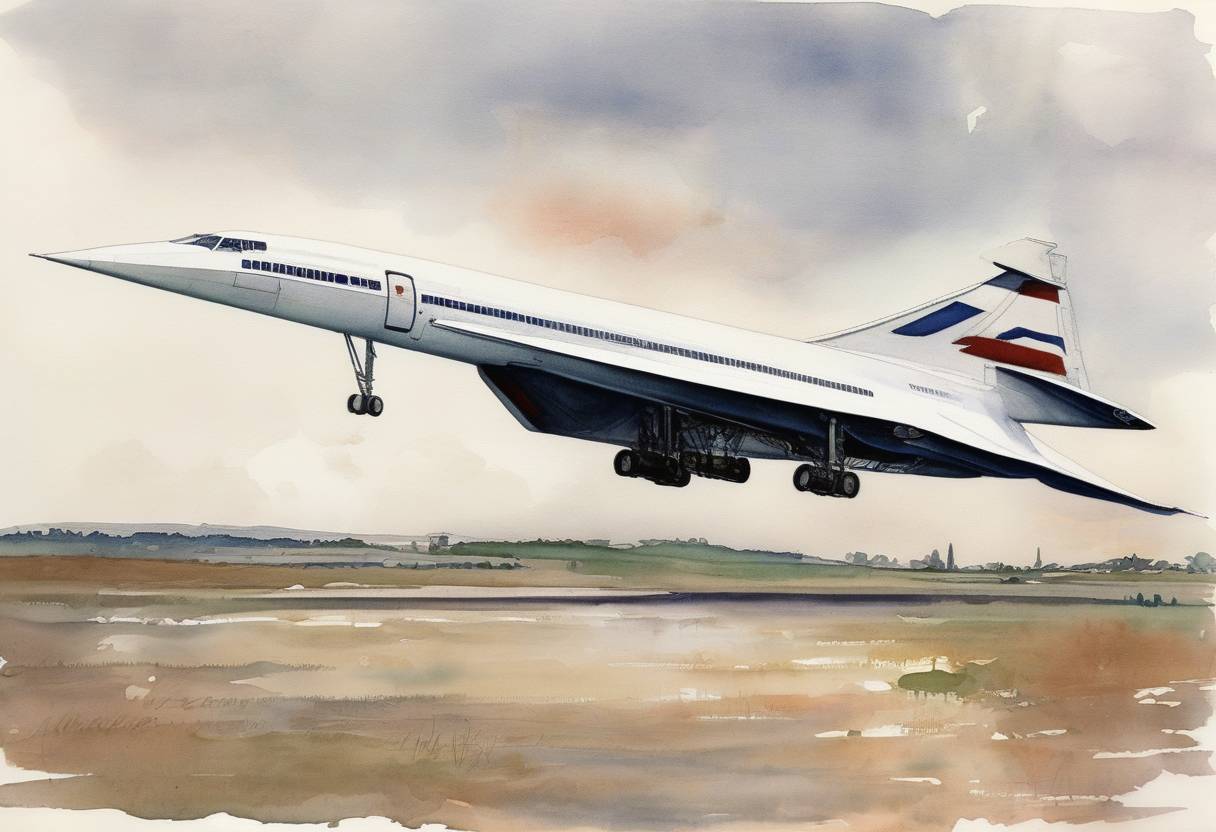
On March 2, 1969, the Concorde, a groundbreaking supersonic passenger airliner, embarked on its maiden test flight from Toulouse, France. This event marked a significant milestone in aviation history, showcasing the culmination of years of international collaboration and technological innovation.
The Concorde project was a joint venture between the British and French governments, with the British Aircraft Corporation and France’s Aérospatiale leading the development. The aim was to create a supersonic transport (SST) aircraft capable of reducing transatlantic flight times by flying at speeds over twice the speed of sound (Mach 2).
The first test flight of Concorde 001 was piloted by André Turcat, a renowned French test pilot, with Jacques Guignard as the co-pilot. The flight lasted 27 minutes, during which the aircraft reached an altitude of 10,000 feet and a speed of 300 knots (approximately 345 mph).
The first test flight of the Concorde on March 2, 1969, was a pivotal moment in the history of aviation. It demonstrated the potential for supersonic passenger travel and set the stage for the Concorde’s role as a marvel of modern engineering, influencing future developments in aerospace technology.
Source: en.wikipedia.org