The Battle of Midway: A Pivotal Naval Engagement
1942 · Midway Atoll, United States
The Battle of Midway, a pivotal naval battle in the Pacific Theater of World War II, ended with a decisive victory for the United States over Japan.
June 20, 1944
The Battle of the Philippine Sea, a major naval battle of World War II, takes place between the United States and Japan, resulting in a decisive American victory.
Philippine Sea, Pacific Ocean | United States Navy
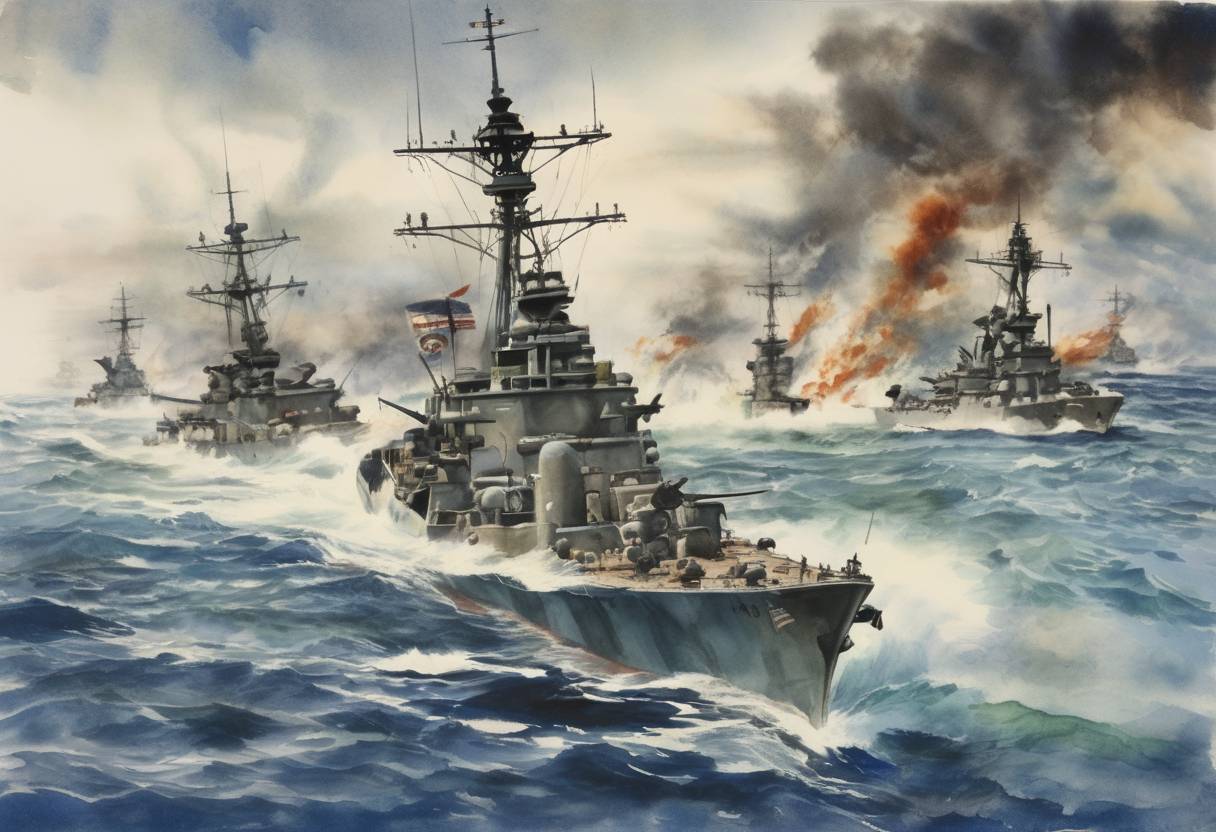
The Battle of the Philippine Sea, occurring on June 19-20, 1944, was a pivotal naval engagement during World War II between the naval forces of the United States and the Empire of Japan. This battle is often referred to as the “Great Marianas Turkey Shoot” due to the disproportionate losses suffered by the Japanese.
The battle was part of the broader Allied strategy to capture the Mariana Islands, which were crucial for launching further operations in the Pacific. The capture of these islands would provide airbases for B-29 bombers to strike the Japanese home islands. The Japanese, aware of the strategic importance of the Marianas, sought to repel the American forces and protect their defensive perimeter.
June 19, 1944: The battle began with a series of aerial engagements. The Japanese launched multiple waves of aircraft from their carriers in an attempt to attack the U.S. fleet. However, American radar technology, superior pilot training, and anti-aircraft defenses decimated the incoming Japanese planes. This day saw the majority of Japanese aircraft losses, leading to the nickname “Great Marianas Turkey Shoot.”
June 20, 1944: The U.S. forces, led by Admiral Raymond A. Spruance and Vice Admiral Marc Mitscher, launched a counteroffensive. American carrier-based aircraft pursued the retreating Japanese fleet, inflicting further damage. The U.S. pilots sank several Japanese carriers, including the Hiyō, and damaged others, significantly weakening Japan’s naval aviation capabilities.
The Battle of the Philippine Sea was a decisive victory for the United States. The Japanese lost approximately 600 aircraft and three carriers, while American losses were minimal in comparison. This battle effectively eliminated the Japanese carrier air force as a significant threat, allowing the U.S. to continue its advance across the Pacific with reduced opposition.
The victory at the Philippine Sea paved the way for the successful capture of the Mariana Islands, including Saipan, Guam, and Tinian, which were crucial for the subsequent Allied strategy in the Pacific. The battle also marked a turning point in naval warfare, showcasing the dominance of air power over traditional battleship engagements.
The Battle of the Philippine Sea underscored the importance of aircraft carriers and air superiority in modern naval warfare. It also highlighted the technological and tactical advancements of the U.S. Navy, which played a crucial role in the eventual Allied victory in the Pacific Theater. The battle’s outcome further isolated Japan and set the stage for the eventual Allied invasion of the Japanese home islands.
Source: en.wikipedia.org