Liberation of Dachau Concentration Camp
1945 · Dachau, Germany
Dachau concentration camp is liberated by United States troops.
April 11, 1945
American forces liberated the Buchenwald concentration camp near Weimar, Germany, during World War II. This was one of the first major concentration camps to be liberated by Allied forces.
Weimar, Germany | United States Army
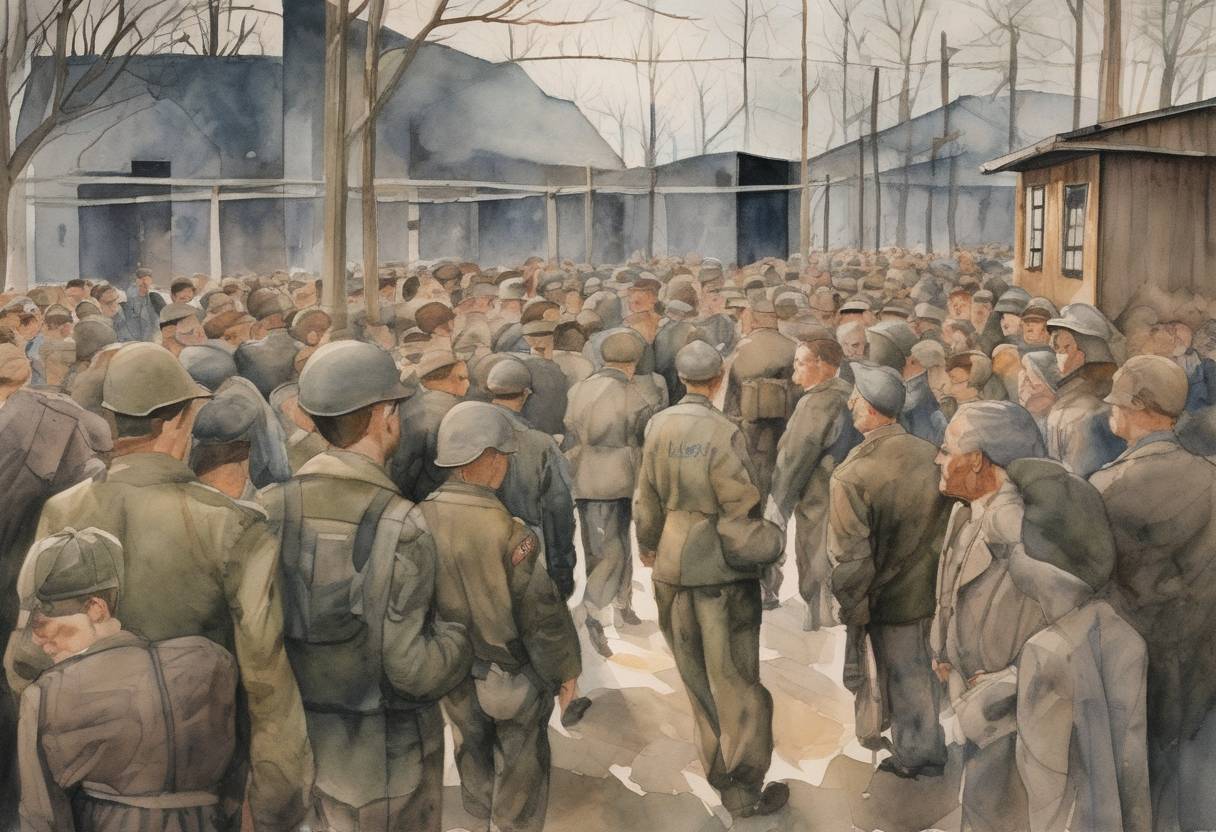
On April 11, 1945, American forces liberated the Buchenwald concentration camp, located near Weimar, Germany. This event marked one of the first major concentration camps to be liberated by Allied forces during World War II, highlighting the atrocities committed by the Nazi regime and bringing the horrors of the Holocaust to global attention.
Buchenwald was established in July 1937 and became one of the largest concentration camps on German soil. Initially, it housed political prisoners, but over time, its population expanded to include Jews, Romani people, Jehovah’s Witnesses, homosexuals, and prisoners of war, among others. The camp was notorious for its brutal conditions, forced labor, medical experiments, and the systematic extermination of inmates.
As Allied forces advanced into Germany in early 1945, they uncovered numerous concentration camps, revealing the extent of Nazi war crimes. On April 11, 1945, units of the U.S. Third Army, led by General George S. Patton, reached Buchenwald. The liberation was preceded by an uprising within the camp; prisoners had managed to seize control of the camp’s main gate and some of its facilities, anticipating the arrival of the Allies.
Upon entering Buchenwald, American soldiers were confronted with the grim reality of the Holocaust. They found thousands of emaciated prisoners, many on the brink of death, and evidence of the atrocities committed there, including mass graves and the remains of a crematorium.
The liberation of Buchenwald had profound implications:
Documentation and Awareness: The liberation provided crucial documentation of Nazi war crimes. Photographs and testimonies from survivors and liberators were disseminated worldwide, raising awareness about the Holocaust’s scale and brutality.
War Crimes Trials: Evidence gathered from Buchenwald and other camps played a significant role in the Nuremberg Trials, where Nazi leaders were prosecuted for war crimes and crimes against humanity.
Humanitarian Response: The liberation highlighted the urgent need for humanitarian aid. Allied forces and relief organizations worked to provide medical care, food, and shelter to survivors.
Historical Memory: Buchenwald became a symbol of Nazi atrocities and a site of remembrance and education about the Holocaust. It serves as a reminder of the consequences of hatred and intolerance.
The liberation of Buchenwald was a pivotal moment in World War II, underscoring the Allies’ commitment to defeating tyranny and bringing justice to the victims of the Holocaust. It remains a powerful testament to the resilience of those who survived and the importance of remembering history to prevent future atrocities.
Source: en.wikipedia.org