Adolf Hitler Becomes Führer of Germany: August 2, 1934
1934 · Berlin, Germany
Adolf Hitler became the Führer of Germany after the death of President Paul von Hindenburg, consolidating his power and marking a pivotal moment in Nazi Germany's history.
April 26, 1933
The Gestapo, the official secret police of Nazi Germany, is established by Hermann Göring.
Berlin, Germany | Gestapo
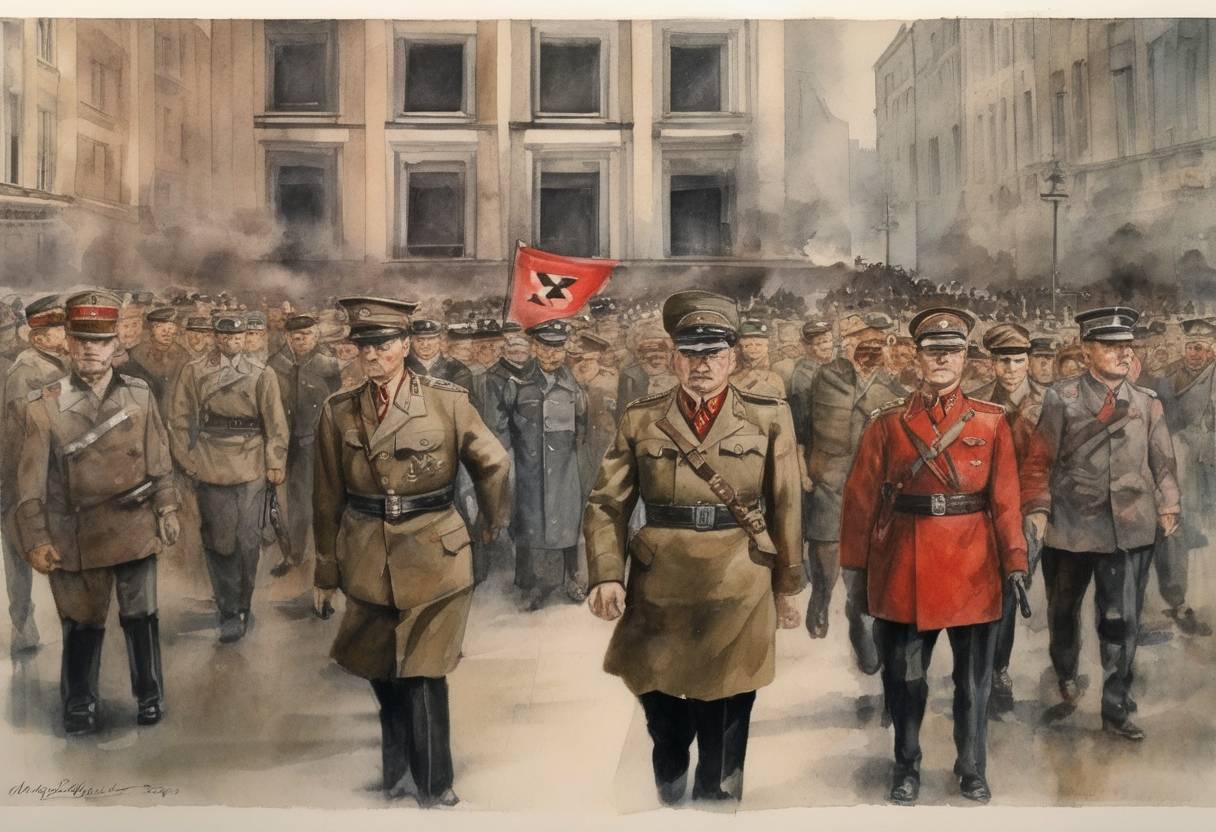
On April 26, 1933, the Gestapo, short for “Geheime Staatspolizei” or “Secret State Police,” was officially established by Hermann Göring in Nazi Germany. This organization became one of the most infamous instruments of terror and oppression during the Nazi regime.
The rise of the Nazi Party to power in January 1933 marked the beginning of a systematic dismantling of democratic institutions in Germany. Adolf Hitler, appointed as Chancellor, quickly moved to consolidate power and eliminate political opposition. The establishment of the Gestapo was a crucial step in this process.
Hermann Göring’s Role: As the Prussian Minister of the Interior, Göring played a pivotal role in the creation of the Gestapo. Initially, it was formed by transforming the existing Prussian political police into a more centralized and powerful entity.
Objectives: The primary purpose of the Gestapo was to investigate and combat all tendencies considered dangerous to the state. This included political dissidents, communists, socialists, and later, Jews and other groups deemed undesirable by the Nazi ideology.
Leadership: Initially under Göring’s control, the Gestapo later came under the leadership of Heinrich Himmler, who was also the head of the SS (Schutzstaffel). Himmler further expanded its reach and integrated it into the broader security apparatus of the Nazi state.
Methods: The Gestapo was notorious for its brutal methods, including surveillance, intimidation, arrest without warrant, torture, and extrajudicial killings. It operated with little to no legal oversight, effectively placing it above the law.
Repression: The Gestapo played a central role in the enforcement of Nazi policies, including the persecution of Jews, the suppression of resistance movements, and the implementation of the Holocaust.
Fear and Control: Its presence instilled fear across Germany and occupied territories, contributing to the regime’s ability to maintain control through terror.
Post-War Consequences: After World War II, the Gestapo was declared a criminal organization during the Nuremberg Trials. Many of its leaders and operatives were prosecuted for war crimes and crimes against humanity.
The establishment of the Gestapo marked a significant escalation in the Nazi regime’s campaign of terror and oppression, leaving a lasting impact on history through its role in the atrocities of World War II and the Holocaust.
Source: en.wikipedia.org