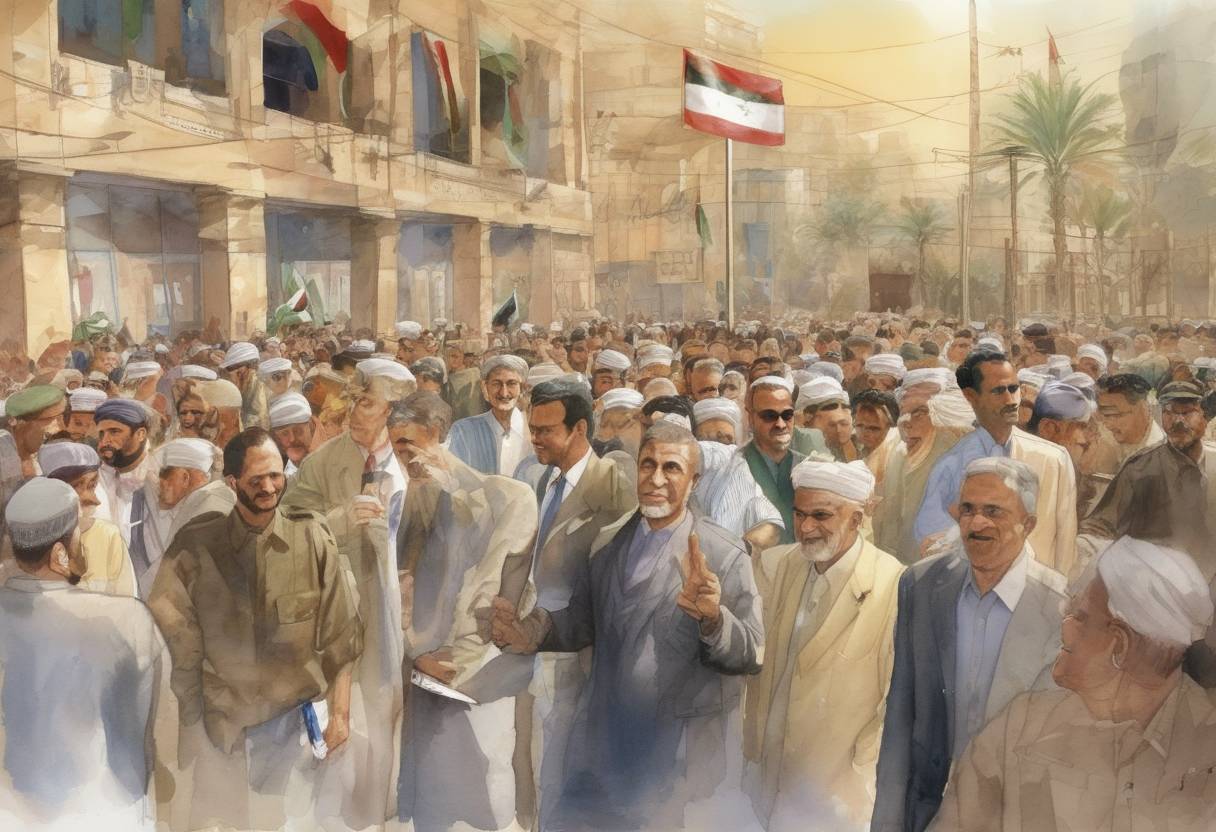
Iraq’s First Free Elections in Over 50 Years: January 30, 2005
On January 30, 2005, Iraq held its first free elections in over half a century, a pivotal moment in the nation’s political reconstruction following the fall of Saddam Hussein’s regime. This election was a significant step towards establishing a democratic governance structure in Iraq, marking a new chapter in its tumultuous history.
Context Leading Up to the Elections
Fall of Saddam Hussein: The U.S.-led invasion of Iraq in 2003 resulted in the toppling of Saddam Hussein’s authoritarian regime. This created a power vacuum and initiated a complex process of political rebuilding.
Interim Government: Following the invasion, the Coalition Provisional Authority (CPA) was established to oversee the transition. In June 2004, sovereignty was formally transferred to an interim Iraqi government, setting the stage for democratic elections.
Security Concerns: The period leading up to the elections was marked by significant violence and instability. Insurgent groups, including those loyal to the former regime and new extremist factions, sought to disrupt the political process.
The Elections
Transitional National Assembly: The elections aimed to form a 275-member Transitional National Assembly. This body was tasked with drafting a new constitution and appointing a transitional government.
Voter Turnout: Despite threats of violence, voter turnout was approximately 58%, with millions of Iraqis casting their ballots. The elections were a testament to the Iraqi people’s desire for democratic governance.
Security Measures: Extensive security measures were implemented to protect voters and polling stations. The day was marred by some violence, but the elections proceeded largely as planned.
Aftermath and Significance
Formation of Government: The elected assembly was responsible for selecting a president and two vice presidents, who would then appoint a prime minister. This process laid the groundwork for a permanent government structure.
Drafting the Constitution: One of the assembly’s primary tasks was to draft a new constitution, which was later approved in a national referendum in October 2005.
Broader Impact: The elections were a crucial step in Iraq’s journey towards democracy and self-governance. They symbolized hope for political stability and were a key component of the broader U.S. and international strategy to stabilize the region.
Historical Significance
The January 30, 2005, elections were a landmark event in Iraq’s modern history. They represented a break from decades of dictatorship and a move towards a more inclusive political system. While challenges remained, including ongoing violence and sectarian tensions, the elections were a foundational moment in Iraq’s ongoing efforts to build a democratic society.