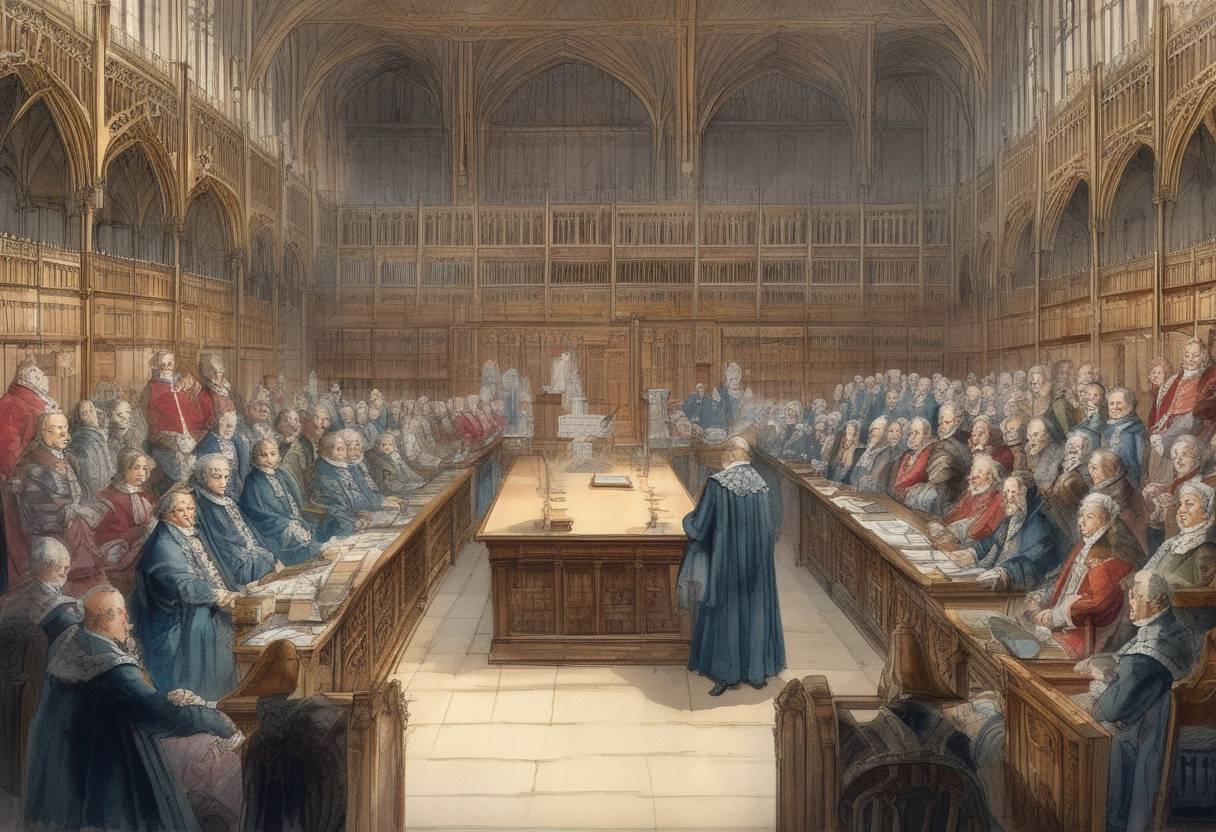
The First English Parliament with Town Representatives - January 20, 1265
On January 20, 1265, a pivotal event in the evolution of the English parliamentary system took place: the convening of the first English Parliament to include not only lords but also representatives from major towns. This assembly marked a significant step towards the development of a more inclusive and representative form of governance in England.
Historical Context
The mid-13th century in England was a period of political turmoil and reform. King Henry III’s reign was characterized by financial difficulties and conflicts with the barons, leading to widespread discontent. The barons, led by Simon de Montfort, the Earl of Leicester, sought to limit the king’s power and increase the influence of the nobility and other societal groups in governance.
The Provisions of Oxford
In 1258, the Provisions of Oxford were established, which aimed to reform the administration and limit royal authority. These provisions called for regular parliaments and a council of barons to advise the king, laying the groundwork for more structured parliamentary governance.
The Parliament of 1265
Simon de Montfort, having seized control of the government after defeating King Henry III at the Battle of Lewes in 1264, called the Parliament of 1265. This assembly was revolutionary for its inclusion of commoners, specifically two knights from each county and, for the first time, two burgesses (citizens) from each major town or borough.
Significance
Inclusion of Town Representatives: The inclusion of town representatives marked a departure from previous parliaments, which primarily consisted of nobles and clergy. This move acknowledged the growing economic and political importance of towns and their inhabitants.
Foundation for Modern Parliament: This parliament is often regarded as a precursor to the modern House of Commons, setting a precedent for the inclusion of commoners in the legislative process.
Symbol of Reform: The 1265 Parliament symbolized the ongoing struggle for power between the monarchy and the barons, as well as the push for broader representation in governance.
Aftermath and Legacy
The Parliament of 1265 was short-lived, as Simon de Montfort’s rule ended with his defeat and death at the Battle of Evesham later that year. However, the principles established during this parliament endured, influencing subsequent developments in the English parliamentary system.
Restoration of Royal Authority: Following de Montfort’s defeat, King Henry III regained control, but the idea of a more representative parliament persisted.
Long-term Impact: The inclusion of commoners in the parliamentary process gradually became more accepted, leading to the establishment of the bicameral system that characterizes the UK Parliament today.
In summary, the Parliament of January 20, 1265, was a landmark event in the history of English governance, representing a shift towards a more inclusive and representative political system. Its legacy is evident in the continued evolution of parliamentary democracy in England and beyond.