The Battle of Fort Washington: A Decisive British Victory
1776 · New York City, United States
The Battle of Fort Washington ends in a decisive British victory during the American Revolutionary War.
August 15, 1824
The Marquis de Lafayette, a hero of the American Revolutionary War, visited the United States, arriving in New York City.
New York City, United States
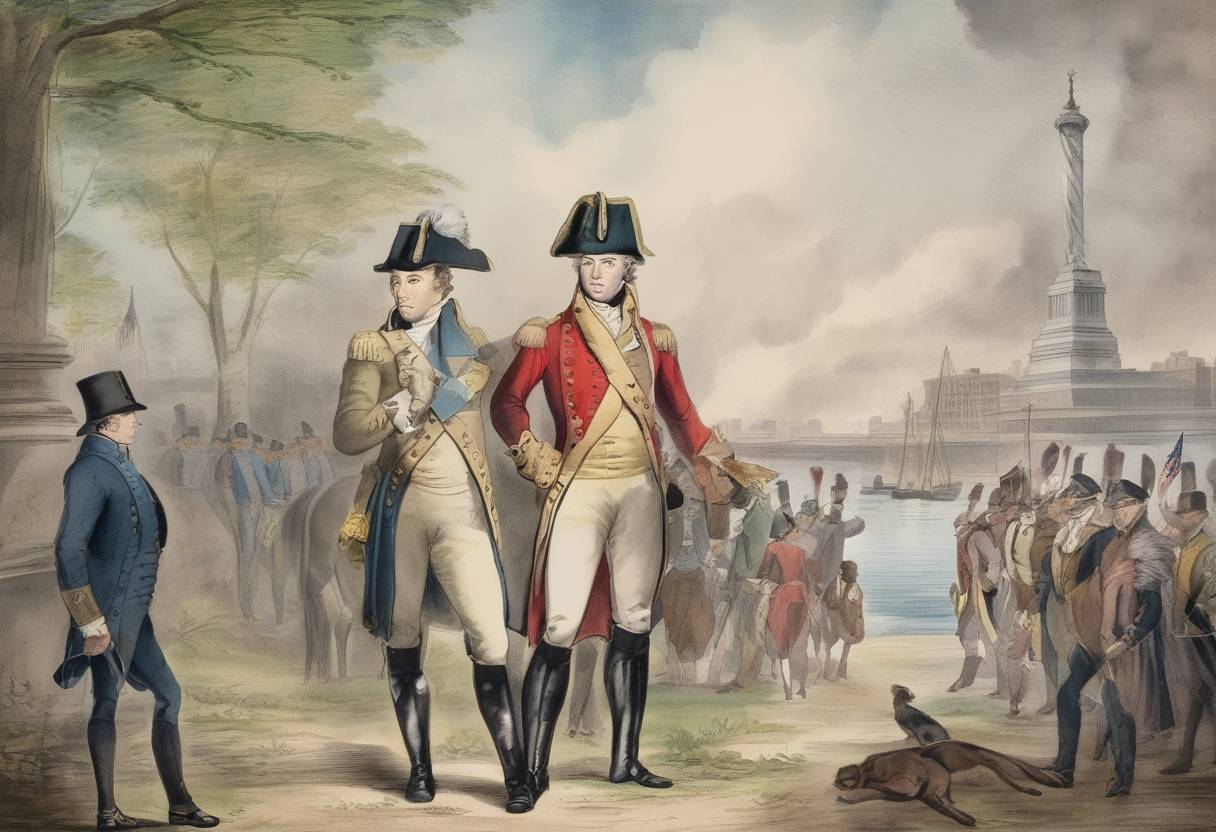
On August 15, 1824, Marie-Joseph Paul Yves Roch Gilbert du Motier, better known as the Marquis de Lafayette, arrived in New York City, marking the beginning of his celebrated tour of the United States. This visit was significant as it commemorated the approaching 50th anniversary of the American Revolution, in which Lafayette played a crucial role.
Lafayette was a French aristocrat and military officer who became a key figure in the American Revolutionary War. He joined the American cause in 1777, offering his services to the Continental Army without pay. His leadership and strategic acumen were instrumental in several battles, including the Siege of Yorktown, which effectively ended the war in favor of the American colonies.
Lafayette’s visit in 1824 was his first return to the United States since the end of the Revolutionary War. Invited by President James Monroe, Lafayette’s tour was intended to honor his contributions to American independence and to strengthen Franco-American relations.
Lafayette’s tour of the United States lasted over a year, during which he visited all 24 states of the Union at the time. His journey included:
Lafayette’s visit was more than a mere ceremonial event; it was a profound reminder of the enduring Franco-American alliance and the shared values of liberty and democracy. His tour helped to rekindle the spirit of the Revolution and fostered a sense of national unity and pride among Americans.
Lafayette’s 1824 visit remains a celebrated chapter in the history of U.S.-France relations and a testament to the enduring legacy of the American Revolution.
Source: en.wikipedia.org