The Battle of St. George and the Brucean Wars: August 15, 1310
1310 · St. George, Scotland
The Battle of St. George resumes, part of the Brucean Wars, highlighting Robert the Bruce's efforts to reclaim Scottish lands.
March 25, 1306
Robert the Bruce was crowned King of Scots at Scone, marking a significant moment in the Wars of Scottish Independence.
Scone, Scotland | Scottish Monarchy
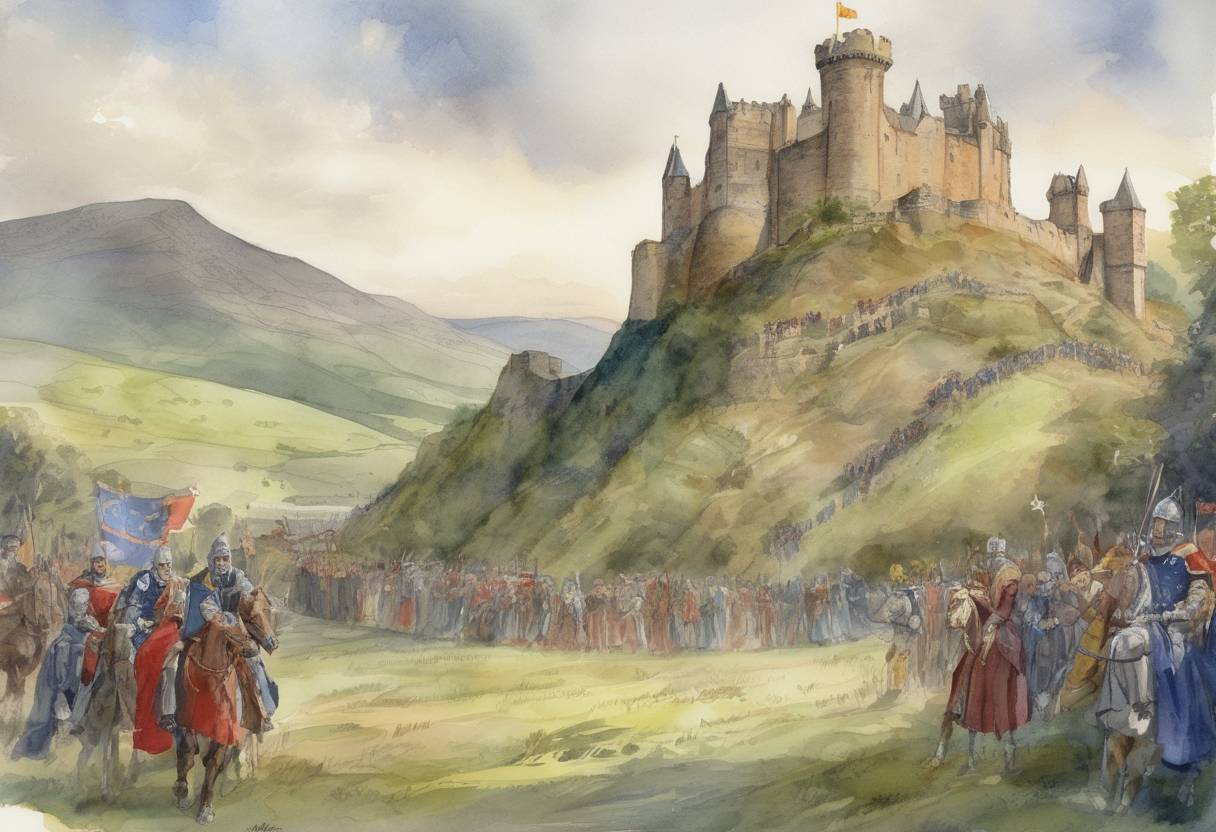
On March 25, 1306, Robert the Bruce was crowned King of Scots at Scone, a pivotal moment in the Wars of Scottish Independence. This event marked a significant turning point in Scotland’s struggle for sovereignty against English domination.
The late 13th and early 14th centuries were tumultuous times for Scotland. The death of King Alexander III in 1286 and the subsequent demise of his heir, Margaret, Maid of Norway, in 1290, left Scotland without a clear successor. This power vacuum led to the intervention of King Edward I of England, who sought to assert his influence over Scotland.
Robert the Bruce, born on July 11, 1274, was a nobleman with a claim to the Scottish throne through his grandfather, Robert de Brus, 5th Lord of Annandale. The competition for the crown was fierce, with John Balliol initially being chosen as king in 1292. However, Balliol’s reign was short-lived, as Edward I deposed him in 1296, leading to increased English control over Scotland.
Robert the Bruce’s path to the throne was marked by political maneuvering and conflict. In 1306, tensions between Bruce and John Comyn, a rival claimant to the throne, came to a head. On February 10, 1306, Bruce killed Comyn in the Greyfriars Church in Dumfries, an act that solidified his resolve to claim the Scottish crown.
Following this dramatic event, Bruce moved quickly to consolidate his position. He gathered support from key Scottish nobles and clergy, who were eager to resist English rule. The coronation at Scone, a traditional site for Scottish kingship, was a symbolic assertion of Scottish independence and Bruce’s legitimacy as king.
The ceremony at Scone was conducted with the traditional rites associated with Scottish kingship. Isabella MacDuff, Countess of Buchan, played a crucial role by placing the crown on Bruce’s head, a gesture that underscored the support of influential Scottish families.
Robert the Bruce’s coronation was not immediately recognized by all, and he faced significant challenges in the years that followed. Edward I responded with military campaigns to reassert control over Scotland. Bruce’s early reign was marked by setbacks, including defeats and a period of guerrilla warfare.
However, Bruce’s resilience and strategic acumen eventually led to significant victories, most notably the Battle of Bannockburn in 1314, which solidified his position and paved the way for Scottish independence. The Treaty of Edinburgh-Northampton in 1328 formally recognized Scotland’s independence and Bruce’s kingship.
The coronation of Robert the Bruce at Scone remains a symbol of Scottish national identity and resistance. It marked the beginning of a new chapter in Scotland’s history, characterized by a determined struggle for self-determination and sovereignty.
Source: en.wikipedia.org