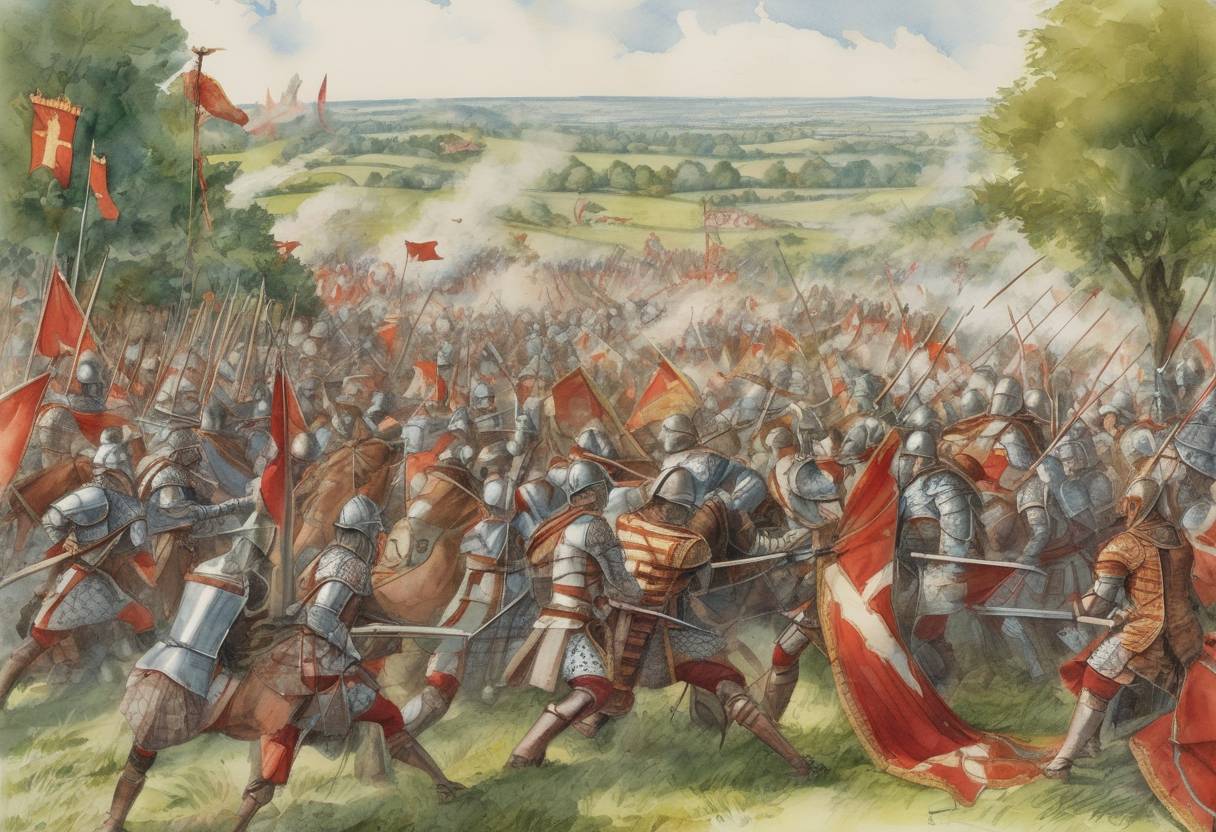
The Battle of Evesham: August 4, 1265
The Battle of Evesham, fought on August 4, 1265, was a pivotal engagement in the Second Barons’ War, a conflict that arose from tensions between King Henry III of England and a faction of rebellious barons led by Simon de Montfort, Earl of Leicester. This battle marked a decisive turning point, effectively ending the rebellion and restoring royal authority.
Background
The Second Barons’ War (1264-1267) was rooted in dissatisfaction with King Henry III’s rule, particularly his financial mismanagement and favoritism towards foreign advisors. In 1258, a group of barons forced the king to accept the Provisions of Oxford, which aimed to limit royal power and increase baronial influence. However, tensions persisted, leading to open conflict.
Simon de Montfort emerged as a leader of the baronial opposition. In 1264, he achieved a significant victory at the Battle of Lewes, capturing King Henry III and his son, Prince Edward. De Montfort effectively ruled England for a year, implementing reforms and calling the first English parliament that included commoners.
The Battle
The tide turned in 1265 when Prince Edward escaped captivity and rallied royalist forces. On August 4, 1265, Edward’s army confronted de Montfort’s forces near the town of Evesham in Worcestershire.
Tactics and Terrain: Edward’s forces utilized superior tactics and the element of surprise. They approached de Montfort’s army from a position that gave them the advantage of higher ground and the cover of early morning mist.
The Engagement: The battle was brutal and swift. De Montfort’s forces were outnumbered and outmaneuvered. The royalists, driven by a desire to avenge previous defeats, showed little mercy. Simon de Montfort was killed in the battle, and his body was mutilated, a testament to the animosity between the factions.
Aftermath
The Battle of Evesham effectively crushed the baronial rebellion. With de Montfort’s death, the baronial cause lost its central figure and momentum. King Henry III was restored to power, although the conflict continued in a diminished capacity until 1267.
Reconciliation and Reforms: In the aftermath, the Dictum of Kenilworth (1266) provided terms for the rebels’ reintegration into the kingdom, although it was less generous than previous agreements. The Provisions of Oxford were annulled, but the conflict had lasting impacts, leading to future reforms under Edward I.
Legacy: The battle and the war highlighted the growing tensions between monarchy and nobility, setting the stage for future constitutional developments in England. Simon de Montfort is remembered as a pioneer of parliamentary democracy, despite his ultimate defeat.
The Battle of Evesham remains a significant event in English history, illustrating the complex interplay of power, governance, and reform in the medieval period.