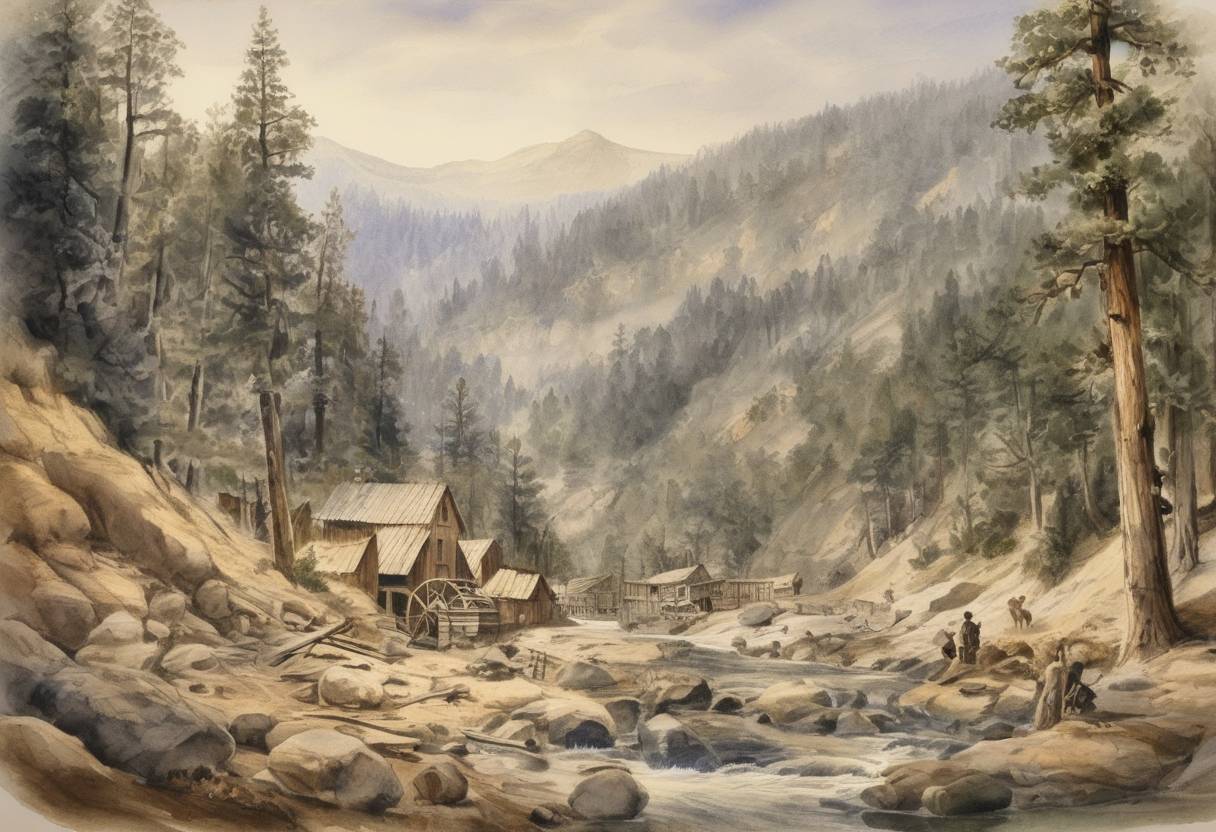
Discovery of Gold at Sutter’s Mill
On January 24, 1848, James W. Marshall made a discovery that would alter the course of American history: he found gold at Sutter’s Mill in Coloma, California. This event marked the beginning of the California Gold Rush, a pivotal moment that would lead to significant economic, social, and demographic changes in the United States.
Background
- James W. Marshall: Born in New Jersey in 1810, Marshall was a carpenter and sawmill operator. He was employed by John Sutter, a Swiss immigrant and entrepreneur who owned a large tract of land in the Sacramento Valley.
- Sutter’s Mill: Located along the American River, the mill was part of Sutter’s plans to build an agricultural empire. Marshall was overseeing the construction of the sawmill when he made the discovery.
The Discovery
- January 24, 1848: While inspecting the mill’s tailrace, Marshall noticed shiny metal flakes in the water. After conducting tests, he confirmed that the flakes were gold.
- Secrecy and Confirmation: Initially, Marshall and Sutter attempted to keep the discovery a secret to protect their interests. However, news quickly spread, and by March 1848, the discovery was confirmed by the local newspaper, the “Californian.”
The Gold Rush
- Migration and Population Boom: The news of gold brought approximately 300,000 people to California from the rest of the United States and abroad. This influx included “forty-niners,” as the prospectors were known, who arrived in 1849.
- Economic Impact: The Gold Rush led to rapid economic growth in California, with San Francisco transforming from a small settlement to a bustling city. The influx of gold also contributed to the U.S. economy, facilitating the development of infrastructure and industries.
Broader Historical Significance
- Statehood: The population boom and economic growth accelerated California’s admission to the Union as the 31st state in 1850.
- Cultural and Social Changes: The Gold Rush brought a diverse array of people to California, including immigrants from Latin America, Europe, Australia, and China, leading to a multicultural society.
- Environmental and Indigenous Impact: The rush for gold had significant environmental consequences, including deforestation and river pollution. It also led to the displacement and suffering of Native American communities.
Conclusion
The discovery of gold at Sutter’s Mill by James W. Marshall was a catalyst for the California Gold Rush, an event that reshaped the American West and had lasting effects on the nation’s development. The rush for gold not only transformed California but also had profound implications for the United States as a whole, influencing its economy, demographics, and cultural landscape.