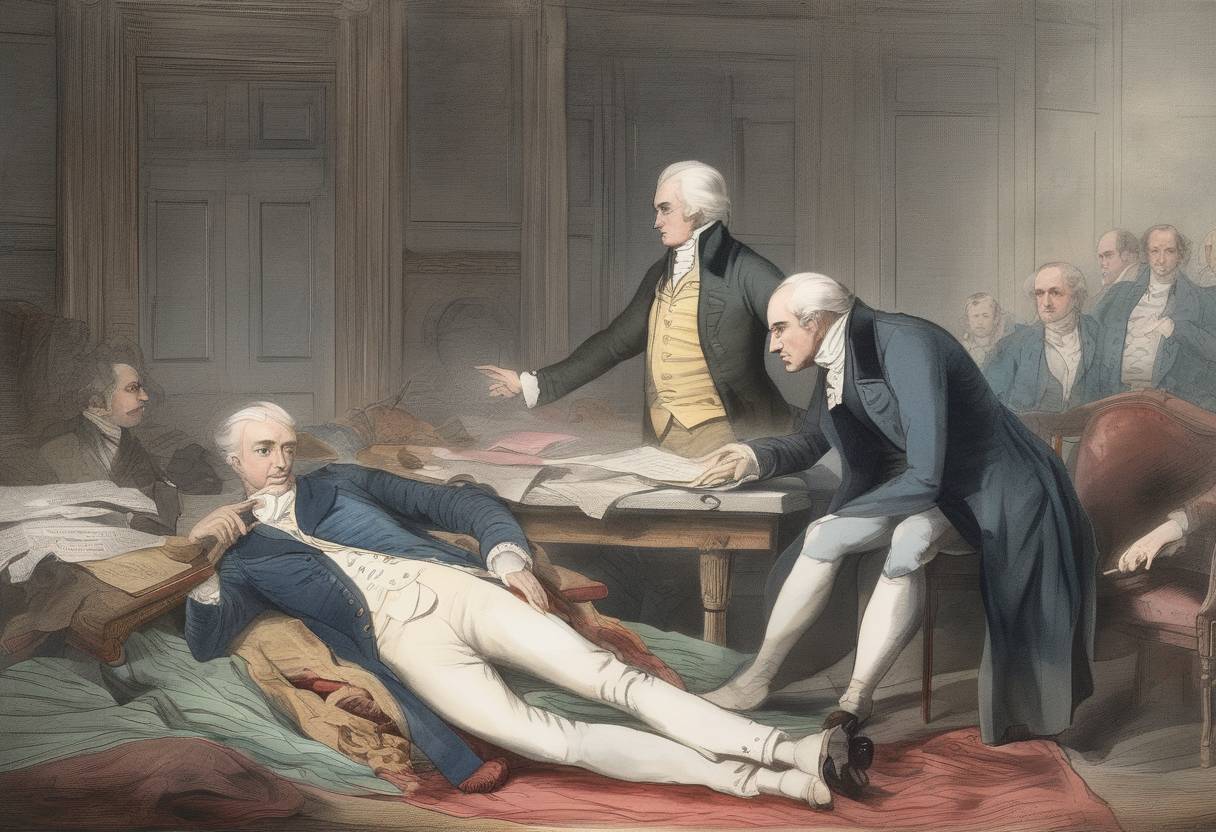
Assassination of British Prime Minister Spencer Perceval
Overview
On May 11, 1812, British Prime Minister Spencer Perceval was assassinated by John Bellingham in the lobby of the House of Commons. This tragic event marks the only time a British Prime Minister has been assassinated while in office.
Background
Spencer Perceval
Spencer Perceval was born on November 1, 1762, and served as the Prime Minister of the United Kingdom from 1809 until his death in 1812. A member of the Tory party, Perceval’s tenure was marked by significant challenges, including the Napoleonic Wars, economic difficulties, and domestic unrest.
John Bellingham
John Bellingham was a merchant who had suffered financial losses and imprisonment in Russia. He believed the British government had failed to assist him in resolving his grievances, which led to his growing resentment and eventual decision to assassinate Perceval.
The Assassination
On the afternoon of May 11, 1812, Spencer Perceval entered the lobby of the House of Commons. As he walked through the lobby, John Bellingham approached him and shot him in the chest at close range. Perceval collapsed and died almost immediately from his wounds.
Aftermath
Immediate Reaction: The assassination caused shock and panic within the House of Commons and across the nation. Bellingham was quickly apprehended by bystanders and taken into custody.
Trial and Execution: John Bellingham was tried for murder at the Old Bailey. Despite his claims of personal grievances against the government, he was found guilty and sentenced to death. Bellingham was executed by hanging on May 18, 1812.
Political Impact: Perceval’s assassination led to a brief period of political instability. Lord Liverpool succeeded him as Prime Minister, continuing many of Perceval’s policies.
Historical Significance
The assassination of Spencer Perceval is a significant event in British history, highlighting the vulnerabilities of political leaders and the potential consequences of unresolved personal grievances. It also underscores the political tensions and societal challenges of early 19th-century Britain, a period marked by war, economic hardship, and political reform.
Perceval’s death remains a unique incident in British political history, as no other sitting Prime Minister has been assassinated since.