Siege of Vienna - October 1, 1529
1529 · Vienna, Austria
The Ottoman Empire, led by Suleiman the Magnificent, begins the Siege of Vienna as part of its campaign to expand into Central Europe.
October 3, 1529
The Siege of Vienna ended, with the Ottoman Empire failing to capture the city from the Habsburgs, thus marking a key turning point in the Ottoman-Habsburg wars.
Vienna, Austria | Ottoman Empire
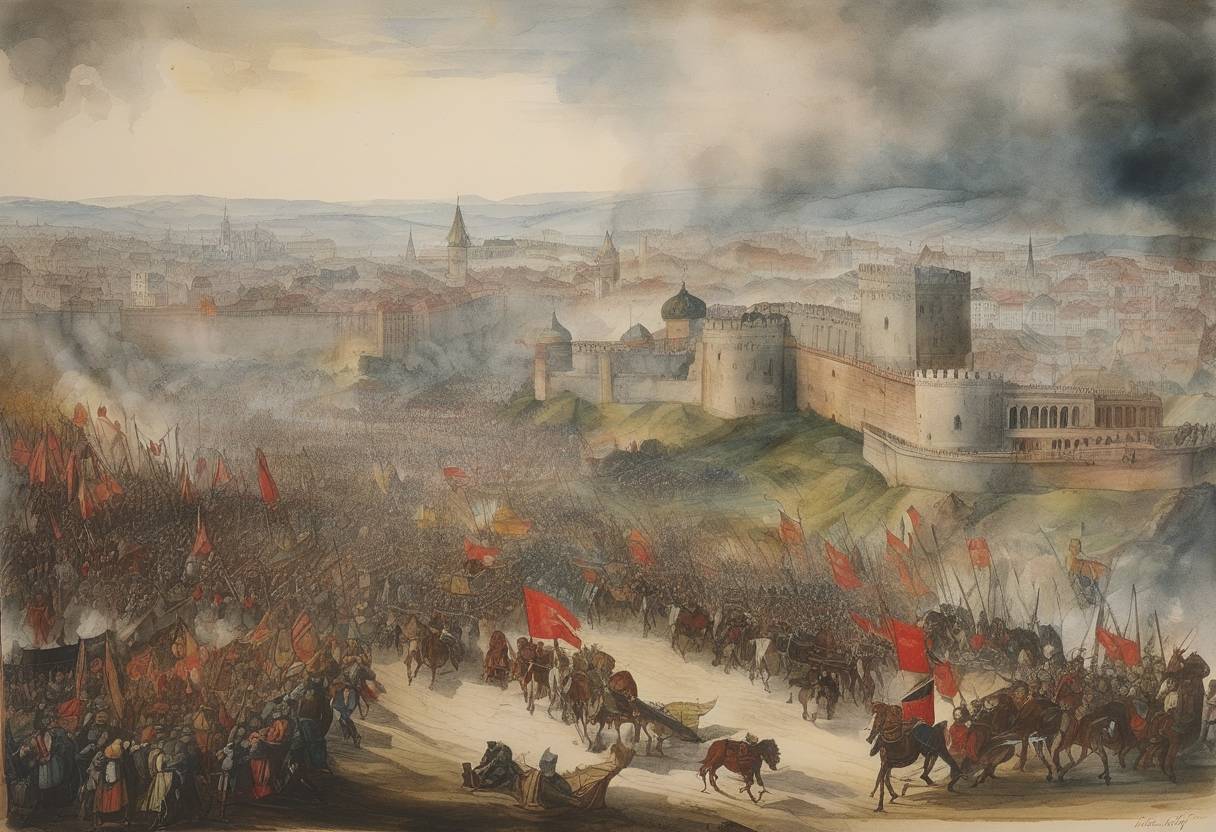
The Siege of Vienna in 1529 marked a significant turning point in the long-standing Ottoman-Habsburg wars. The Ottoman Empire, under the rule of Sultan Suleiman the Magnificent, sought to capture Vienna, the capital of the Habsburg Monarchy, as part of their ambitious expansion into Central Europe. Despite their formidable military prowess, the Ottomans were unable to breach the city’s defenses, ultimately leading to a withdrawal on October 3, 1529.
By the early 16th century, the Ottoman Empire was at the height of its power under Sultan Suleiman I, who had overseen expansive territorial gains in the Middle East, Africa, and Europe. The capture of Belgrade in 1521 and the subsequent defeat of the Kingdom of Hungary at the Battle of Mohács in 1526 set the stage for a direct confrontation with the Habsburgs, whose territories loomed as the next major obstacle to Ottoman expansion into Central and Western Europe.
The siege began in September 1529 after an arduous journey for the Ottoman forces, who faced logistical challenges such as heavy rains and difficult terrain, which delayed and weakened their approach. Despite these difficulties, Suleiman’s army—consisting of around 120,000 soldiers—arrived at Vienna’s doorstep.
The defenders of Vienna, commanded by Niklas Graf Salm and with support from Charles V, Holy Roman Emperor, were relatively modest in number, with estimates of around 16,000 troops. However, the city had fortified its defenses extensively in anticipation of the Ottoman threat. The defenders utilized the city’s walls, as well as deep ditches that thwarted attempts at tunneling and direct assault.
The failure of the siege marked the halt of Ottoman territorial expansion into Central Europe at that time. It demonstrated the resilience of Habsburg forces and the logistical challenges any army would face in laying siege to heavily fortified cities in adverse conditions. This event also set the stage for future conflicts, with Vienna becoming a symbol of resistance against Ottoman encroachment.
The siege’s end is considered a defining moment in European history, as it signaled a shift in the balance of power in the region. The Habsburgs were emboldened by their success, while the Ottoman Empire turned its focus elsewhere, leading to a temporary pause in their campaigns in Europe. The event was a precursor to the Second Siege of Vienna in 1683, which also ended in failure for the Ottomans and marked the beginning of the empire’s long retreat in Europe.
Source: en.wikipedia.org