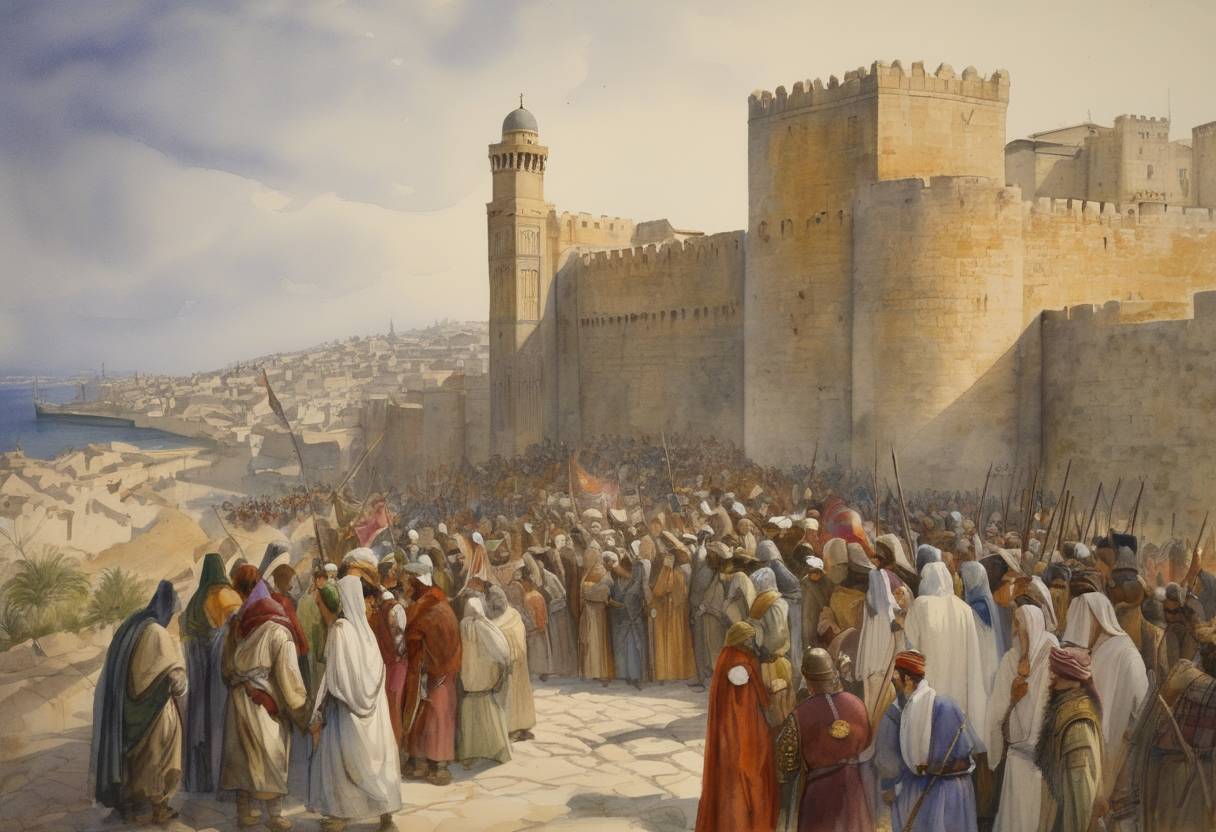
The Treaty of Jaffa: September 2, 1192
The Treaty of Jaffa was signed on September 2, 1192, marking an important conclusion to hostilities between Richard the Lionheart, the King of England, and Saladin, the first Sultan of Egypt and Syria. This treaty brought an end to the warring factions during the Third Crusade and laid down the terms for a temporary peace in the region.
Background
The Third Crusade (1189-1192) was initiated in response to the capture of Jerusalem by Saladin in 1187. Led by European monarchs including Richard I of England, King Philip II of France, and Emperor Frederick I of the Holy Roman Empire, the Crusaders embarked on a campaign to reclaim the Holy Land. Despite several victories, such as the capture of Acre and key coastal cities by the forces of Richard the Lionheart, the Crusaders were unable to recapture Jerusalem.
Key Terms of the Treaty
- Control of Jerusalem: Jerusalem remained under Muslim control. This was a significant stipulation, as the primary goal of the Crusade was to return Jerusalem to Christian rule.
- Pilgrimage Rights: The treaty guaranteed safe passage for Christian pilgrims to visit Jerusalem and other holy sites without persecution. This was a critical point, as it allowed Christians to continue their religious practices related to Jerusalem.
- Territorial Boundaries: Richard’s forces secured a coastal strip extending from Jaffa to Tyre. These cities provided strategic footholds for Christians in the Levant.
- Truce Duration: The treaty established a three-year truce between the Christian and Muslim forces, intended to allow both sides to rebuild and recover from the extensive warfare.
Significance and Aftermath
The Treaty of Jaffa was significant because it established a period of relative peace and coexistence in the region. Although it did not achieve the ultimate goal of placing Jerusalem under Christian rule, it ensured that Christian holy sites could be accessed. This pragmatic compromise allowed for the devotion of resources to other priorities, preparing for future campaigns.
While the treaty did not provide a permanent solution to the conflict in the Holy Land, it underscored the complex interactions between the Christian and Muslim powers. The respectful negotiations between Richard and Saladin became a part of their enduring legacies, highlighting their capabilities as military leaders as well as diplomats.
The truce offered stabilization for the region, and the implications of the treaty and the crusade had enduring effects on Christian-Muslim relations, informing future interactions during subsequent crusades and in diplomacy throughout the medieval period.