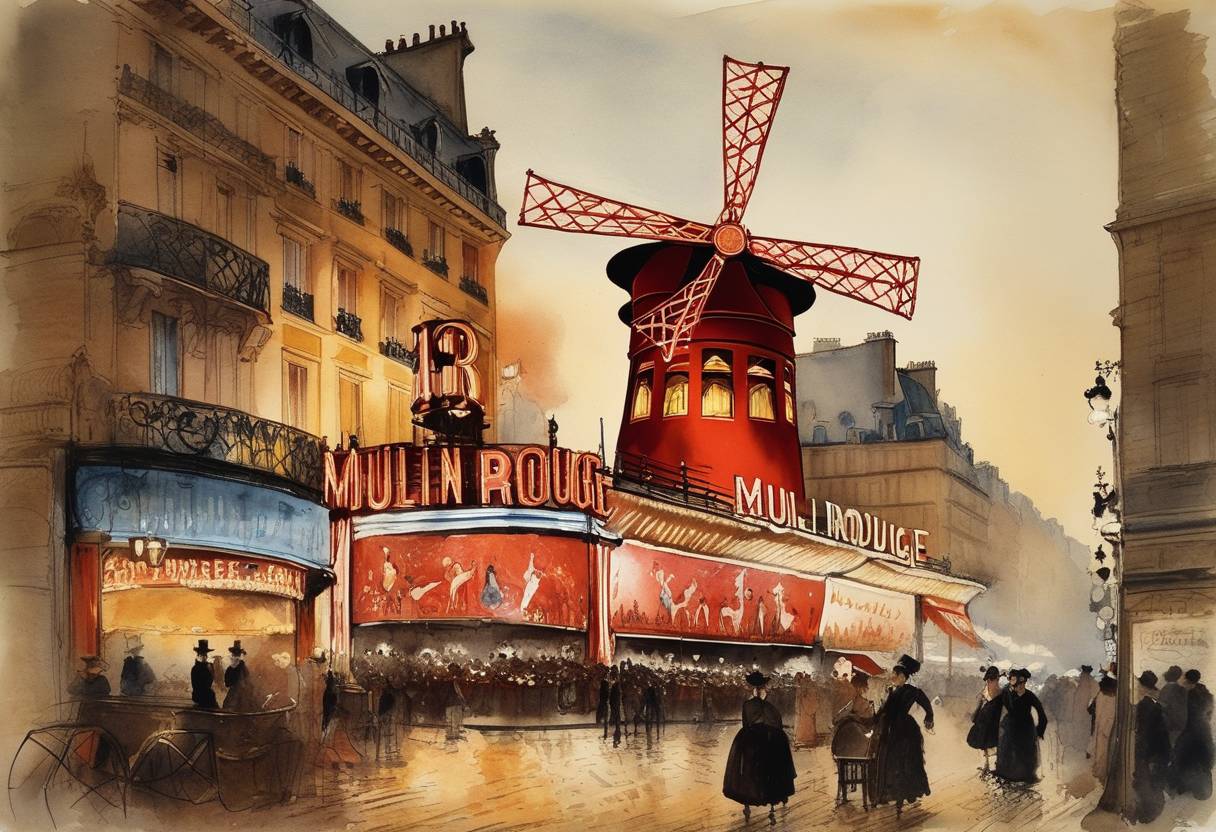
Opening of the Moulin Rouge Cabaret
The Moulin Rouge, a renowned cabaret in Paris, opened its doors on October 6, 1889. Situated in the bustling Montmartre district, the establishment quickly became a symbol of the vibrant Parisian nightlife during the Belle Époque.
Background
- Founders: The Moulin Rouge was founded by Joseph Oller and Charles Zidler, who envisioned a venue where locals and visitors could indulge in an extravagant entertainment experience.
- Location: The cabaret was strategically placed in Montmartre, an area known for its bohemian culture and artistic community.
- Design: The building was noted for its iconic red windmill façade, designed to evoke the charm and spirit of traditional rural French architecture.
Opening Night Highlights
- The inauguration was marked by grandeur, with an array of performers and spectacles that showcased exotic and eclectic acts.
- It introduced the “Can-can” dance, performed by dancers wearing flamboyant costumes, which became synonymous with the Moulin Rouge.
- The venue attracted a diverse audience of aristocrats, celebrities, artists, and the general public, fostering an atmosphere of social and cultural mingling.
Cultural Impact
- Artistic Hub: The cabaret served as a creative center for artists like Henri de Toulouse-Lautrec, who frequently painted scenes from within the Moulin Rouge.
- Entertainment Evolution: It played a crucial role in transforming the landscape of entertainment, influencing the development of modern cabaret and musical theatre.
- Iconic Status: Over the years, the Moulin Rouge has maintained its place as a symbol of artistic freedom and the playful, extravagant spirit of Paris.
Legacy
- Today, the Moulin Rouge continues to be a major tourist attraction, retaining its historical significance and cultural charm.
- It stands as a testament to the dynamic cultural and social life of late 19th-century Paris, and its legacy lives on through numerous references in literature, art, and popular culture.