National Thanksgiving Day Proclamation - November 26, 1789
1789 · New York City, United States
A national Thanksgiving Day is observed in the United States as proclaimed by President George Washington at the request of Congress.
December 18, 1777
The United States holds a official Thanksgiving celebration, marking the date as the first national day of thanksgiving in the country after the British surrender at the Battle of Saratoga.
Nationwide, United States | Continental Congress
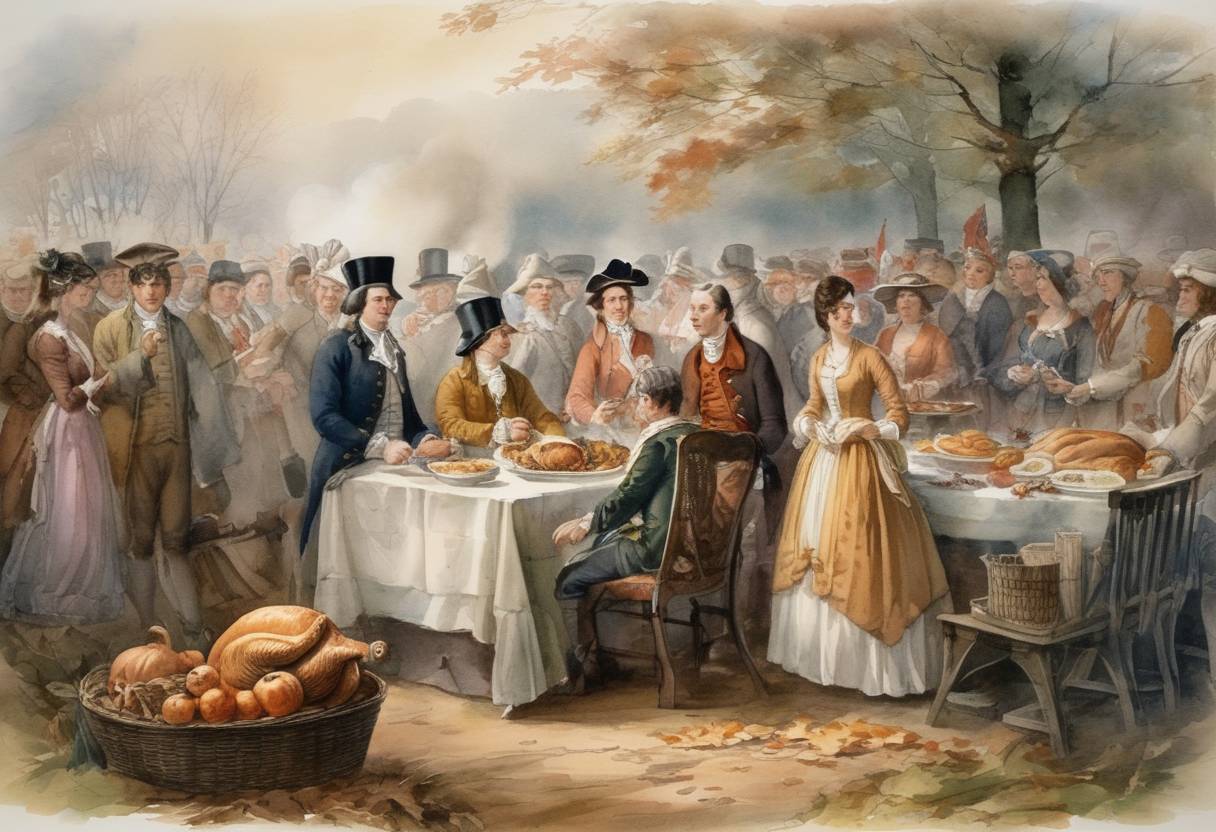
On December 18, 1777, the United States observed its first official Thanksgiving celebration. This date was set by the Continental Congress following the decisive American victory over the British at the Battle of Saratoga. The battle, which took place in two significant engagements on September 19 and October 7, 1777, was a turning point in the American Revolutionary War. It ended with the surrender of British General John Burgoyne’s army on October 17, 1777.
The victory at Saratoga was crucial for the American forces. It effectively ended British plans to divide the rebellious colonies along the Hudson River and significantly boosted the morale of the American public and troops. More importantly, it demonstrated to foreign powers, particularly France, that the American cause was viable. This victory played a pivotal role in securing French support, both diplomatic and military, which would prove indispensable in the subsequent years of the war.
Following this strategic triumph, the Continental Congress decided to express gratitude through a national day of thanksgiving. On November 1, 1777, Congress issued a proclamation calling for December 18 of that year to be set aside:
“That at one time and with one voice, the good people may express the grateful feelings of their hearts and consecrate themselves to the service of their divine benefactor.”
The observance sought to unite the colonies in expressing gratitude for the victories of the Continental Army and the protection believed to have been afforded by divine providence.
The day was marked by various public and private expressions of thanksgiving. Churches across the nation held sermons and services filled with prayers of thanks and supplication. People were encouraged to demonstrate piety, virtue, and devotion, reflecting the deep religious sentiment that underpinned the observance.
While this was a one-off observance initially, it set a precedent for future national days of thanksgiving. Thanksgiving as a holiday would evolve throughout American history. President George Washington proclaimed the first nationwide Thanksgiving celebration in 1789. It became an official federal holiday in 1863, during the presidency of Abraham Lincoln, who set it as an annual tradition to be observed on the last Thursday in November.
The 1777 Thanksgiving celebration stands as an important moment in the early history of the United States, signifying unity, resilience, and the role of providence in the young nation’s struggle for independence.
Source: en.wikipedia.org