The English Rump Parliament's Decision on January 6, 1649
1649 · London, England
The English Rump Parliament votes to put Charles I on trial for high treason and other high crimes.
December 6, 1648
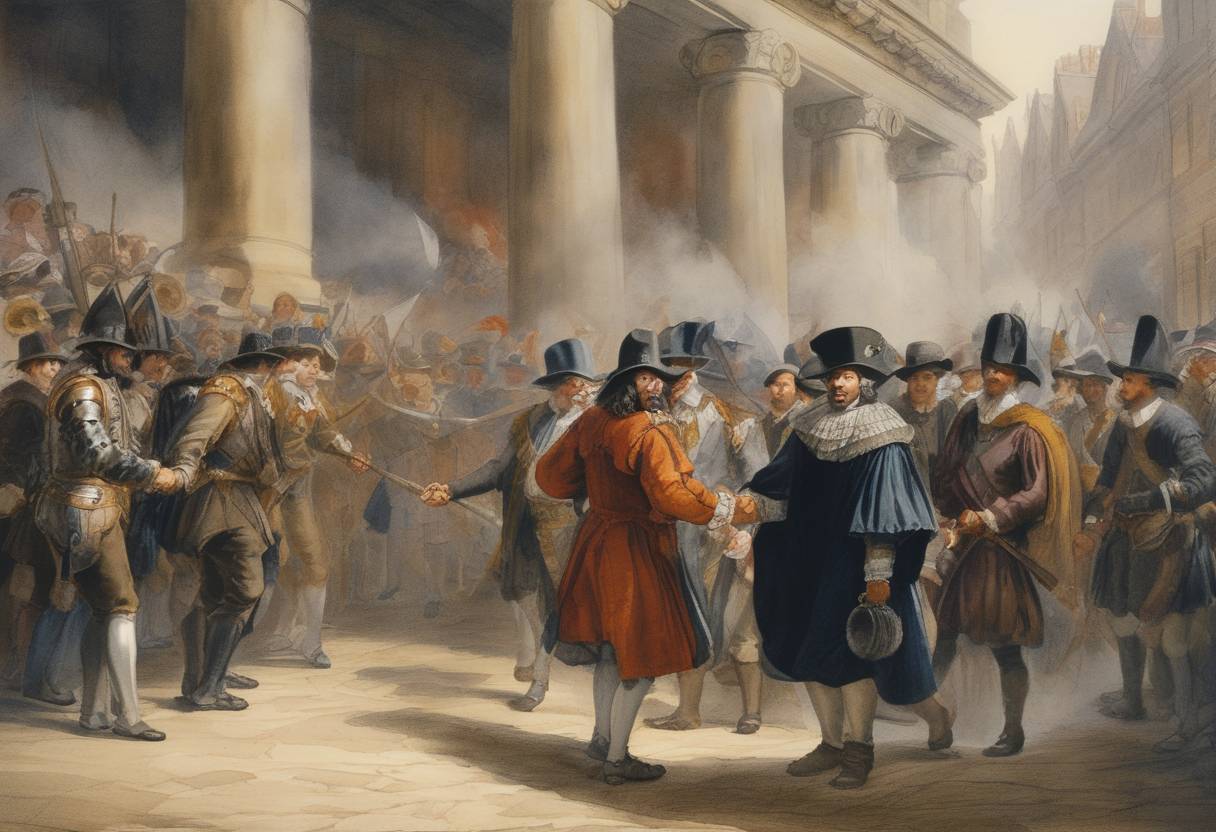
Pride's Purge took place during which Colonel Thomas Pride physically barred presbyterian members from entering the Parliament, leaving a Rump Parliament of Independents.
London, England | Parliament of England
Overview
Pride’s Purge, which occurred on December 6, 1648, was a pivotal event during the English Civil War that dramatically altered the English Parliament. It was orchestrated by Colonel Thomas Pride, a staunch ally of the New Model Army. This event effectively set the stage for the trial and execution of King Charles I, and the temporary establishment of the Commonwealth of England.
Background
In the late 1640s, political divisions deepened within the English Parliament between the Presbyterians, who sought a negotiated settlement with King Charles I, and the Independents, who favored a more radical or military solution and were closely associated with the New Model Army. The tensions culminated in the army’s demands being systematically ignored by the Presbyterian-dominated Parliament, leading to increased frustration within the ranks of the Army and their leaders.
The Events of December 6, 1648
On December 6, 1648, Colonel Thomas Pride took decisive action aligned with the interests of the Independents and the army. As members of Parliament convened, Pride, stationed at the door of the House of Commons, physically barred entry to around 110 members, primarily Presbyterians, who were suspected of opposing the army’s wishes and supporting negotiations with the king. Those not supportive of the Independents were detained or prevented from entering, effectively purging Parliament of its moderate members. This left a smaller body known as the “Rump Parliament,” which was dominated by the Independents.
Consequences
The Rump Parliament, devoid of its more moderate and Presbyterian members, took a more hardline stance, leading to a series of consequential actions. Most notably, this body established a High Court of Justice to try King Charles I, eventually condemning him to death. The king’s execution in January 1649 abolished the monarchy and paved the way for Oliver Cromwell’s rise to power and the establishment of the Commonwealth.
Historical Significance
Pride’s Purge was a significant event in the English Civil War and the broader struggle between monarchy and Parliament. It marked a departure from potential reconciliation and highlighted the power of the military over civil government. The purge set a precedent for military intervention in politics and underscored the fragility of parliamentary authority in the face of armed force. This episode was a critical stepping stone towards the eventual establishment of a republic, albeit a short-lived one, until the monarchy was restored in 1660.
Source: en.wikipedia.org