The Naval Battle of Guadalcanal: A Decisive Allied Victory
1942 · Guadalcanal, Solomon Islands
The Naval Battle of Guadalcanal ends in a decisive Allied victory during World War II, marking a turning point in the Pacific Theater.
October 11, 1942
The Battle of Cape Esperance begins during the Guadalcanal Campaign in World War II, resulting in an Allied victory.
Cape Esperance, Solomon Islands | Allied Forces
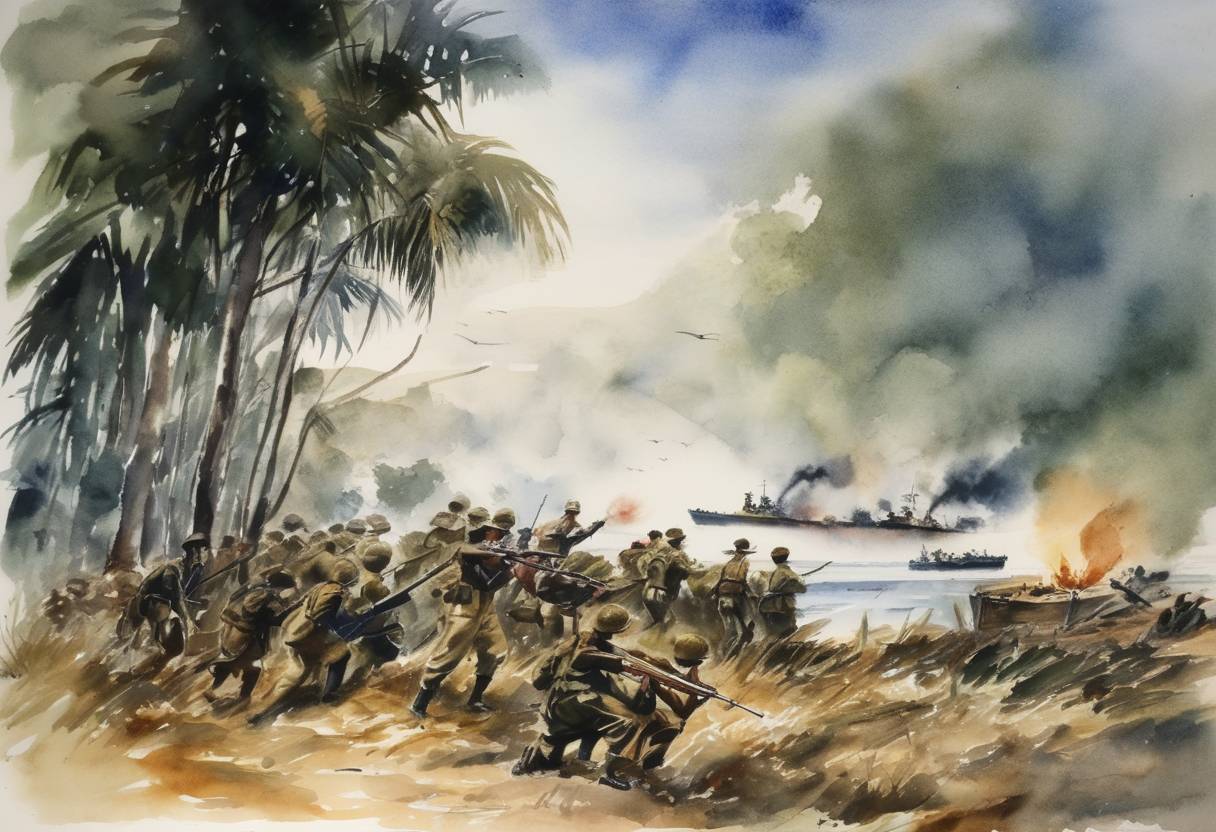
The Battle of Cape Esperance was a crucial naval engagement that took place on the night of October 11-12, 1942, during the Guadalcanal Campaign in World War II. This battle was part of the larger strategic struggle between Allied and Japanese forces for control of Guadalcanal in the Solomon Islands.
Following the Allied landing on Guadalcanal in August 1942, the campaign became a prolonged conflict as both sides sought to control the island’s valuable airfield and surrounding territory. The naval battles in the waters around Guadalcanal were critical, as they determined the ability to supply and reinforce troops on the island.
The Japanese, attempting to reinforce their troops on Guadalcanal, dispatched a force under Rear Admiral Aritomo Gotō, consisting of three heavy cruisers, two destroyers, and transport ships carrying troops. On the American side, Rear Admiral Norman Scott led a task force of four cruisers and five destroyers with orders to intercept and disrupt Japanese operations.
The confrontation began on the night of October 11th. Taking advantage of superior radar technology, Scott’s forces detected and engaged the Japanese task force off Cape Esperance. In the ensuing battle, confusion reignited among the Japanese ships, exacerbated by poor coordination and a lack of radar.
The US Navy capitalized on their surprise and strategic position, delivering effective gunfire and torpedo attacks. Gotō’s flagship, the cruiser Aoba, was badly damaged, and the cruiser Furutaka was sunk. The US forces also caused damage to other Japanese vessels and forced them to withdraw.
The Battle of Cape Esperance resulted in an important tactical victory for the Allies. Although the Japanese were able to land some troops on Guadalcanal, the battle demonstrated the effectiveness of radar in night engagements and boosted Allied morale. More importantly, it hindered Japanese supply and reinforcement efforts, contributing to the eventual Allied success in the Guadalcanal Campaign.
This naval victory helped maintain the Allied strategic initiative in the Pacific, allowing them to slowly increase pressure on Japanese positions in the Solomon Islands and beyond. The battle, though not decisive alone, was part of a series of engagements that ultimately led to the reclamation of Guadalcanal and a shift in momentum in favor of the Allies in the Pacific Theater.
Source: en.wikipedia.org