Discovery of Liquid Water on Mars: September 29, 2015
2015 · N/A, N/A
NASA announced the discovery of liquid water on Mars, a breakthrough in the search for extraterrestrial life and understanding of the planet's geology.
September 28, 2015
NASA announced that liquid water flows intermittently on present-day Mars, a significant discovery in the search for extraterrestrial life.
Washington, D.C., United States | NASA
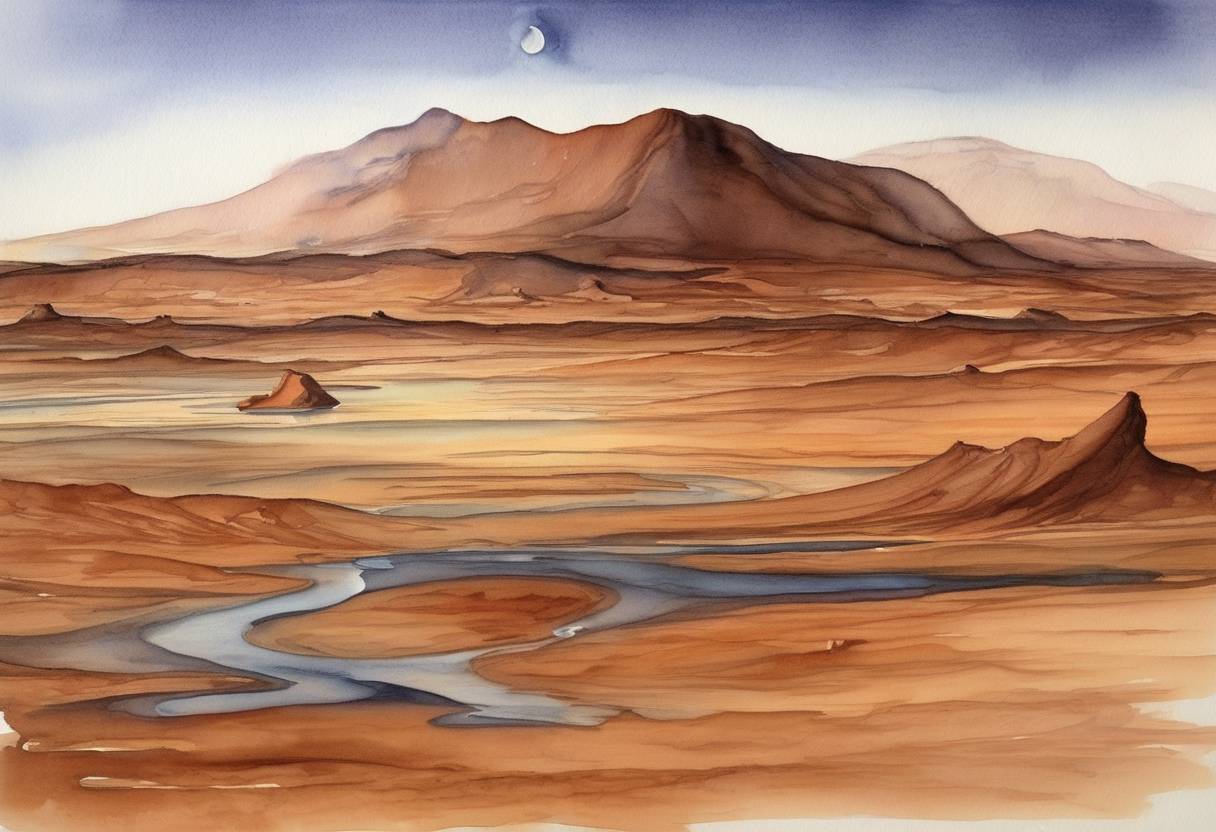
On September 28, 2015, NASA made a groundbreaking announcement that significantly advanced our understanding of Mars and its potential to harbor life. The space agency confirmed the presence of liquid water flowing intermittently on the Martian surface in modern times. This revelation was based on data acquired by the Mars Reconnaissance Orbiter (MRO), which had been studying the red planet since 2006.
Researchers identified distinctive dark streaks on Martian slopes, known as recurring slope lineae (RSL), which appeared to vary with the seasons. These streaks darkened and expanded during warmer periods and faded in cooler times. The patterns indicated that salty liquid water could be flowing just below the Martian surface, creating a briny substance that allows water to remain liquid despite the planet’s cold temperatures and low atmospheric pressure.
The MRO utilized its imaging spectrometer, called the Compact Reconnaissance Imaging Spectrometer for Mars (CRISM), to detect hydrated salts at four locations where RSLs were present. These salts, such as perchlorates, are known to lower the freezing point of water, supporting the hypothesis that the streaks were formed by liquid water.
The discovery of liquid water on Mars has profound implications for the possibility of life existing elsewhere in the universe. Water is a crucial ingredient for life as we know it, and the presence of liquid water increases the potential for microbial life on Mars. This finding also plays a critical role in future Mars exploration missions, as understanding the planet’s water dynamics is essential for both scientific discovery and the planning of human missions to Mars.
NASA’s announcement reinvigorated scientific and public interest in space exploration and the search for extraterrestrial life. It underscored the necessity of continued examination of Mars’ geology and climatology, prompting discussions about planetary protection policies and the ethics of directly exploring RSL sites for signs of life.
Following the 2015 announcement, numerous studies have been conducted to further understand the conditions and behaviors of Martian water. The ongoing exploration of Mars continues to be a cornerstone of NASA’s objectives, influencing missions like the Mars 2020 Perseverance Rover and the ExoMars program.
The confirmation of intermittent liquid water has framed our scientific narrative towards understanding not only Mars’ ancient climate and geography but also the potential that lies beyond our own planet—a quest that continues to inspire and challenge human curiosity and ingenuity.
Source: www.nasa.gov