Inauguration of the Paris Métro Line 1 - July 19, 1900
1900 · Paris, France
The first line of the Paris Métro, Line 1, was inaugurated, marking a significant development in urban public transportation.
April 1, 1854
The first official passenger ride on the Paris Métropolitan took place, marking the beginning of the famous Paris subway system.
Paris, France | Paris Métropolitan
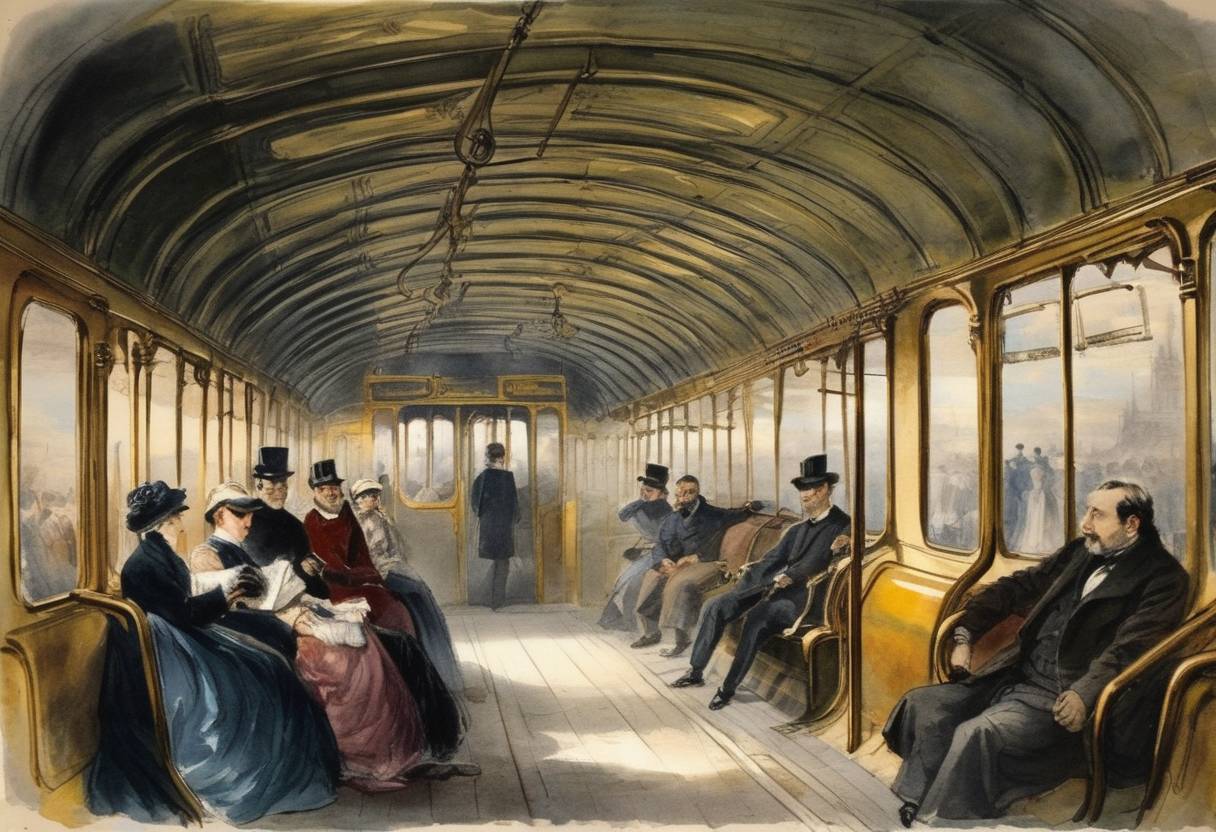
The first official passenger ride on the Paris Métropolitan system did not occur on April 1, 1854, as there seems to be a confusion in that date. The construction of the Paris Métro and its official opening is historically marked differently.
The Paris Métropolitan, often referred to as the Paris Métro, officially opened its first line to passengers on July 19, 1900. The construction of this urban transit system came after decades of proposals and planning to alleviate increasing traffic congestion and to modernize the Parisian public transportation network.
Origins: The idea began to take hold in the mid-19th century, but due to various political and financial obstacles, it was not until the 1890s that serious planning and construction began. Paris sought to develop an underground railway system amidst growing urbanization.
Engineering and Planning: The planning led by engineer Fulgence Bienvenüe and architect Hector Guimard, engaged in designing stations and tracks that would become iconic elements of the Paris Métro system. Construction began in 1898, following the plans approved by the City of Paris in 1896.
Opening: The first line, Ligne 1, ran between Porte Maillot and Porte de Vincennes and was specifically timed to be operational for the 1900 Paris Exposition Universelle, a world’s fair designed to celebrate the technological advancements of the time.
The launching of the systems highlighted the innovations of the era and provided a crucial component for daily life in Paris, shaping the city’s growth and its capacity to accommodate residents and visitors efficiently. The metro remains a vital part of Paris’s infrastructure and cultural landscape.
Source: www.paris.fr