1840 · Kaitaia, New Zealand
The Treaty of Waitangi was signed in New Zealand by Māori chiefs and representatives of the British Crown.
February 7, 1842
The Treaty of Waitangi was signed by around 40 New Zealand Maori chiefs, an event that formalized the treaty agreements made on February 6, 1840. The treaty is a foundational document in the history of New Zealand.
, New Zealand
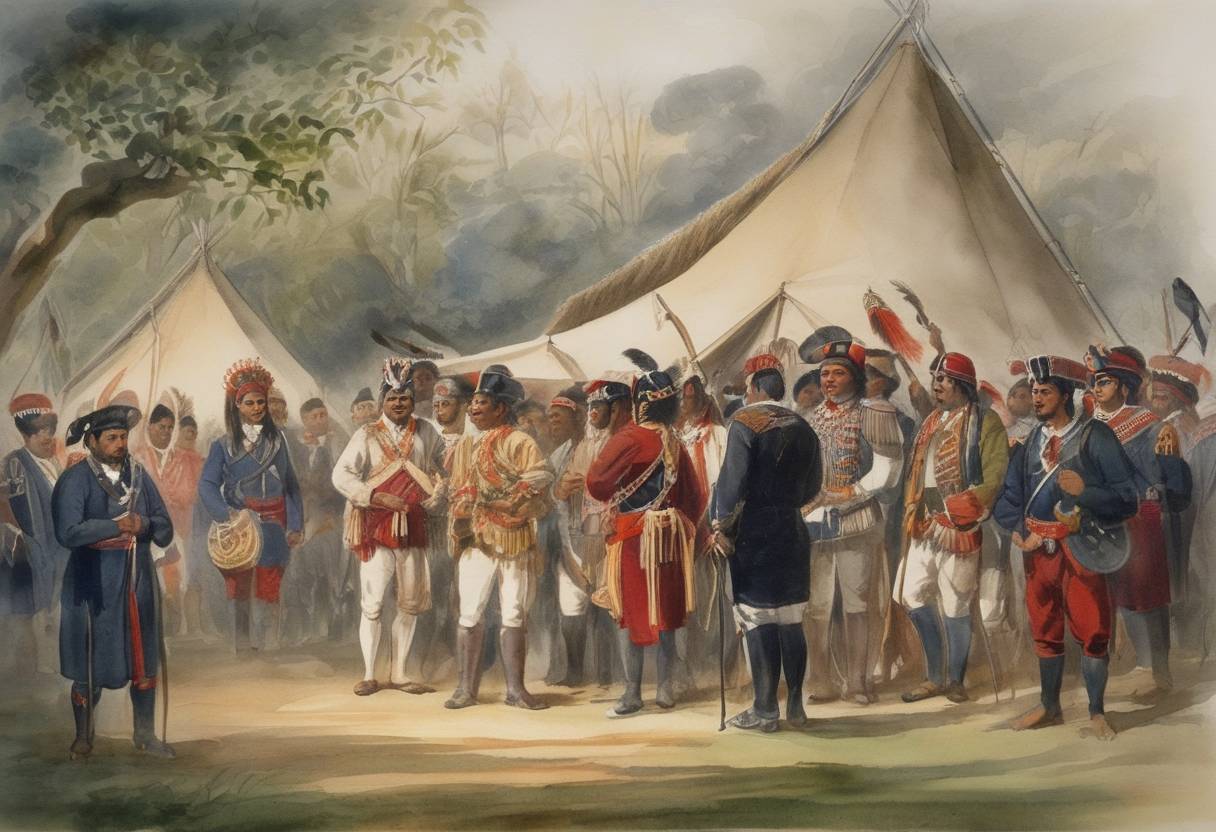
The Treaty of Waitangi was not signed on February 7, 1842; it was initially signed on February 6, 1840. The following provides details on the signing of the Treaty of Waitangi in 1840 and its significance:
In the early 19th century, New Zealand was becoming increasingly influenced by European traders, missionaries, and settlers. There was a need to establish a framework for relationships between the British Crown and the Māori, the indigenous people of New Zealand, to address land ownership and governance issues. The Treaty of Waitangi was proposed as a means to formalize these relationships.
The Treaty of Waitangi is considered a crucial element in New Zealand’s history as it provided a framework for integrating Māori and European settlers under a common system of governance, albeit with ongoing disputes regarding its interpretation and implementation. The treaty’s relevance remains strong today, often serving as a basis for legal and social discourse regarding indigenous rights and land claims.
Source: nzhistory.govt.nz