Germany Announces Unrestricted Submarine Warfare: January 31, 1917
1917 · Berlin, Germany
Germany announces its policy of unrestricted submarine warfare, a factor leading to the United States entering World War I.
January 31, 1915
During World War I, Germany's government released a memorandum outlining the intent to intensify submarine warfare against neutral and enemy ships, influencing naval and international policies.
Berlin, Germany | German Government
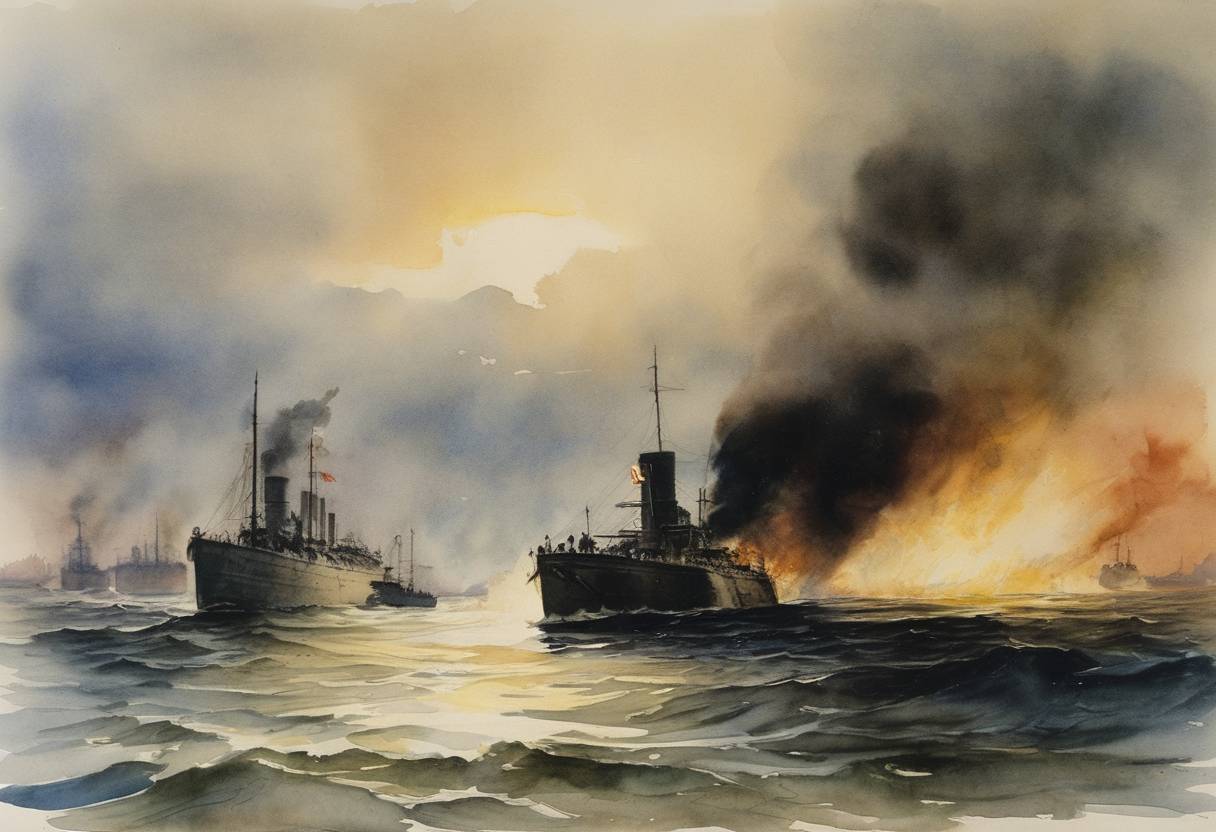
On January 31, 1915, during the tumultuous period of World War I, Germany issued a significant memorandum detailing its intent to escalate submarine warfare. This memorandum became a pivotal moment in naval strategy and international relations amidst the ongoing global conflict.
By 1915, World War I had been raging for over six months, with much of the fighting concentrated on the Western and Eastern Fronts. The war’s naval aspect was also critical, as control of sea routes was vital for military and economic resources. Following the global naval arms race of the early 20th century, Germany and Britain were the primary maritime powers in contention.
Germany’s memorandum outlined a strategic shift towards unrestricted submarine warfare. This meant that German U-boats would no longer adhere strictly to traditional maritime warfare rules, which involved surfacing and warning non-combatant ships before attacking. Instead, German submarines would target both neutral and hostile ships within designated war zones, particularly around the British Isles.
The decision to intensify submarine warfare stemmed from Germany’s desire to cut off supplies to the Allied forces, particularly Britain, which relied heavily on maritime supply lines. Germany hoped that this aggressive strategy would effectively throttle Britain’s economic stability and war effort.
The announcement marked a significant escalation in Germany’s naval strategy and had several implications:
Legal and Ethical Concerns: There was substantial international outrage, as unrestricted submarine warfare posed a threat to civilian lives and neutral countries’ commercial interests. This approach implicitly disregarded established maritime laws, including the Hague Conventions, which sought to protect non-combatant ships.
Straining Relations with Neutral Countries: The memorandum strained Germany’s relations with neutral countries, most notably the United States, whose citizens and ships were at risk in these targeted zones. While the U.S. maintained its neutral stance, incidents involving American ships would eventually contribute to U.S. engagement in the war.
Strategic Ramifications: The policy initially seemed effective as German U-boats successfully sank numerous Allied vessels, disrupting supply lines. However, it also prompted a coordinated response from the Allies, who developed improved anti-submarine techniques and convoy systems to mitigate losses.
Germany’s intensification of submarine warfare marked a turning point in World War I’s naval conflict. While it provided tactical advantages to the Central Powers by directly targeting enemy supplies, it also contributed to Germany’s diplomatic isolation, particularly with neutral countries like the United States. Ultimately, this strategy played a role in reshaping naval warfare and influencing future international maritime policies.
Source: www.history.com