Henry Hudson's Exploration of the Hudson River on September 12, 1609
1609 · New York, United States
Henry Hudson began his exploration of the river that would later be named after him, the Hudson River, during his search for a Northwest Passage.
June 23, 1611
The mutinous crew of Henry Hudson's fourth voyage set Hudson, his son, and seven loyal crew members adrift in an open boat in James Bay.
James Bay, Canada
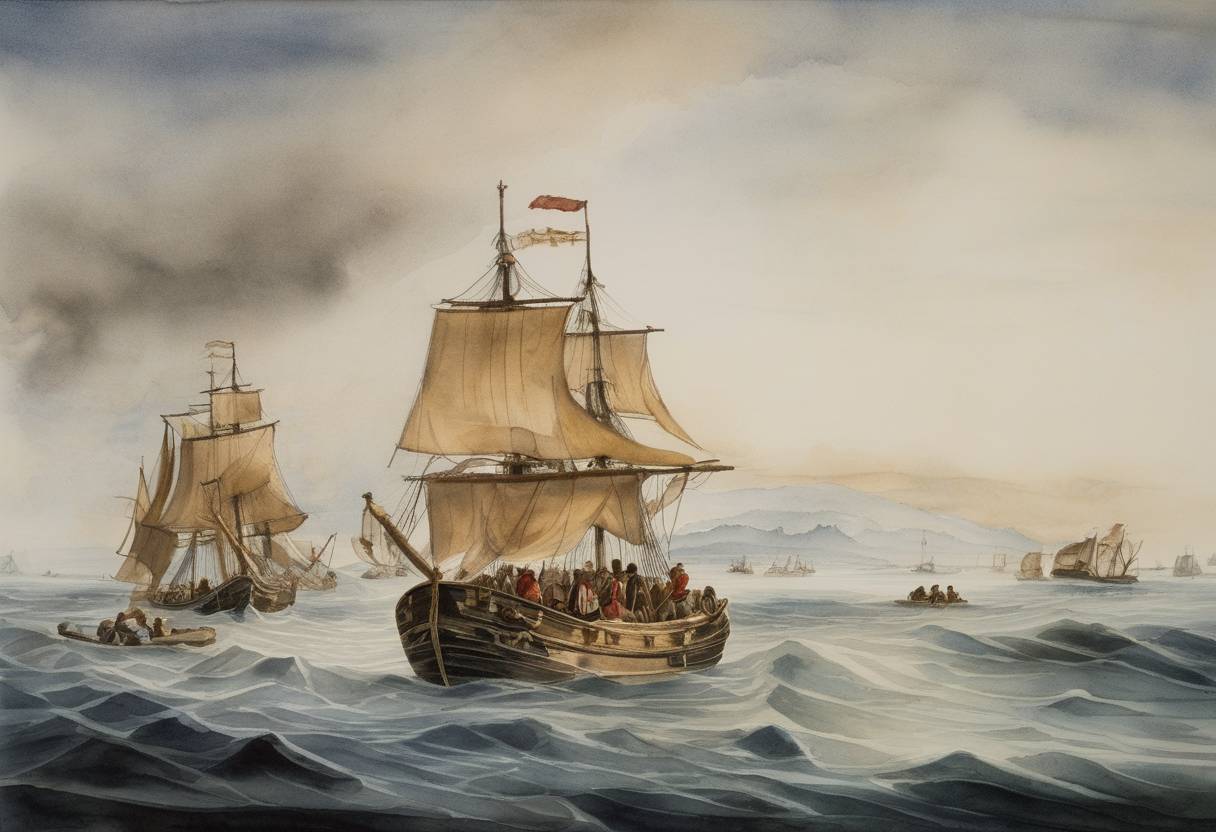
On June 23, 1611, a seminal event unfolded during Henry Hudson’s fourth voyage to find the Northwest Passage—a fateful mutiny. The voyage, under the patronage of the English investors and the Dutch East India Company, was fraught with hardship. Hudson, a seasoned explorer, aimed to discover a passage to Asia through the Arctic.
By the spring of 1611, after wintering in James Bay, severe tensions had emerged within the crew aboard the Discovery. The challenges of the harsh climate, dwindling supplies, and Hudson’s rigid leadership style aggravated discontent. With promises of riches unmet and concern for survival rising, the crew’s dissatisfaction boiled over.
On the morning of June 23, 1611, the situation reached a critical point. The mutinous crew seized control of the ship. They set Hudson, along with his teenage son, John, and seven crew members loyal to Hudson, adrift in a small, open boat. The ship, now under the control of the mutineers led by Robert Juet, departed, abandoning Hudson and his loyalists to the mercy of the harsh environment.
The fate of Hudson, his son, and the others is shrouded in mystery. They vanished without a trace, presumed lost to the elements, starvation, or exposure. The mutineers, meanwhile, piloted the Discovery back to Europe, facing accusations of their betrayal. Some were tried upon their return but escaped serious punishment due to the lack of direct evidence of criminal acts—reflective of the era’s challenging legal standards.
Hudson’s misfortune ended his ambitious exploratory endeavors but underscored the perilous nature of early modern exploration. The event would resonate through history, emphasizing the severe risks inherent in maritime discovery. Hudson’s efforts did expand geographical knowledge, particularly regarding the Canadian Arctic, laying groundwork for future exploration in the region.
Source: en.wikipedia.org