Launch of SCORE: The World's First Communications Satellite
1958 · Cape Canaveral, United States
The world's first communications satellite, SCORE, is launched by the United States, broadcasting a Christmas message from President Eisenhower.
June 23, 1969
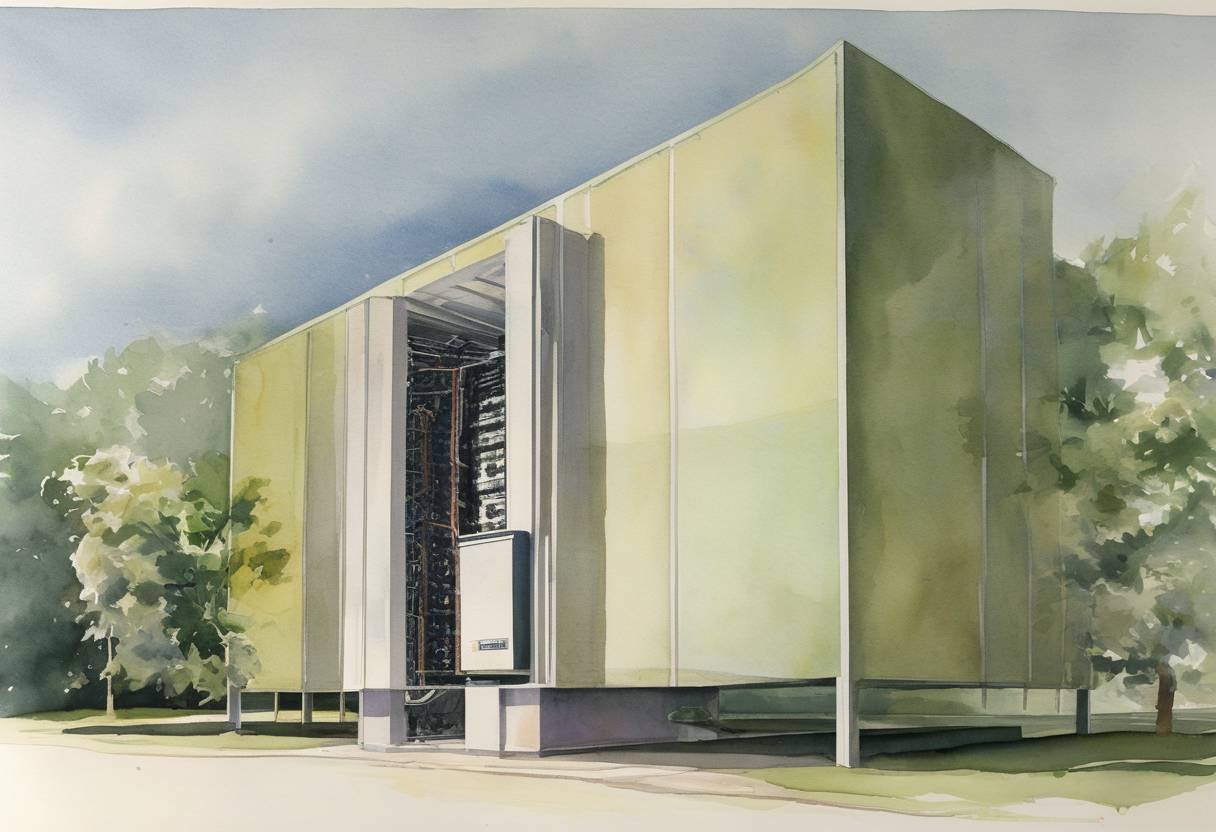
The IBM 360/91 supercomputer is turned off at NASA's Goddard Space Flight Center in Maryland, marking the end of its use.
Greenbelt, United States | NASA
June 23, 1969
On June 23, 1969, NASA’s Goddard Space Flight Center in Greenbelt, Maryland, marked the end of an era in computing technology with the shutdown of the IBM System/360 Model 91 supercomputer. This event was significant in the progression of computational advancements used by NASA and other research institutions during the 1960s.
The IBM System/360, announced by IBM in 1964, was a revolutionary family of computers, noted for its use of the same instruction set across a range of models. The System/360 was designed to support both scientific and commercial applications, making it highly versatile. The Model 91 was one of the high-end configurations, engineered for scientific computing at large institutions like NASA.
The retirement of the IBM 360⁄91 on June 23, 1969, marked the conclusion of one chapter in computing history, paving the way for the new wave of high-performance computing technology that would support space exploration in the 1970s and beyond. Its legacy persists in the form of innovations that continue to underpin modern computer architecture.
Source: ethw.org