Argentina Declares Independence from Spain: July 9, 1816
1816 · San Miguel de Tucumán, Argentina
Argentina declares independence from Spain.
May 14, 1811
Paraguay formally declares independence from Spanish rule. This marked the beginning of self-governance that followed an uprising against Spanish authorities, with local leaders such as José Gaspar Rodríguez de Francia playing a critical role.
Asunción, Paraguay | Paraguayan Revolutionaries
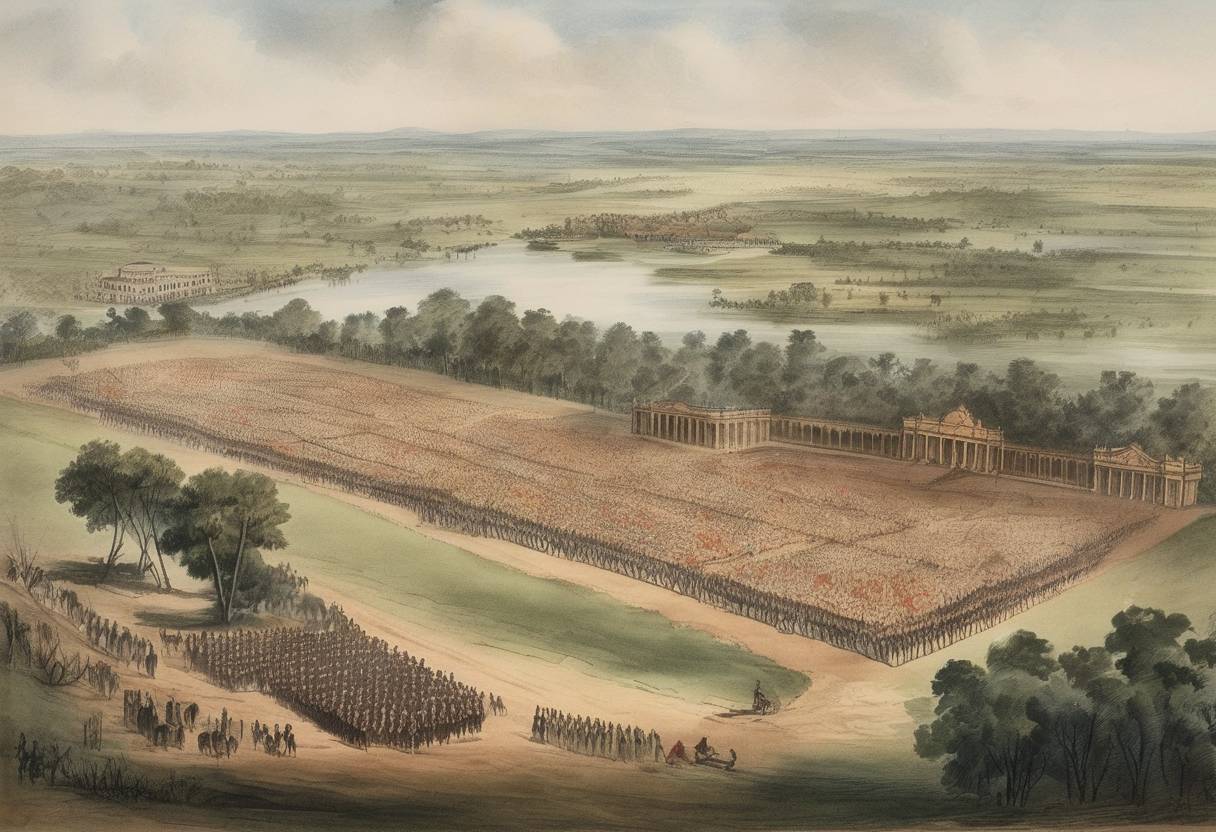
On May 14, 1811, Paraguay formally declared its independence from Spanish rule, marking the beginning of a new era of self-governance and the end of colonial dominance in the region. This significant event was the culmination of a burgeoning movement fueled by a growing dissatisfaction with Spanish colonial administration and inspired by other independence movements occurring across Latin America.
In the early 19th century, the Spanish Empire was increasingly unable to maintain its colonial possessions in the face of rising internal and external pressures. In 1808, Napoleon’s invasion of Spain and the consequent Peninsular War weakened Spanish authority, making it difficult to exert control over distant territories. In the Río de la Plata region, of which Paraguay was a part, the political turmoil provided fertile ground for revolutionary ideas.
Paraguayans were initially reluctant to support the ideas of independence propagated by neighboring territories such as Buenos Aires. However, alliances formed with local Paraguayan leaders began to shift this sentiment. The key figure in Paraguay’s movement towards independence was José Gaspar Rodríguez de Francia, a learned lawyer who would become a central figure in Paraguay’s political future.
The tipping point came when local leaders and military figures, frustrated with Spanish officials and wary of foreign dominance, decided to take action. In the early hours of May 14, 1811, a group of revolutionaries moved against the Spanish authorities.
The revolution unfolded with strategic precision. Military leaders including Captain Pedro Juan Caballero, along with civilians such as Fulgencio Yegros and Francia, orchestrated the removal of the Spanish governor Bernardo de Velasco. By the morning of May 15, news of the successful uprising and the declaration of independence reached the public, who largely supported the change.
In the immediate aftermath, Paraguay set up a temporary ruling junta, which began the transition towards establishing a stable government. José Gaspar Rodríguez de Francia would later become a dominant political figure as the nation’s first consul and eventually assumed dictatorial powers, shaping the country’s politics for decades.
Paraguay’s independence was notable as it managed to maintain autonomy while avoiding the severe conflicts that plagued other regions. It secured its sovereignty without significant interference from external powers, setting it apart as a unique case in the broader Latin American independence movement.
The declaration of independence on May 14, 1811, laid the groundwork for Paraguay’s future as a sovereign nation and remains a pivotal moment in its history. It heralded the end of colonial rule and the beginning of Paraguay’s journey towards self-determination.
Source: www.britannica.com