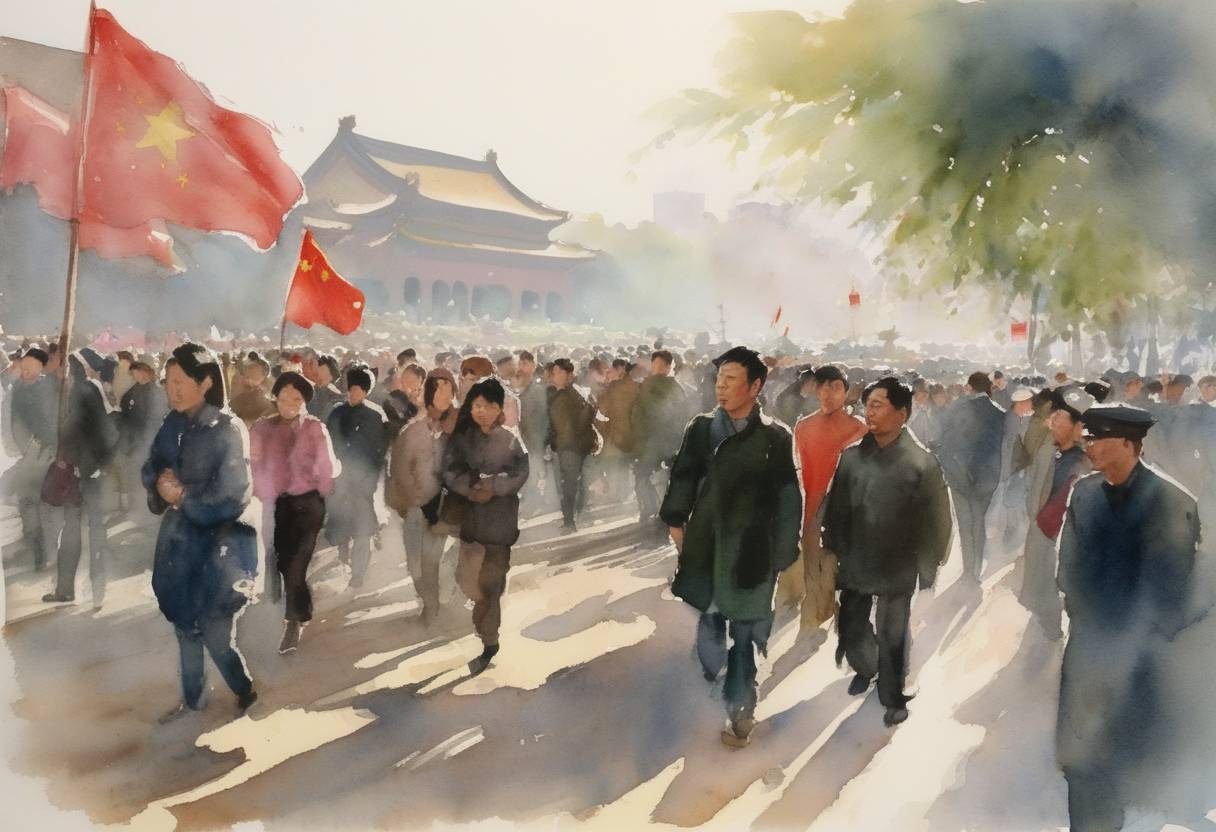
Tiananmen Square Protests on May 30, 1989
On May 30, 1989, the Tiananmen Square Protests, a significant pro-democracy movement in Beijing, China, reached a critical phase with demonstrations peaking in attendance. The protests were part of a larger movement that called for political reform, increased freedoms, and a fight against official corruption within the Chinese government.
Background
The protests began in April 1989, following the death of Hu Yaobang, a former Communist Party leader who was sympathetic to calls for political reform. Students and intellectuals, inspired by his legacy, gathered initially to mourn Hu but quickly shifted focus to broader demands for reforms.
Events of May 30, 1989
By May 30, the demonstrations in Tiananmen Square had swelled to an estimated attendance of over a million people. The gathering was marked by the installation of the “Goddess of Democracy,” a large statute symbolizing the protestors’ demands for freedom and reform. This period represented the peak of protester unity and presence, with students, intellectuals, and workers joining forces in the square to push for change.
Broader Context
The Chinese government, led by Deng Xiaoping, viewed the protests as a threat to its authority. As the demonstrations grew, internal debates within the government intensified over how to handle the unrest. Hardliners argued for a crackdown, fearing that the protests marked the beginning of widespread challenges to communist rule.
Aftermath
Following May 30, tensions continued to escalate. The government’s patience waned, leading to the imposition of martial law and the eventual military crackdown on June 4, 1989, which resulted in a tragic and violent end to the protests. The government’s actions were widely condemned internationally and have remained a highly sensitive and censored topic within China.
These protests highlighted deep societal frustrations and left a lasting impact on China’s socio-political landscape, affecting government policies and international relations for years to come. The events remain a powerful symbol of the struggle for freedom and human rights worldwide.