The Treaty of Den Haag - September 25, 1690
1690 · The Hague, Netherlands
The Treaty of Den Haag was signed, an agreement between England and the Netherlands against France, during the War of the Grand Alliance.
May 31, 1678
The Treaty of Nijmegen was signed between France and the Dutch Republic, marking the end of the Franco-Dutch War. This treaty expanded French territories and solidified the power of Louis XIV in Europe.
Nijmegen, Netherlands
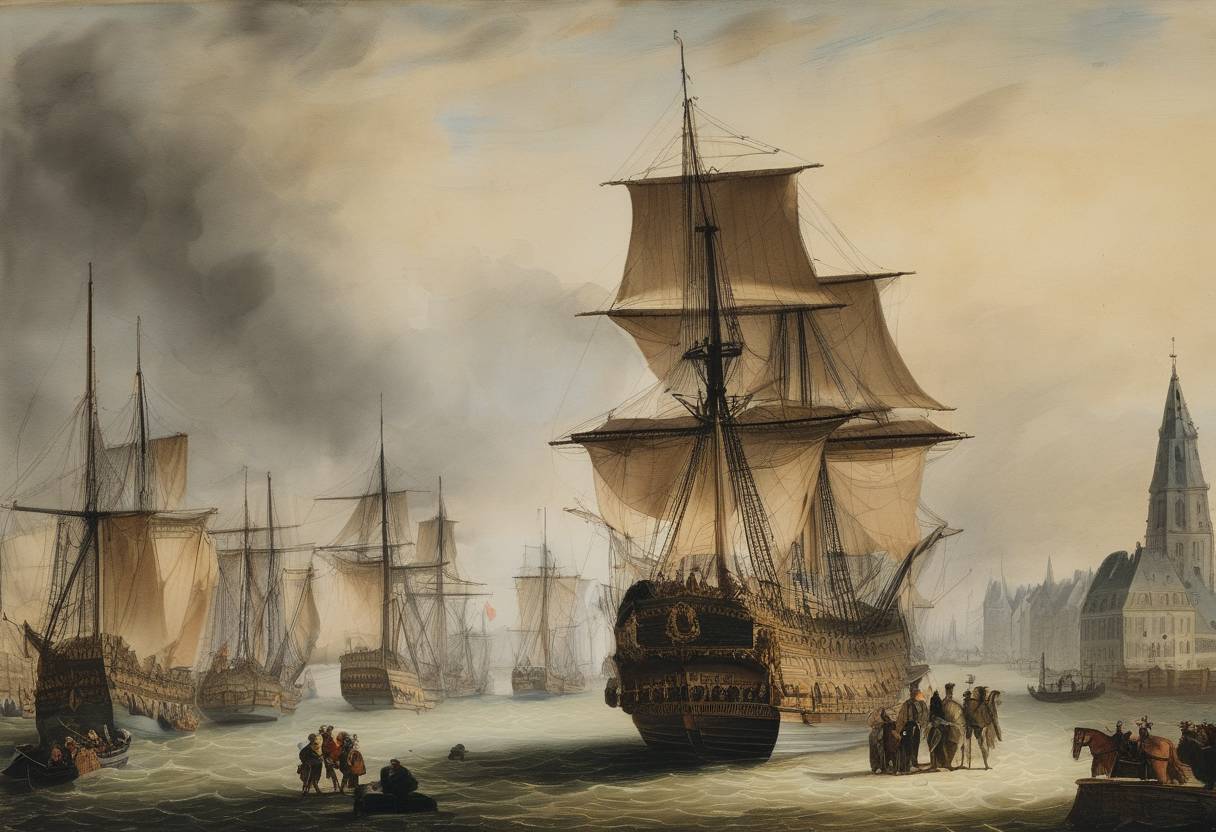
On May 31, 1678, the Treaty of Nijmegen was signed between France and the Dutch Republic, marking a significant moment in European history by ending the Franco-Dutch War. The treaty was one in a series negotiated between 1678 and 1679, concluding various conflicts involving multiple European powers.
The Franco-Dutch War (1672–1678) began primarily due to Louis XIV’s ambitions to expand French territories and his dissatisfaction with the Dutch Republic, which opposed French interests by forming alliances, notably with England, Sweden, and other European states. The war also involved significant battles involving Spain and the Holy Roman Empire, aligning with the Dutch against France.
The Treaty of Nijmegen contained several important clauses that reshaped territorial boundaries and political alliances:
The treaty solidified Louis XIV’s power, strengthening his reputation as a formidable ruler in European politics. The territorial gains enhanced France’s strategic position and economic potential, providing Louis XIV with increased resources to pursue further endeavors.
The Treaty of Nijmegen was a landmark agreement that reshaped Europe’s political landscape in the late 17th century. By establishing France’s territorial advancements, it not only ended the war but also highlighted the ongoing complexities of European diplomacy and the relentless quest for dominance among its major powers.
Source: en.wikipedia.org