Zhu Yuanzhang Ascends to the Throne: The Beginning of the Ming Dynasty
1368 · Nanjing, China
Zhu Yuanzhang ascends to the throne of China as the Hongwu Emperor, marking the beginning of the Ming Dynasty.
January 24, 1368
In China, Zhu Yuanzhang ascends the throne of the Ming Dynasty as the Hongwu Emperor.
Nanjing, China | Ming Dynasty
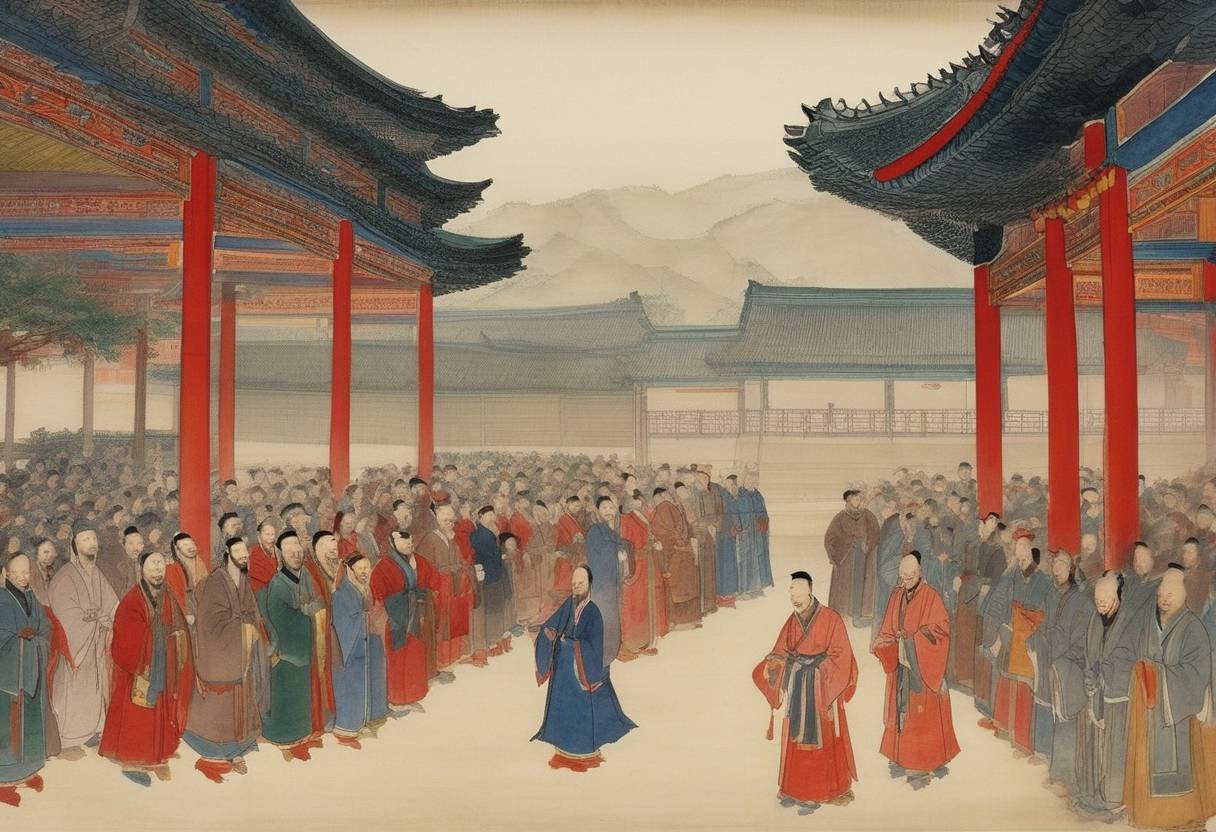
On January 24, 1368, in Nanjing, Zhu Yuanzhang ascended the throne, inaugurating the Ming Dynasty as the Hongwu Emperor. This marked a pivotal moment in Chinese history, as it signaled the end of the Mongol-led Yuan Dynasty and the beginning of over 276 years of Ming rule.
The Yuan Dynasty, established by Kublai Khan in 1271, had seen significant decline by the mid-14th century. Corruption, heavy taxation, and natural disasters contributed to widespread peasant unrest across China. During this time, Zhu Yuanzhang, born into a poor peasant family in 1328, rose to prominence amid the chaos. Orphaned at a young age, Zhu joined a Buddhist monastery and later became involved with the Red Turbans, a rebel group opposing Yuan rule.
Military Campaigns: Zhu proved to be an adept military leader within the Red Turban movement. By 1356, he had captured Nanjing, which he established as his base of operations. Over the following years, Zhu meticulously conquered various parts of southern and central China, defeating both rival rebel factions and Yuan loyalists.
Establishing Authority: Zhu gradually consolidated power, gaining support from intellectuals, military leaders, and local officials who had grown disillusioned with Yuan rule. His promises of fair governance and agrarian reform won him widespread popular support.
Proclamation as Emperor: On January 23, 1368, Zhu declared himself emperor of the new Ming Dynasty. The following day, January 24, 1368, he was formally enthroned as the Hongwu Emperor.
Hongwu’s ascension marks the re-establishment of Han Chinese rule after nearly a century of foreign dominance under the Mongols. His reign was characterized by significant reforms aimed at rebuilding China’s infrastructure, revamping the legal code, and reducing corruption through the establishment of loyal, centralized governance.
Institutional Reforms: Hongwu implemented the Lijia system to streamline tax collection and foster community mutual responsibility. He also reintroduced Confucian policies, reinstating the civil service examination system that encouraged learning and ideological unity.
Agricultural Prosperity: The emperor emphasized agricultural development, ensuring food security and stability for his empire, which significantly improved the socio-economic conditions of the peasantry.
Military and Defense: To prevent future foreign invasions, Hongwu strengthened the Great Wall and established a formidable military system with regional command centers.
The Ming Dynasty, under Hongwu’s foundational rule, would go on to oversee a period of cultural regeneration, economic expansion, and monumental architectural projects, including the construction of the Forbidden City later on. His lasting impact paved the way for successive emperors and left a profound legacy on Chinese society and governance.
Source: en.wikipedia.org