2021 Partial General Elections in El Salvador
2021 · San Salvador, El Salvador
The partial general elections were held in El Salvador to elect members to the national assembly and local governments.
April 8, 1838
The Central American Federation dissolves officially after Costa Rica and Nicaragua leave it.
San Salvador, El Salvador | Central American Federation
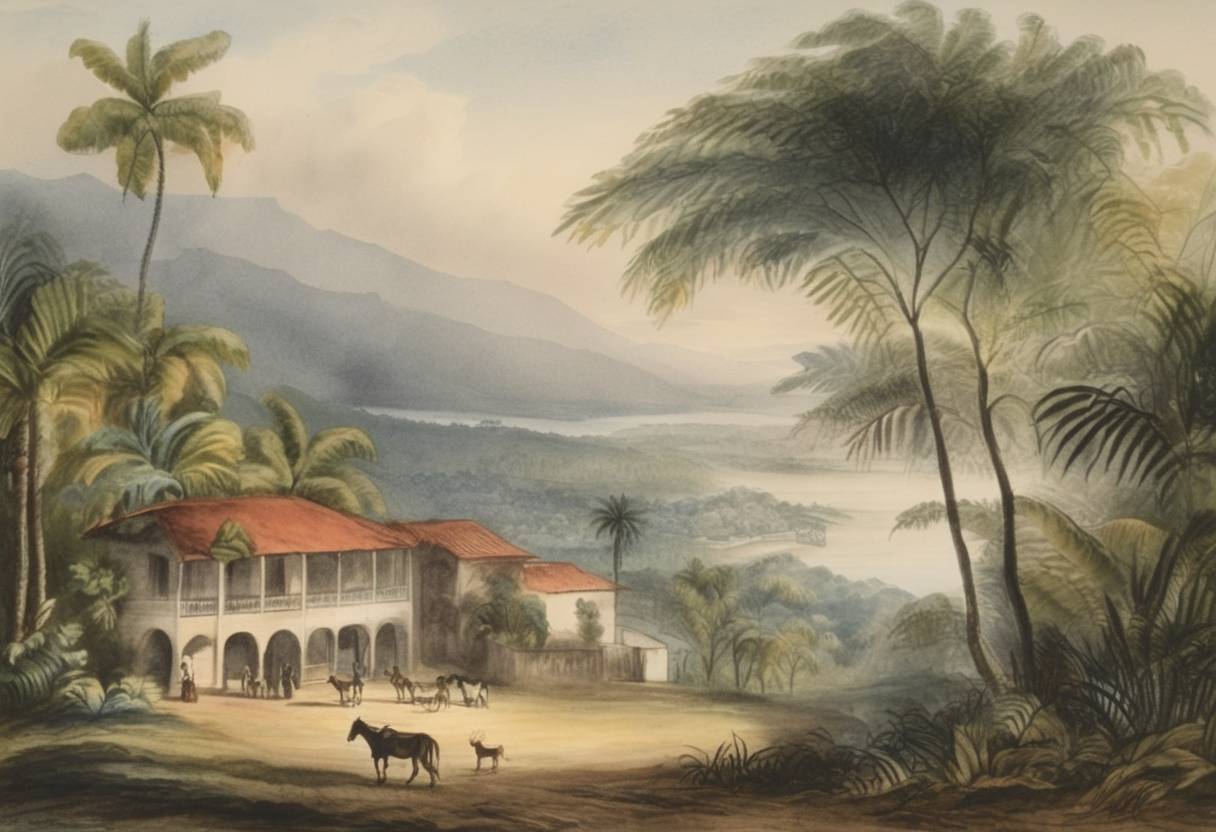
On April 8, 1838, the Central American Federation, also known as the Federal Republic of Central America, was formally dissolved. This event marked a pivotal shift in the political landscape of Central America. The dissolution process had been ongoing, triggered by various political, social, and economic tensions within the federation, culminating in the secession of two key member states, Costa Rica and Nicaragua.
The Central American Federation was established in 1824 following the region’s independence from Spanish rule. It comprised five member states: Costa Rica, El Salvador, Guatemala, Honduras, and Nicaragua. The union was inspired by the ideals of unity and cooperation, similar to the United States of America.
However, from its inception, the federation struggled with internal conflicts. Key issues included disputes over the centralization of authority, differences in economic interests among the member states, and regional rivalries. The liberal and conservative factions within the federation also clashed over government power and church involvement in state affairs.
In the years leading up to 1838, tensions escalated as the federal government in Guatemala City failed to effectively mediate disputes and maintain control. Discontent among the member states grew, fueled by dissatisfaction with governance and representation.
The situation reached a critical juncture when Costa Rica and Nicaragua decided to secede from the federation. In 1838, Costa Rica declared its own independence from the federation, followed by Nicaragua shortly thereafter. These departures undermined the federation’s structure and signaled an inevitable collapse.
The official withdrawal of Costa Rica and Nicaragua on April 8, 1838, effectively signified the end of the Central American Federation as a political entity. The dissolution laid the groundwork for each member state to pursue individual nationhood, leading to the establishment of the independent republics of Costa Rica, El Salvador, Guatemala, Honduras, and Nicaragua.
The breakdown of the federation had long-standing effects on the region, influencing future attempts at Central American unity. It highlighted the complexities and challenges of creating a cohesive political union among diverse entities with distinct priorities and cultures.
The dissolution of the Central American Federation is a significant historical event that underscores the difficulties of maintaining regional alliances amidst internal strife. It serves as a poignant example of early efforts at supranational governance and the inherent tensions between central authority and local autonomy in forming lasting unions. The event left a legacy that continues to influence Central American politics and aspirations for regional integration today.
Source: www.britannica.com