Ratification of the Articles of Confederation
1781 · Annapolis, United States
The Articles of Confederation were ratified after Maryland became the last state to sign them, establishing the United States' first constitution.
November 17, 1777
Articles of Confederation were submitted to the states for ratification by the Continental Congress in York, Pennsylvania, officially establishing the United States as a confederation of sovereign states.
York, United States | Continental Congress
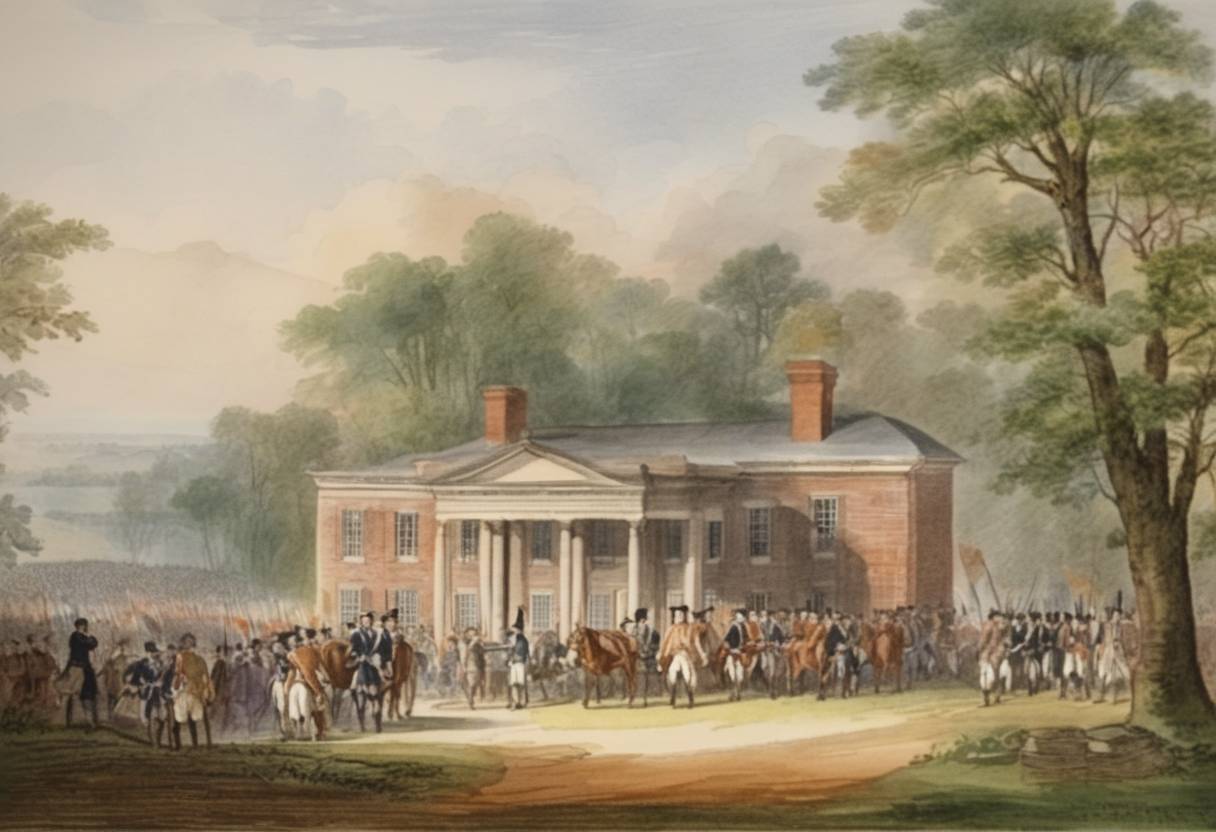
On November 17, 1777, the Continental Congress, convening at York, Pennsylvania, submitted the Articles of Confederation to the thirteen states for ratification. This pivotal document marked the official formation of the United States as a confederation of sovereign states, laying the foundational framework for the nation’s first government.
The push for a formalized national government emerged during a critical period in the American Revolutionary War. The Declaration of Independence in 1776 necessitated a unified structure to manage the war effort and diplomatic relations. A committee led by John Dickinson initially drafted the Articles in mid-1776, and extensive debates ensued to address concerns regarding state sovereignty and federal authority.
The Articles of Confederation established a “firm league of friendship” among states, focusing on their mutual defense and collective welfare. Key provisions included:
The Articles reflected the collective wariness of centralized authority prevalent among the colonies. However, this structure led to inherent weaknesses, such as:
The ratification process for the Articles of Confederation required unanimous approval from all thirteen states, a goal not reached until March 1, 1781. Despite its shortcomings, the Articles served as a crucial stepping stone, providing a learning environment that eventually informed the drafting of the U.S. Constitution in 1787.
The submission of the Articles for ratification signified an important step in the evolution of American governance, emphasizing the need for balance between state sovereignty and federal oversight, themes that continue to be integral to the United States’ constitutional framework.
Source: en.wikipedia.org