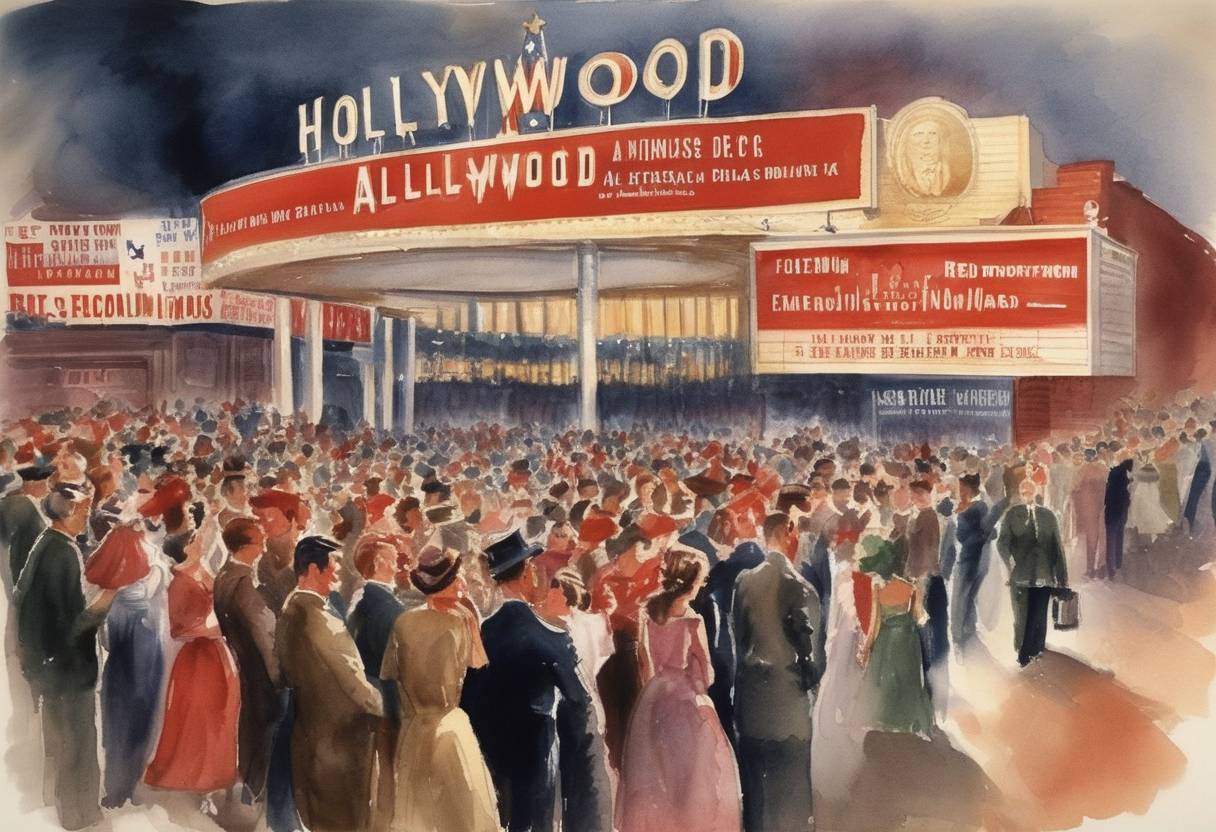
The Hollywood Ten and the Red Scare Intensification - October 27, 1947
On October 27, 1947, the Red Scare’s impact on Hollywood reached a pivotal moment with the intensified scrutiny of the film industry, marked by the involvement of the House Un-American Activities Committee (HUAC). This date is significant for the proceedings that led to the publicized confrontation involving the Hollywood Ten, a group of influential screenwriters and directors who were summoned by HUAC.
Background
Post-World War II America was gripped by the fear of Communism, intensified by emerging geopolitical tensions that sowed the seeds of the Cold War. HUAC, originally established in 1938, gained renewed momentum in its mission to investigate alleged subversive activities within various American institutions, focusing heavily on alleged Communist influences in the entertainment industry.
Key Events
HUAC Hearings Begin: By late 1947, HUAC had begun its hearings specifically targeting Hollywood as a source of Communist propaganda. The aim was to discern supposed Communist infiltration in the industry and to identify individuals involved.
The Hollywood Ten’s Defiance: On October 27, 1947, the controversy peaked when ten prominent film industry figures refused to testify before the committee. The individuals—later known as the Hollywood Ten—included screenwriters Dalton Trumbo and Ring Lardner Jr., and director Edward Dmytryk, among others. They were charged with contempt of Congress for their refusal to answer questions about their alleged Communist affiliations, citing their First Amendment rights.
Invocation of the Fifth Amendment: The Hollywood Ten opted not to reference the Fifth Amendment, which protects against self-incrimination, as part of their resistance, focusing instead on the broader implication of First Amendment rights surrounding freedom of expression and association.
Aftermath and Impact
Blacklisting: The events of October 27 were a precursor to the widespread blacklisting in the entertainment industry. The Hollywood Ten were eventually sentenced to prison and subjected to career-damaging blacklists that affected not only them but many others suspected of similar affiliations.
Industry-Wide Chilling Effect: The hearings and subsequent actions cast a long shadow over Hollywood, leading to a restrictive environment where numerous careers were derailed by mere suspicion of Communist ties.
Cultural Legacy: The Hollywood Ten’s defiance has since been viewed as a significant moment in the fight against censorship and persecution based on political beliefs, highlighting tensions between security and freedom.
Overall, the testimonies and the eventual consequences that followed the events of October 27, 1947, underscored the intersection of politics and culture in mid-20th-century America, contributing to a broader understanding of civil liberties’ role within the democratic framework.