The Treaty of the Pyrenees: October 27, 1659
1659 · Pheasant Island, France/Spain
The Treaty of the Pyrenees is signed between France and Spain, ending the Franco-Spanish War.
October 29, 1500
The Treaty of Granada was signed between Louis XII of France and Ferdinand II of Aragon, outlining the partition of the Kingdom of Naples.
Granada, Spain | Kingdom of France and Crown of Aragon
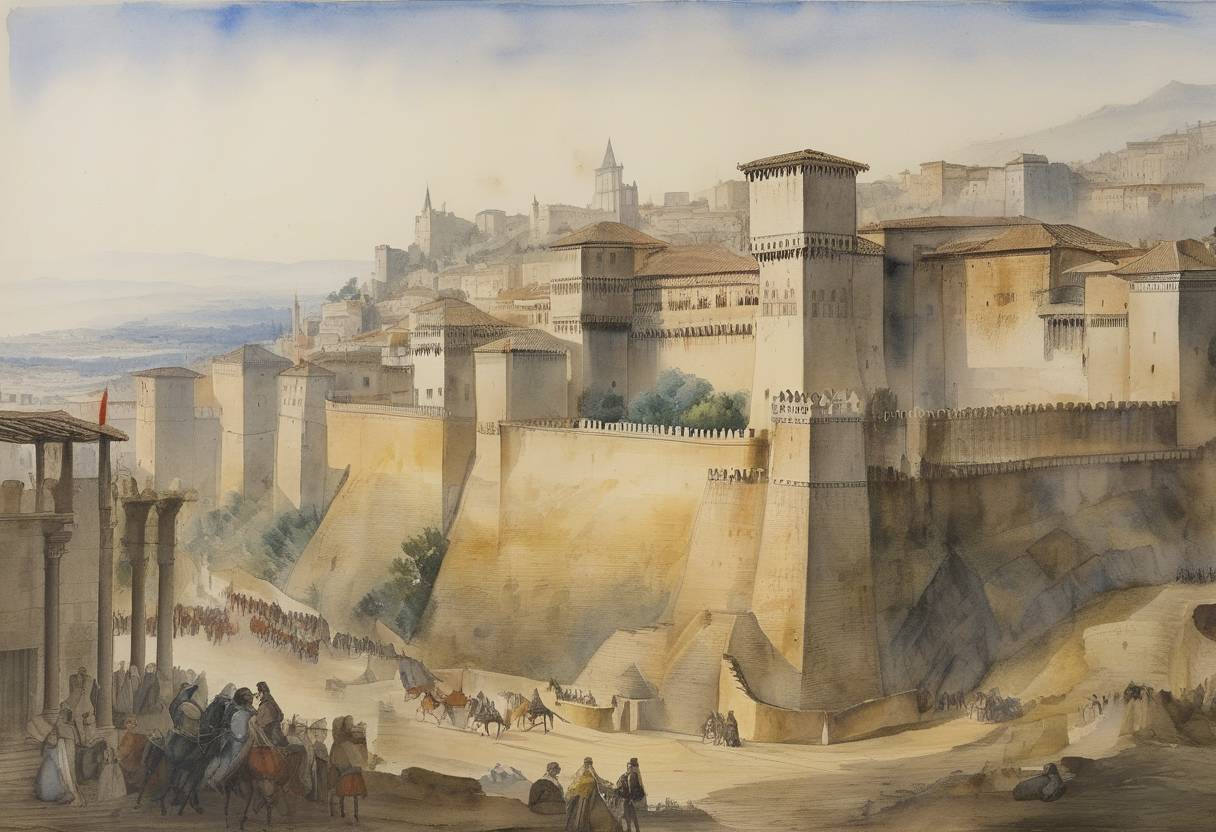
The Treaty of Granada was signed on October 29, 1500, between Louis XII of France and Ferdinand II of Aragon. This agreement outlined a pact between the two monarchs to partition the Kingdom of Naples, a highly contested territory in Italy during this period.
By the late 15th century, the Kingdom of Naples had become a focal point of power struggles among European powers due to its strategic location and economic wealth. France, under King Charles VIII, had previously attempted to assert control over Naples but faced resistance and ultimately withdrew. Louis XII, his successor, renewed these ambitions. Meanwhile, Ferdinand II of Aragon was keen to expand Spanish influence in Italy.
The Treaty of Granada specified that:
The initial cooperation between France and Spain was short-lived. Disputes over the exact boundaries and governance erupted soon after the successful conquest, leading to conflicts known as the Italian Wars. These tensions worsened diplomatic relations and set the stage for later conflicts between France and Spain over Naples and broader dominions in Italy.
The Treaty of Granada is significant as it exemplifies the complex alliances and rivalries of the period. The partition of Naples highlighted the political machinations in Renaissance Europe, where shifting alliances were common, and territorial gains were pursued aggressively. This treaty also foreshadowed the resistance to what would become ongoing French efforts to dominate the Italian Peninsula during the Italian Wars, which played a pivotal role in shaping the political landscape of Europe in the early modern period.
Source: en.wikipedia.org