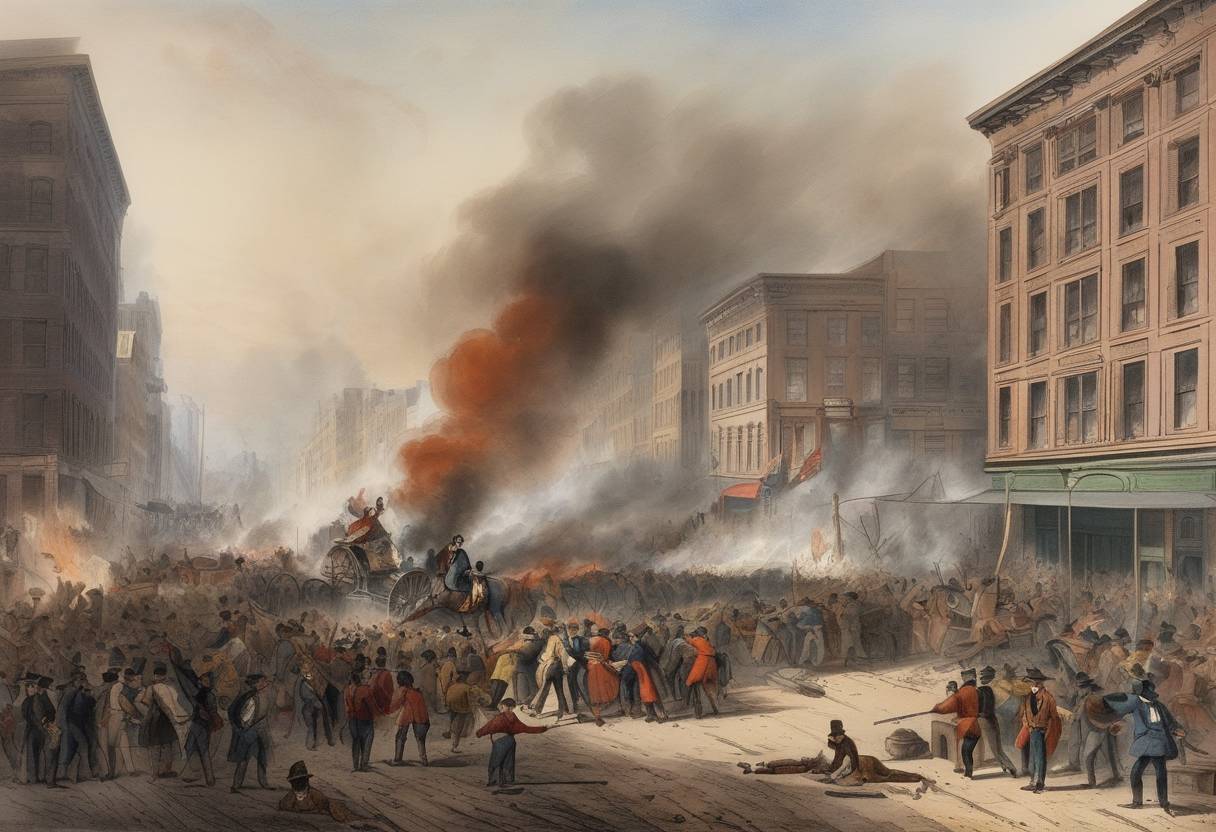
The Astor Place Riot: May 10, 1849
The Astor Place Riot is a significant and violent episode in the history of New York City, marked by a deadly conflict rooted in cultural tensions and theatrical rivalry. Occurring on May 10, 1849, it was driven by nationalism, class struggle, and personal antagonism between two prominent actors of the time, Edwin Forrest of the United States and William Charles Macready of England.
Background
The rivalry between Edwin Forrest and William Charles Macready stemmed from both professional competition and cultural animosity. Forrest, a celebrated American actor, was a symbol of the emerging American theater, populist in appeal and nationalist in sentiment. Macready, an esteemed English tragedian, represented the traditional and elite aspects of theater, often associated with the old-world aristocracy.
Tensions escalated when Forrest publicly expressed his contempt for Macready, accusing him of sabotaging his performances during a tour in England. Their personal feud was compounded by existing nationalist sentiments, as Americans at the time were keen to assert cultural independence from Britain post the Revolutionary War and War of 1812.
Key Events Leading to the Riot
The immediate catalyst for the riot was the simultaneous performances planned by both actors in New York City. Macready was scheduled to perform at the Astor Place Opera House, while Forrest was performing elsewhere in the city. A previous attempt by Macready to perform in New York had been marred by disruptions allegedly orchestrated by Forrest’s supporters.
On May 7, 1849, Macready’s performance was disrupted by Forrest’s partisans hurling objects and shouting insults. Despite considering leaving the country, Macready was persuaded by prominent New Yorkers to continue his performance. This set the stage for the infamous confrontation on May 10, when Macready took to the stage again at Astor Place.
The Riot
On May 10, an aggressive crowd gathered outside the Astor Place Opera House, numbering in the thousands. Many in the mob were staunch supporters of Forrest, while others were drawn by anti-British sentiments and class resentment against the perceived elitism of Macready and his patrons.
As tensions escalated, the police were unable to control the mob, prompting the involvement of the state militia. The crowd grew more unruly, and in the ensuing chaos, the militia opened fire on the rioters after being pelted with stones and debris. The violence resulted in the deaths of at least 22 people, with estimates of those injured ranging from dozens to over a hundred.
Aftermath and Significance
The Astor Place Riot highlighted deep societal divides in mid-19th century New York City, illustrating the volatile intersection of culture, class, and national identity. It was a stark reminder of the capacity for cultural events to escalate into violence when intertwined with entrenched social tensions.
In the aftermath, public discourse critically examined the role of law enforcement, social order, and cultural identity. The event also marked a turning point in the city’s approach to public safety, leading to reforms in crowd control and the handling of public gatherings.
The Astor Place Riot remains a pivotal moment in American theater history and a reflection of the complex cultural dynamics during an era of national transformation.