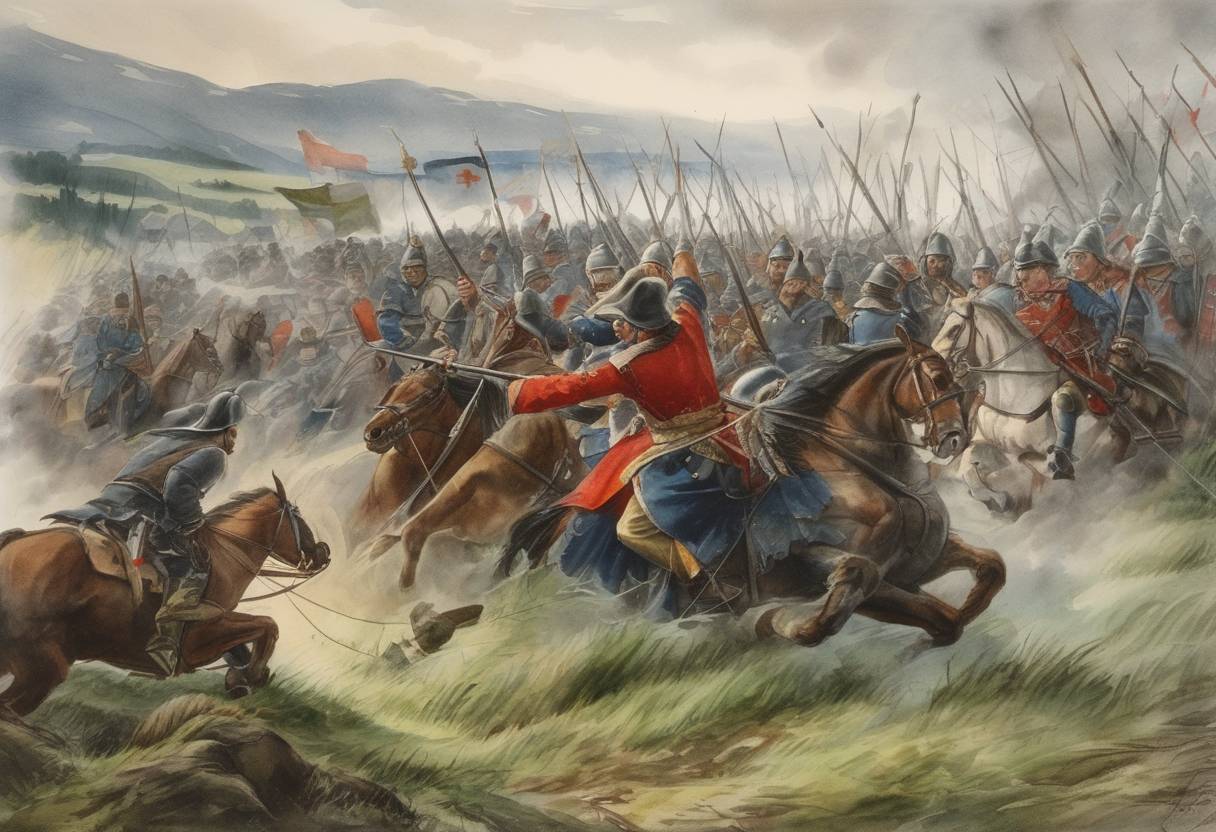
The Battle of Kalvskinnet - June 19, 1179
The Battle of Kalvskinnet, fought on June 19, 1179, was a pivotal engagement during the civil war era in Norway, witnessing the forces of Sverre Sigurdsson defeating those of King Magnus V. This confrontation took place in the area of Kalvskinnet, located near the city of Nidaros, present-day Trondheim.
Background
The conflict between Sverre Sigurdsson and King Magnus V was part of a larger series of civil wars in Norway, characterized by claims and counterclaims to the Norwegian throne. Sverre, who had emerged as a leader among the Birkebeiner faction, claimed to be the illegitimate son of the previous king, Sigurd II. His rival, King Magnus V, was supported by the established Bagler faction and recognized as the reigning monarch.
Lead-Up to the Battle
Sverre’s rise was marked by his strategic acumen and charismatic leadership. Following a series of successes in rallying supporters, he posed a significant threat to Magnus V’s rule. As Sverre’s forces advanced towards Nidaros, a city known for its strategic and religious significance, King Magnus V prepared to defend his rule against the Birkebeiner insurgents.
The Battle
On June 19, 1179, the two armies clashed at Kalvskinnet. Sverre’s forces, motivated by a mix of personal loyalty and the promise of political change, confronted the more established army of King Magnus. The battle’s specifics are recorded with ambiguity, typical of medieval accounts, but it is known that Sverre utilized both tactical ingenuity and the morale of his troops to secure a decisive victory.
Consequences
Sverre’s victory at Kalvskinnet was a critical turning point in the civil wars. It significantly weakened King Magnus V’s position and bolstered Sverre’s claim to the throne. After subsequent battles and strategic maneuvers, Sverre successfully established himself as King of Norway in 1184 after the death of Magnus V at the Battle of Fimreite.
Broader Historical Impact
Sverre’s ascendancy marked the beginning of a new era in Norwegian history. His reign (1177-1202) was characterized by attempts at centralizing royal power and reforming institutional structures in Norway, which laid foundational changes for the Norwegian state. This period of upheaval also invigorated discussions and development in law and governance, impacts that rippled through subsequent generations.
Sverre’s ability to capitalize on his victory at Kalvskinnet demonstrated the power of charisma and strategy in medieval politics, altering the course of Norwegian history and influencing the nature of kingship in Scandinavia.