1649 · London, England
King Charles I of England went on trial for treason and other high crimes against the realm. This trial eventually led to his execution.
June 18, 1583
Richard Martin, in the English Parliament, made a motion to examine the export of money bullion, reflecting concerns over England's economic policies.
London, England | English Parliament
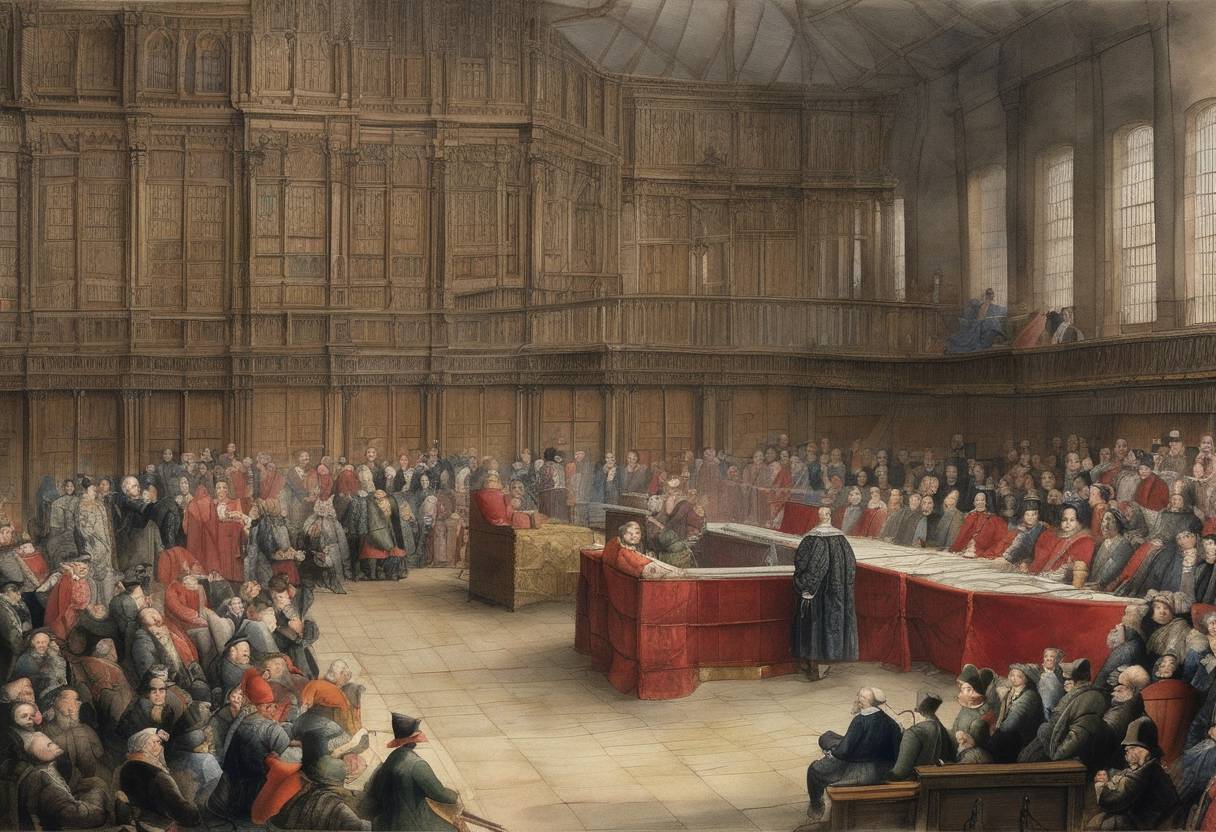
On June 18, 1583, Richard Martin, a member of the English Parliament, moved to examine the export of money bullion from England—a critical issue reflecting the economic considerations of the Elizabethan era. Martin’s motion highlighted growing concerns about the loss of bullion and the potential negative effects on England’s economy.
By the late 16th century, England, under Queen Elizabeth I, was experiencing considerable economic evolution and facing challenges from both domestic and international fronts. The increasing globalization of trade, driven by exploration and colonization, resulted in complex financial and economic dynamics. England’s involvement in international trading networks necessitated a careful management of monetary policies, particularly regarding bullion—precious metals like gold and silver that were the raw material for minted currency.
The exportation of bullion was an intensely debated topic as bullion was perceived as the backbone of national wealth and economic security. There was an inherent fear that allowing large amounts of precious metals to leave the country would weaken England’s financial position. Bullion exports could potentially lead to a shortage of coinage within the country, disrupt trade balances, and diminish England’s ability to finance military and colonial ventures.
Richard Martin, an influential Member of Parliament, expressed these concerns formally by initiating a motion for Parliament to scrutinize the nation’s bullion exportation policies. This move underscored the legislative body’s role in responding to economic pressures and protecting national interests. The discussion around this motion exemplified the broader movement towards stronger regulation of economic activity.
The debate initiated by Martin’s motion reflected broader themes of economic nationalism and the intricate balance of securing domestic economic stability while engaging in international commerce. It also highlighted the role of Parliament in addressing crucial issues affecting the state, setting a precedent for future economic legislation. The discussions and any subsequent actions stemming from this motion would contribute to the narrative of England’s economic policy development during a crucial period of expansion and consolidation.
Martin’s motion is an early example of legislative efforts to manage the intricacies of national and international economic considerations, endeavoring to maintain prosperity while navigating the complexities of a burgeoning global economy.
Source: en.wikipedia.org